Best For
- Traditional memory foam feel
- Exceptional pressure relief and comfort
- Limited motion transfer and very low bounce
Considerations
- Extremely slow material recovery speed
- Low sex score due to lower bounce and weaker edges
- $175 return fee if things don’t work out
Our Verdict
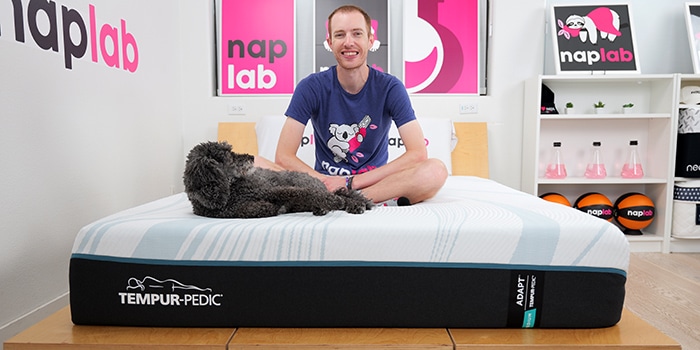
The Tempurpedic Adapt is an 11.00″ memory foam mattress made of memory foam and support foam. This mattress is available as an all foam version and a hybrid version. We tested the all foam version, which creates a more dramatic memory foam feel.
While the Tempurpedic Adapt is available in two types, all foam and hybrid, the firmness on both versions is the same. The Adapt has a medium-firm feel. In our firmness scale, this is a 6 out of 10, where 10 is the most firm.
This mattress has deep sinkage and very low levels of bounce. It has a dramatic contour, which can be ideal if you like your mattress to have a bit more hug.
In our performance tests, this mattress earned an overall score of 8.06, ranking the mattress in the bottom 19% of all mattresses tested to date.
The Tempurpedic Adapt is $2,299 for a queen-sized mattress, which is over 2X more expensive than average memory foam mattress we’ve tested, an additional cost of nearly $1,200 for a queen mattress. Most of what you’re paying for is the brand name here, but for sleepers who definitely want the classic Tempurpedic memory foam mattress feel the Adapt can be a good option.
Type: Memory Foam
Firmness: Medium-Firm (6)
Best For: All Sleeping Positions, All Body Weights

In This Review
Performance Tests | Firmness | Support & Sleeping Positions | Design | Materials | Comparisons | FAQs
Performance Tests
At NapLab, we put each mattress to the test.
We test 10 different factors that impact the performance, comfort, and feel of the mattress. We then take the results of those tests and compare them to every mattress we’ve tested to date.
Check out the full performance table below to see how this mattress ranks:
| Factor | Tempurpedic Adapt | Average |
|---|---|---|
| Overall Score | 8.06 | 8.52 |
| Price (Queen) | $2,299 | $1,105 (Memory Foam only) |
| Cooling – Score | 8.0 | 8.6 |
| Sinkage – Depth | 2.30″ | 2.25″ |
| Sinkage – Feel | Deep | Moderate |
| Motion Transfer – Score | 8.8 | 8.2 |
| Motion Transfer – Acceleration | 7.61 m/s² | 8.77 m/s² |
| Response Time – Score | 5.0 | 8.8 |
| Response Time – Mostly Recovered | 2.0 sec. | 0.4 sec. |
| Response Time – Fully Recovered | 3.8 sec. | 1.0 sec. |
| Bounce – Height | 5.97″ | 8.65″ |
| Bounce – Feel | Very Low | Moderate |
| Edge Support – Score | 8.2 | 8.7 |
| Edge Support – Sitting | 4.25″ | 3.85″ |
| Edge Support – Lying | Good | Good |
| Sex – Score | 7.1 | 8.2 |
| Pressure Relief – Score | 10 | 8.6 |
| Comfort Layer Thickness | 3.00″ | 4.34″ |
| Mattress Thickness | 11.00″ | 12.30″ |
| Off-Gassing – Score | 9.4 | 7.9 |
| Off-Gassing – Smell | Strong | Strong |
| Off-Gassing – Days | 2 days | 8 days |
| Company – Score | 6.4 | 8.8 |
| Trial | 90 nights | 193 nights |
| Warranty | 10 years | 40% have lifetime warranties, average of other 60% of mattresses is 13 years |
How is Tempurpedic Adapt Different?
The Tempurpedic Adapt is a 11.00″ memory foam mattress with an overall performance level that is below average and a price that is considerably higher than above average. This isn’t usually the dynamic that we like to see, as it marks a mattress that could be a poor value for sleepers looking for high performance.
Advantages
Still, there are some advantages of the Adapt. This mattress has less motion transfer than average and fantastic pressure relief. Despite only having a 3.0″ comfort layer, these foam layers are doing maximum work, providing a dramatic contour with lots of hug around the body.
Off-gassing is also faster than average, which is less common with a traditional memory foam mattress.
Neutral Factors
The Adapt has deep sinkage and very low bounce. If you enjoy the viscoelasticity of memory foam (imagine pressing your hand in, when you remove your hand the imprint stays) then you are likely to see these factors as advantages.
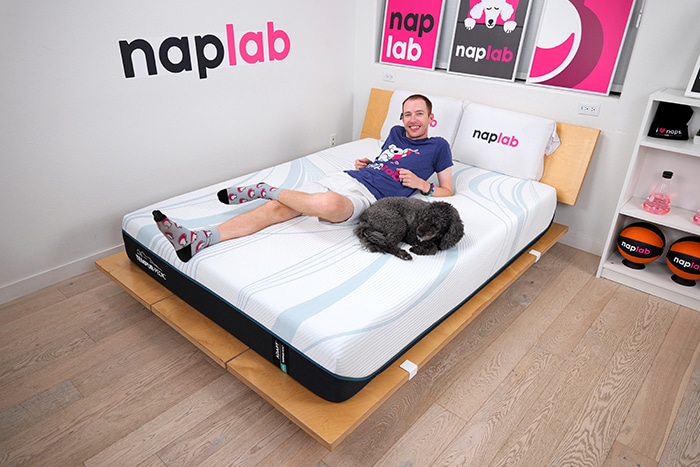
If you want a mattress that is quick to respond and less likely to leave you feeling “stuck”, then these factors may be disadvantages for you.
Disadvantages
Disadvantages of the Tempurpedic Adapt include worse cooling, slower material response time, and weaker edge support. In addition, this mattress only has a 90-night trial period (over 100 nights shorter than average), and if you decide that the Adapt isn’t right for you, Tempurpedic has a $175 return fee.
Cooling Test
The Tempurpedic Adapt has good cooling. During our tests, I felt a slight level of heat retention around my body, but it wasn’t anything extreme or anything I’d describe as “hot”.
Baseline Temp.
79.4° F
Max. Temp.
92.6° F
Ending Temp.
83.4° F
This mattress is available as an all-foam mattress and as a hybrid. We tested the all-foam version. I would guess the hybrid version would have better cooling performance.
The all-foam version is a fairly simple design consisting of a thin, non-quilted cover, 3.0” of memory foam, and 8.0” of support foam. Certainly, the all-foam design is limiting breathability, which is contributing to the higher max temperatures we measured.
In addition, having 3.0” of dense memory foam comfort layers also retains more heat than many other types of foam.
Max. Temp.
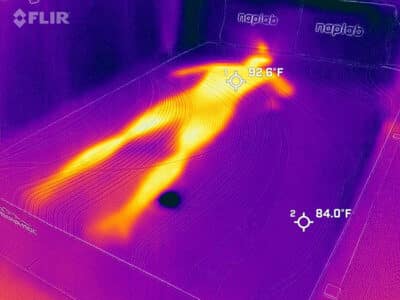
Ending Temp.
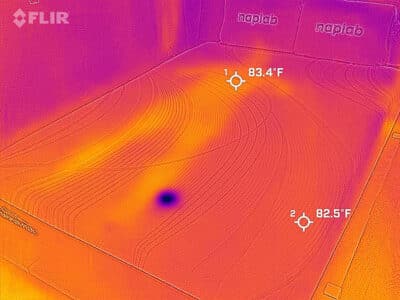
- Baseline Temperature – the temperature of the mattress before anyone lies on it
- Maximum Temperature (0 minute) – the temperature of the mattress after lying on it for 15 minutes
- Ending Temperature (5 minute) – the temperature of the mattress after being lied upon and having no one on it for 5 minutes
While those dense memory foams are great for comfort, pressure relief, and body contouring hug, they don’t do any favors for cooling. Notably, the topmost support foam layer is convoluted, meaning it has been cut with air channels.
I expect those air channels are helping with cooling, but alone aren’t enough to overcome the other cooling challenges on the mattress.
In our objective temperature tests, we measured a max surface level temperature of 92.6° F. This is 2.3° warmer than the average of 90.3° F, based on all of our tests to date.
After getting off the mattress, the temperature declined by 6.0 degrees from minutes 0 to 1, which is 1.2 degrees cooler than the average 0 to 1 minute decline of 4.8 degrees.
Heat Dissipation Over Time
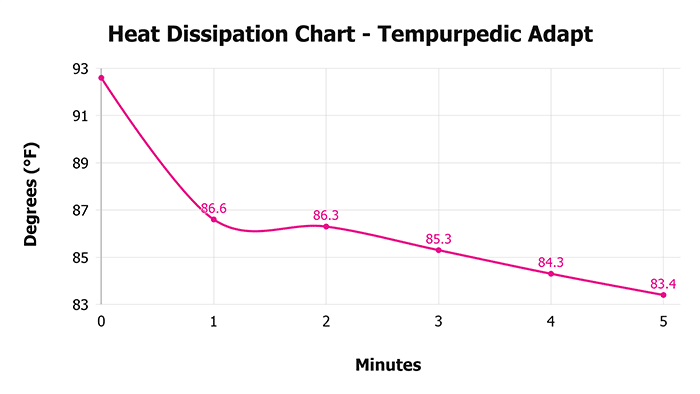
When we consider the combination of objective data, my subjective experiences, and an analysis of the materials, I’m confident in my view that cooling is good.
Sinkage Test
The Tempurpedic Adapt has deep sinkage. During our tests, we measured a pressure point sinkage depth of 2.30″. This is 0.05″ more sinkage than the average sinkage depth of 2.25″, based on all of our tests to date.
The mattress creates a dramatic body contouring hug, which is what we expect from a Tempurpedic.
Sinkage Depth
2.30″
Sinkage Feel
Deep
Body Contour
Dramatic
The level of sinkage is documented in the image below.
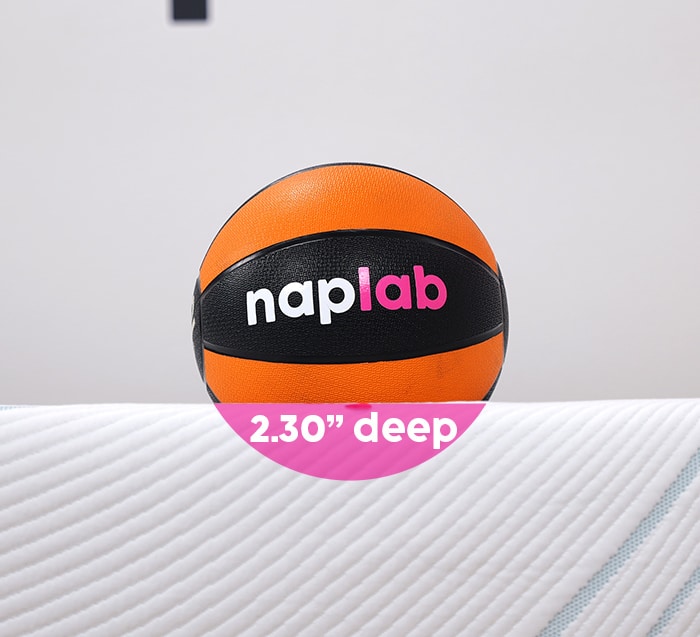
Tempurpedic and more broadly, classic memory foam, is known for the dramatic body contouring hug and slower material recovery speed. This sinkage dynamic creates something of a snug lying “in” the mattress feel, as opposed to lying “on” the mattress.
Heavier and bonier parts of my body, including my butt, mid-section, head, and elbows, sank down a bit further, and I could really feel the hugging sensation.
However, lighter parts of my body where weight is more evenly distributed created less sinkage, though there is still enough hug and contour to create ample comfort and pressure relief.
Motion Transfer Test
The Tempurpedic Adapt has a low level of motion transfer. During our tests, we measured a total acceleration range of 7.61 m/s². This is 13% less motion transfer than the average of 8.77 m/s².
Accel. Range
7.61 m/s²
Motion Duration
0.65 seconds
This mattress benefits from the all-foam design, thick 3.0” memory foam layer, and a memory foam that has a classic viscoelastic feel and slower material recovery speed.
Each of these design attributes helps to absorb and disperse energy and lower bounce. The result is low motion transfer.
The level of motion transfer is also documented in the video below.
In our motion transfer chart, which visualizes our accelerometer data, we can see the highest motion peaks from 0 to 0.2 seconds. Motion drops off dramatically immediately thereafter.
By 0.65 seconds, we’ve returned to near-zero levels of energy, which is 0.25 seconds shorter than the average motion duration of 0.90 seconds.
Motion Transfer Over Time
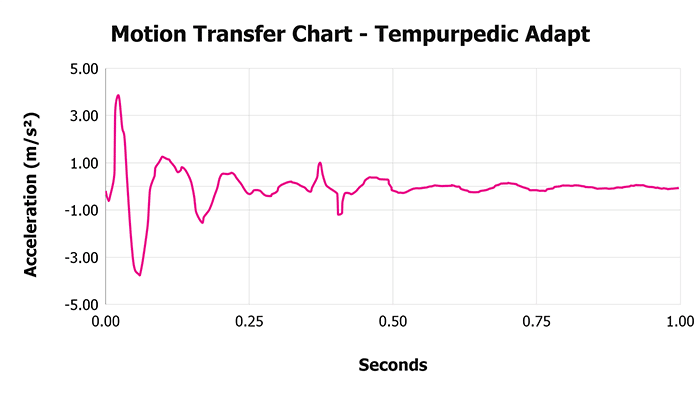
Both motion duration and motion intensity are notably better than average. As a result, motion transfer is kept in check. The low motion makes the Tempurpedic Adapt an especially good choice for couples.
Response Test
The Tempurpedic Adapt has a very slow material response. In our mostly recovered test, we measured a recovery speed of 2.0 seconds, which is 1.58 seconds slower than the average of 0.42 seconds, based on all of our tests to date.
In our fully recovered responsiveness test, we measured a recovery speed of 3.8 seconds, which is 2.78 seconds slower than the average of 1.02 seconds.
Mostly Recovered
2.0 sec.
Fully Recovered
3.8 sec.
This mattress has the 11th slowest fully recovered responsiveness speed we’ve tested to date (out of 451 tests). Tempurpedic uses a very classic type of memory foam.
Their memory foam creates a dramatic body contouring hug and has significant viscoelastic properties. These properties cause the foam to keep its shape longer after it has been compressed. For some sleepers, this feel is really what they love about Tempurpedic.
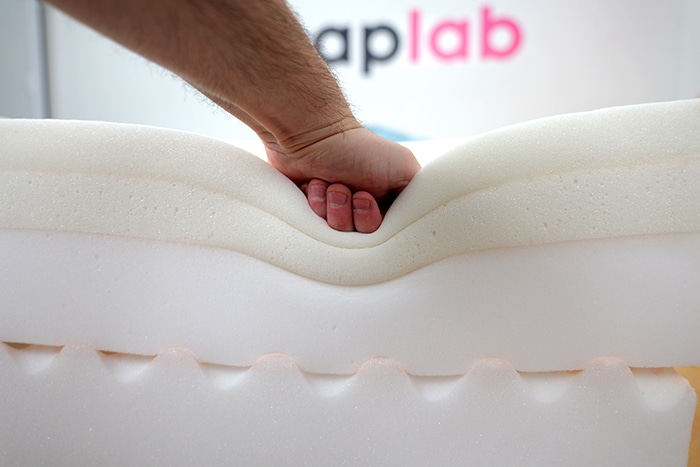
It creates an exact and precise body contour and makes it so you sleep “in” the mattress. That said, some sleepers find this feel too restrictive.
The level of responsiveness is documented in the video below.
Whether you prefer this feel or not, it’s fair to say that the slower material recovery speed makes this mattress harder to move around on, harder to get in / out of bed, and harder to change positions.
The poor ease of movement is among the biggest cons for memory foam mattresses.
Bounce Test
The Tempurpedic Adapt has a very low level of bounce. During our tests, we measured a total bounce height of 5.97″. This is 2.69″ less bounce than the average of 8.66″, based on all of our tests to date.
Max. Depth
4.82″
Max. Rebound
1.15″
Total Bounce
5.97″
The lower level of bounce is a product of the all-foam design, thick 3.0” memory foam comfort layer, and highly viscoelastic memory foam formulation.
These material and design attributes greatly absorb and disperse energy, creating lower bounce. Those same properties are also driving the low level of motion transfer.
Max. Sinkage Depth
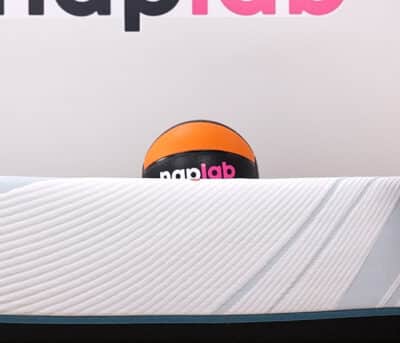
Max. Bounce Height
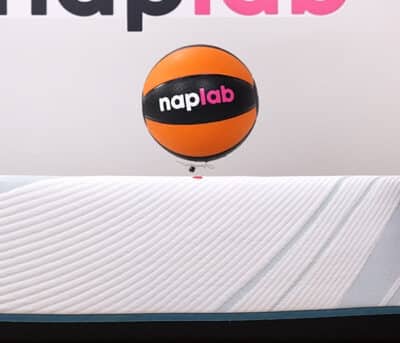
The level of bounce is also documented in the video below.
However, a lower bounce does make sex and ease of movement worse. As such, it’s worth considering what’s most important to you. Lower motion transfer? Or ease of movement and sex performance?
Edge Support Test
The Tempurpedic Adapt has good sitting edge support and good lying edge support.
Max. Sinkage
4.25″
Lying Support
Good
Reinforced Edge
No
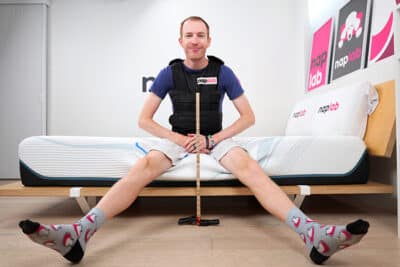
In our sitting edge support test, we measured a sitting sinkage compression of 4.25″. This is 0.40″ more sitting sinkage than the average of 3.85″, based on all of our tests to date.
The level of edge support while seated is documented in the images below.
Sitting, 140 lbs.
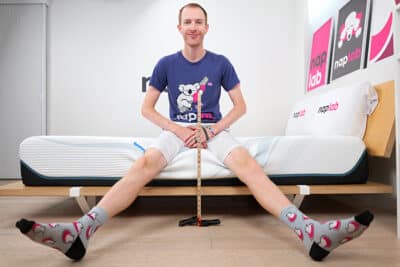
Sitting, 200 lbs.
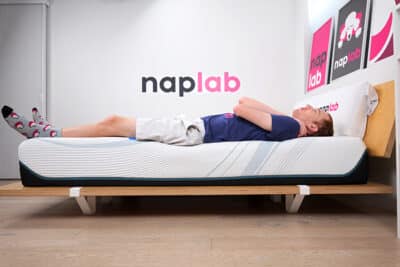
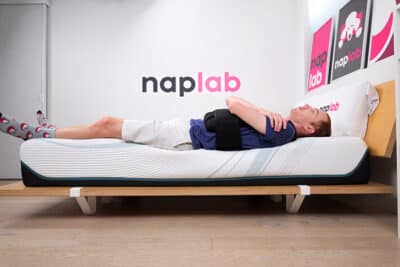
While lying directly on the edge of the mattress, I felt that the support was good in all sleeping positions, but it also didn’t rise to the excellent or outstanding level. Notably, the all-foam version of this mattress (which is what we tested) does not use any type of reinforced material along the perimeter edge.
However, the hybrid version does use a perimeter of reinforced support foam. Certainly, the lack of reinforcing edge support is part of the reason why edge support was only good, but far from great.
In addition, memory foam mattresses often struggle with edge support and I think that’s part of the problem here as well.
The level of edge support while lying is documented in the images below.
Lying on Edge, 140 lbs.
Lying on Edge, 200 lbs.
Memory foam by its nature creates a dramatic and exacting hug around the body. While in the middle of the mattress, that’s perfectly fine.
However, along the edge it becomes a problem because there isn’t enough material to both contour and fully support the part of the body nearest the edge. This creates a weakened supportive feel at the edge of the mattress.
To be fair, this isn’t a problem with Tempurpedic specifically, but rather most memory mattresses we’ve tested. If your preference is to get a memory foam mattress, you should be prepared for edge support to be less-than-perfect.
Sex Test
The Tempurpedic Adapt has fair sex performance. On the positive side, noise is minimal and pressure relief is outstanding. So if nothing else, it’s quiet and incredibly comfortable.
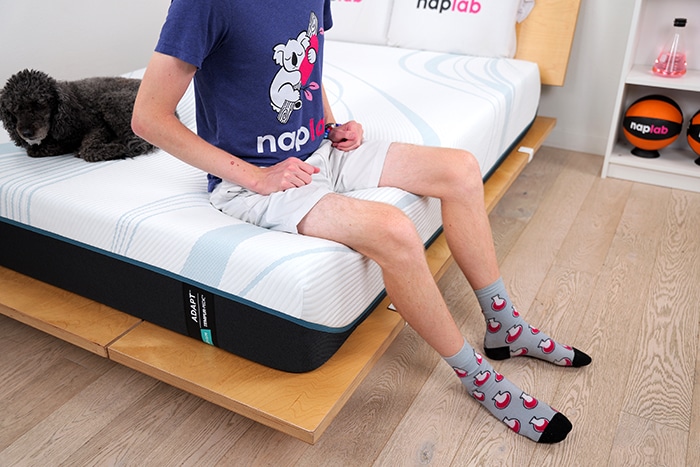
Moving on with middling performances, we have both cooling and edge support, both of which were good, but not amazing. Edge support measured 4.25” of sitting edge sinkage, which is slightly worse than average, but still robust enough to be a functional and usable part of the mattress for sex.
Lastly, we’ve got to talk about bounce, which is the one big negative on this mattress. Bounce measured 5.97”, which is considerably less bounce than average.
| Sex Factor | Factor Weight | Score | Rating |
|---|---|---|---|
| Bounce | 65% | 6.2 | Low |
| Edge Support | 20% | 8.4 | Good |
| Noise | 5% | 10 | Minimal |
| Pressure Relief | 5% | 10 | Outstanding |
| Cooling | 5% | 8.0 | Good |
The lower bounce makes sex more tiring and more strenuous. Some people describe amorous activity on a memory foam mattress a bit like having sex in quicksand. I think that is a reasonable comparison.
All that to say, the overall sex performance on the Tempurpedic Adapt is significantly worse than average.
Pressure Relief Test
The Tempurpedic Adapt has an outstanding level of pressure relief. During our tests, I felt no significant pressure points on my body. Overall, I found this mattress to be incredibly comfortable.
Comfort Layer
3.00″
Support Layer
8.00″
The mattress is equipped with 3.0″ of comfort material, which is 1.34″ less comfort material than the average comfort layer thickness of 4.34″, based on all of our tests to date. This mattress is equipped with a thin, non-quilted cover.
This cover helps to create more direct and pronounced engagement with the 3.0” memory foam comfort layers immediately below it. The memory foams create an exacting and dramatic body contouring hug.
While this hugging sensation isn’t preferred by all sleepers, for those who enjoy the feel of foams conforming to the precise shape of the body they will love the feel of the Tempurpedic Adapt.
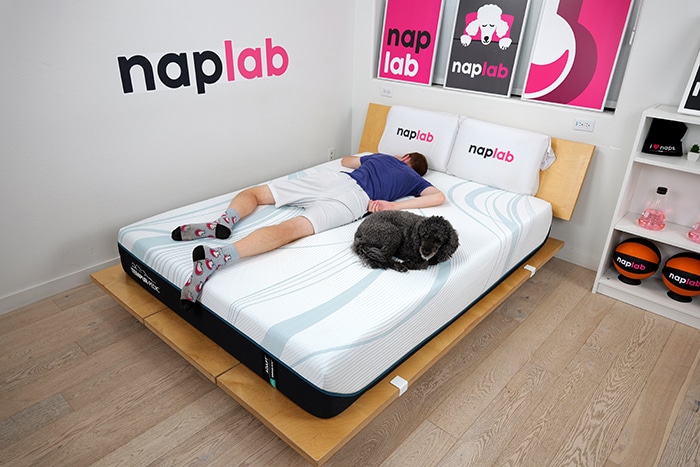
In addition, this mattress has moderate to deep sinkage. Heavier parts of the body sink down a bit further, while lighter parts of the body and body parts where weight is more evenly distributed will sink down a bit less.
In our objective pressure mapping tests, we measured a max PSI of 0.41, which is significantly lower than the 1.0 max PSI threshold that I ideally want to see.
Pressure Map – Side Sleepers
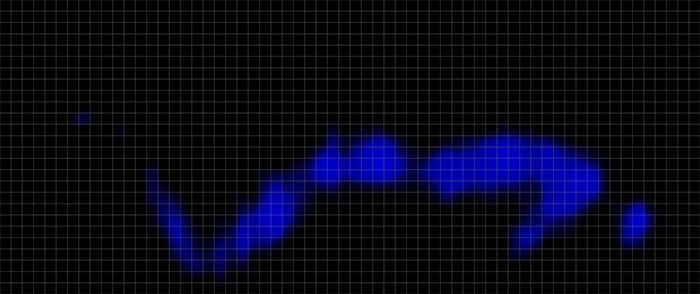
| Pressure Relief (PSI) | Average | Maximum |
|---|---|---|
| Side Sleepers | 0.09 | 0.27 |
Pressure Map – Back Sleepers
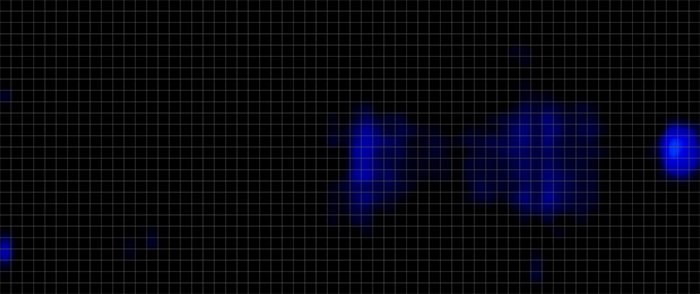
| Pressure Relief (PSI) | Average | Maximum |
|---|---|---|
| Back Sleepers | 0.06 | 0.41 |
Pressure Map – Stomach Sleepers
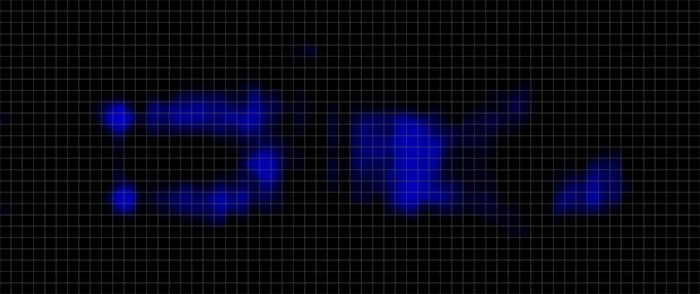
| Pressure Relief (PSI) | Average | Maximum |
|---|---|---|
| Stomach Sleepers | 0.06 | 0.25 |
When I consider our objective pressure mapping tests, material thickness, material quality, and my subjective experience on the mattress, I’m confident most sleepers will find the pressure relief to be outstanding.
Off-Gassing Test
The Tempurpedic Adapt had a strong smell upon the initial arrival. The mattress smelled for 2 days. This is 5.7 days shorter than the average smell duration of 7.7 days.
Notably, this mattress arrived uncompressed, but in a sealed bag. While the bag did prevent some of the off-gassing, being shipped uncompressed almost certainly helped it off-gas much of the smell that may have existed before we began our tests.
Initial Smell Strength
Strong
Off-Gassing Period
2 days
Company
Tempurpedic mattresses come with a 90-night trial period and a 10-year warranty. Shipping is free. Returns are $175.
| Company Factor | Factor Weight | Score | Data |
|---|---|---|---|
| Returns | 40% | 5.0 | $175 |
| Trial Period | 30% | 6.0 | 90 nights |
| Warranty | 20% | 8.0 | 10 years |
| Shipping | 10% | 10 | $0 |
| Country of Origin | 0% | USA |
Comparing 118+ brands tested to date, the average trial period is 193 nights. When we compare this average to the shorter 90-night trial period of Tempurpedic, Tempurpedic definitely is at a disadvantage.
Looking at warranties, the average warranty is 13 years, 3 years more than Tempurpedic. This is excluding 40% of mattresses that offer lifetime warranties.
How firm is Tempurpedic Adapt?
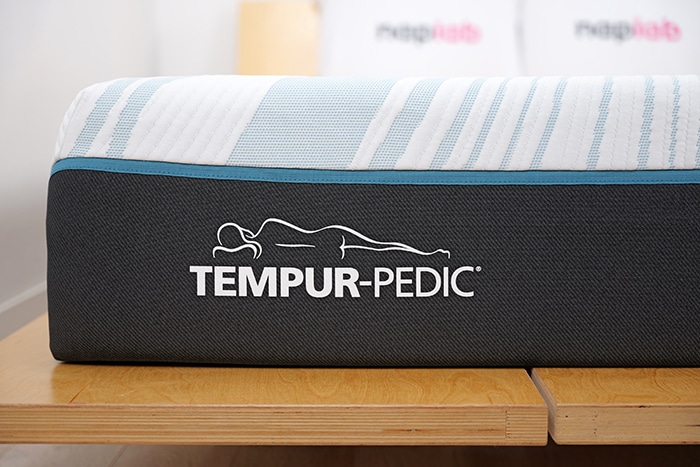
The Tempurpedic Adapt is available in two versions that they call Medium and Medium Hybrid. Essentially, the two versions only differ in their support layer: the Medium Hybrid uses a pocketed coil unit and the Medium uses support foam.
The version we tested was the all-foam Medium and the mattress had a medium-firm feel. On our firmness scale, this is a 6 out of 10, where 10 is the most firm.

Based on my testing of the medium memory foam version, I don’t expect the medium hybrid version to have a significantly different firm.
With this, I would put both versions of the Adapt model at a 6 out of 10 firmness rating and a medium-firm feel.
Support & Sleeping Positions
Support on the Tempurpedic Adapt is excellent. During our tests, I felt well supported in all sleeping positions.
The mattress is equipped with an 8.0″ support layer. This is 0.04″ thicker than the average support layer thickness of 7.96″, based on all of our tests to date.
| Support Factor | Data |
|---|---|
| Comfort Layer | 3.00″ |
| Support Layer | 8.00″ |
| Firmness | Medium-Firm |
| Body Contour | Dramatic |
| Zoned Support | No |
| Reinforced Edge | No |
Mattresses that create the best support are able to meet two major requirements. First, they must create a neutral spinal alignment. Second, they must provide ample comfort and pressure relief.
The Tempurpedic Adapt meets those requirements with ease. This mattress is available in a medium all-foam version and a medium hybrid. We tested the medium all-foam version and found it to be a medium-firm feel, 6 out of 10 firmness.
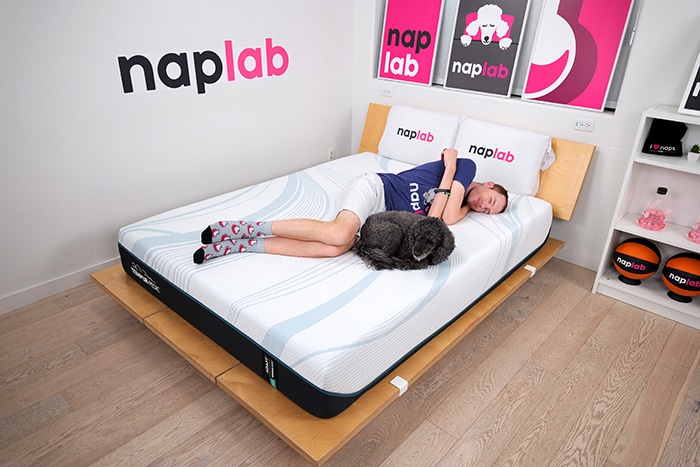
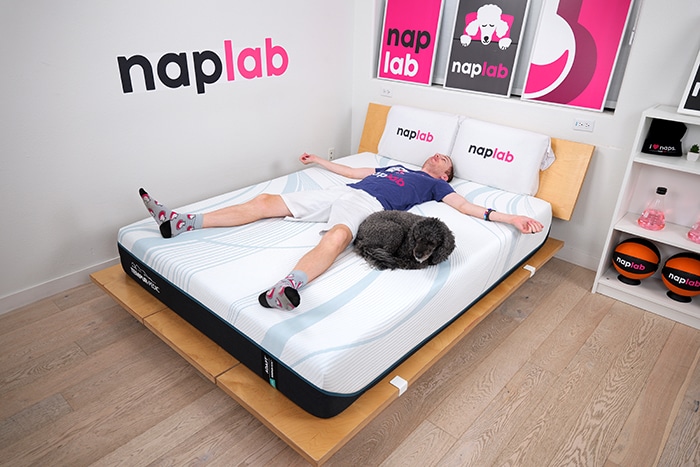
This firmness is appropriate to the needs of most sleepers and all sleeping positions. I would estimate the medium hybrid version is also a medium-firm feel.
The medium hybrid is also going to be perfectly supportive for most sleepers, but especially those who prefer better cooling, more bounce, and better edge support.
Check out the table below to see the sleeper weights and sleeping positions that would be best suited for this mattress.
Medium (All-Foam)
| Sleeper Weight | Stomach Sleeper | Side Sleeper | Back Sleeper |
|---|---|---|---|
| Under 150 lbs. | Yes | Yes | Yes |
| 150-250 lbs. | Yes | Yes | Yes |
| 250-300 lbs. | Yes | Yes | Yes |
Medium Hybrid
| Sleeper Weight | Stomach Sleeper | Side Sleeper | Back Sleeper |
|---|---|---|---|
| Under 150 lbs. | Yes | Yes | Yes |
| 150-250 lbs. | Yes | Yes | Yes |
| 250-300 lbs. | Yes | Yes | Yes |
Moving on, let’s talk about material quality. In all mattress tests, we make it a point to cut the mattress open and examine the material quality. In doing so, I’m generally pleased with what we see and measure; however, it’s also fair to say there is room for improvement.
The Adapt mattress uses 2 memory foams, one with a PCF of 2.29 and the second with a PCF of 3.56. A 3.56 PCF memory foam is good, no issues there, though I will say I’m less than thrilled with a 2.29 PCF memory foam in a mattress at this price point.
Less dense foams sag more, sag earlier, and simply don’t last as long. While I have good confidence in the support foams and the 3.56 PCF memory foam, I’m concerned that a 2.29 PCF memory foam in the topmost layer will be more prone to sagging.
Lastly, this mattress does not use zoned support. Instead, we have a consistent firmness and support from the head to the foot of the mattress.
Based on all of my tests to date, an analysis of the materials, and my subjective experiences, I’m confident most sleepers will find support on the Tempurpedic Adapt is excellent.
Design
The Tempurpedic Adapt is an 11.00″ memory foam mattress that comes in two versions— Medium (all-foam) and Medium Hybrid.
As mentioned above, we tested the Medium version. If you want better edge support and a more active feel (faster response + higher bounce), the Medium Hybrid may be the better option.
| Design Factor | Data |
|---|---|
| Type | Memory Foam |
| Thickness | 11.00″ |
| Cover Type | Thin |
| Weight | 70 lbs. |
| Has Handles | No |
| Fiberglass-Free | Yes |
| Ships in a Box | No |
Within the Tempurpedic collection, the Adapt is a mid-tier option, costing slightly more than the TEMPUR-Cloud collection, but less than the TEMPUR-Breeze collection.
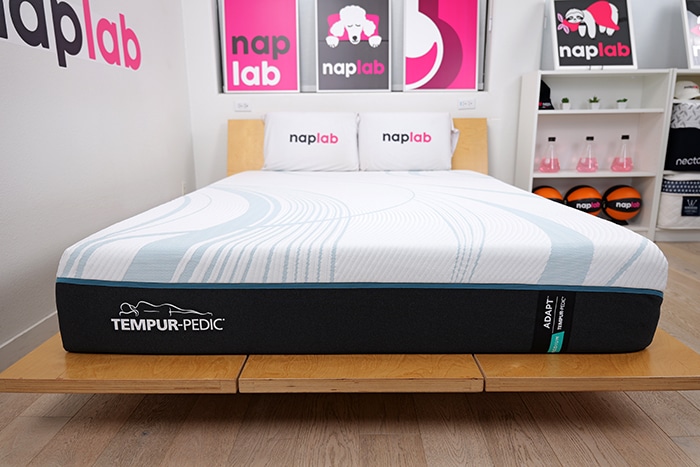
Within the Adapt collection, there are three levels of mattresses—the Adapt (11″), Pro Adapt (12″), and Luxe Adapt (13″).
Materials
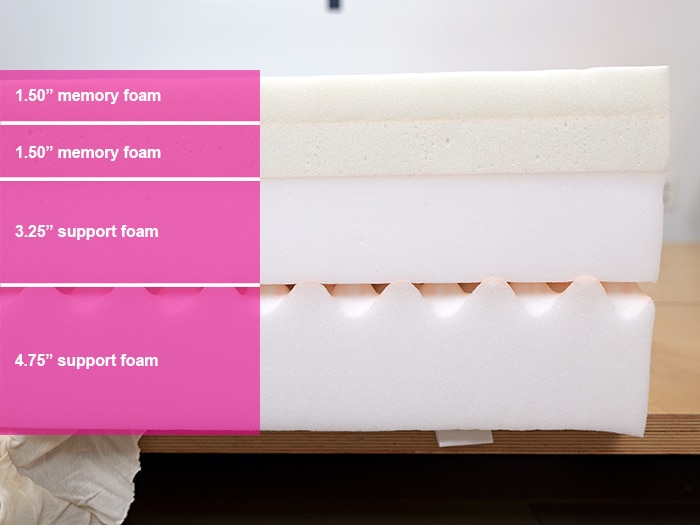
The Tempurpedic Adapt is 11.00″ thick and contains a combination of memory foam and support foam. From top to bottom, here is a full list of the materials used in this mattress:
| Layer Type | Thickness | Manufacturer’s Specs | Tested Specs |
|---|---|---|---|
| Memory Foam | 1.50″ | Not Available | 2.29 PCF |
| Memory Foam | 1.50″ | Not Available | 3.56 PCF |
| Support Foam | 3.25″ | Not Available | 1.69 PCF |
| Support Foam | 4.75″ | Not Available | 1.67 PCF |
The Law Tag outlines the full breakdown of materials included in this mattress.
- Materials
- 55% polyurethane foam pad
- 45% visco-elastic polyurethane foam pad
- Made for: Tempur-Pedic Management LLC, 1000 Tempur Way, Lexington, KY 40511
- Date of Delivery:
- Finished Size: 80 x 60 x 11 in
- Net Weight of Filling Mat: 60 lbs
- Assembled in USA
- Manufactured by: Tempur Production USA, LLC, 12907 Comfort Way, Albuquerque, NM 87120
- Date of Manufacture: 12/17/2025
- Adapt 2.0 Medium Queen
The Cover
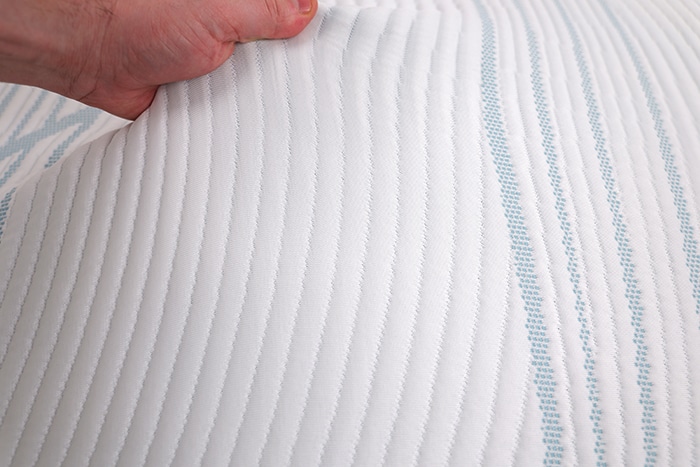
The Tempurpedic Adapt has a thin cover that is removable, machine-washable, and cool-to-the-touch. It includes cooling fibers that help to draw heat away from the body when sleeping.
The Comfort Layer
The comfort layer is 3.00″ thick and made of two layers of memory foam. Each memory foam layer is 1.5″ thick.
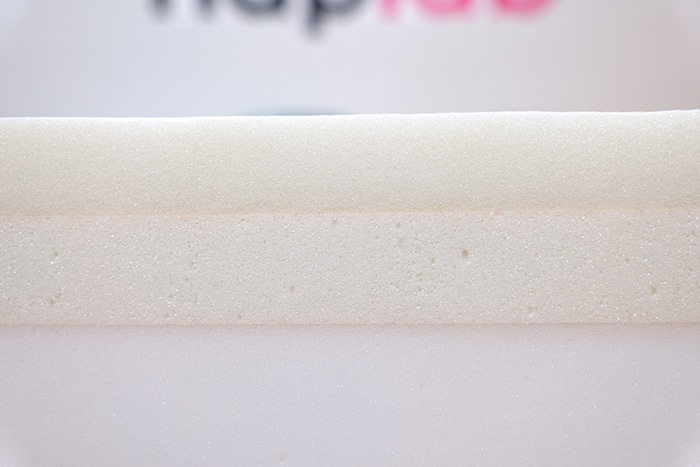
Visually, there is limited distinction between the different layers, but in our tests, we did measure slightly different densities at each layer (as shown in the table above).
The Support Layer
The support layer is 8.00″ thick and made of two layers of support foam. Directly below the comfort layers is a 3.25″ support foam followed by a 4.75″ support foam.
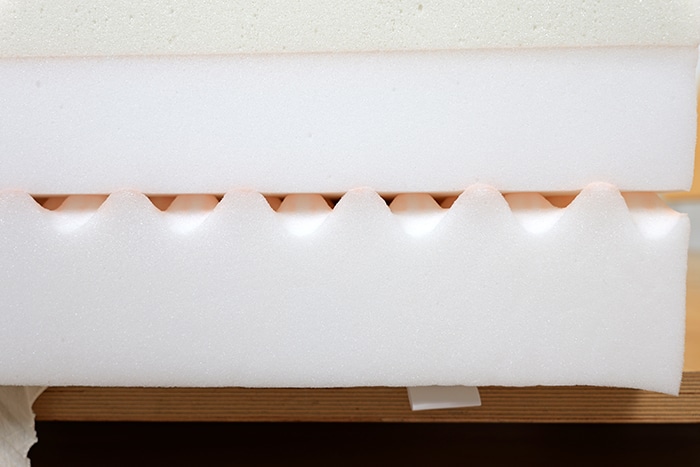
The support foam at the base of the mattress has a convoluted design, which does help promote airflow and pressure relief.
Product Evolution
The Tempurpedic Adapt was originally launched in 2018, released as a replacement for the Cloud, Contour, and Flex collections.
In 2024, the Adapt underwent more significant updates with new foam, better cooling, and an updated support system. Refreshed covers topped the new Adapt, giving the mattress a more modern look.
This review (tested in 2026) is the first time we’ve tested the Tempurpedic Adapt, so it’s unclear how earlier versions may be similar or different.
Other Mattresses to Consider
Not sure if the Tempurpedic Adapt is the right pick for you? Check out these three other top-rated memory foam mattresses for alternatives you may want to consider.
For Better Performance
DreamCloud Luxe
Under $1,700/Queen
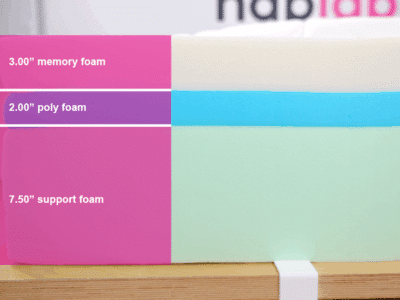
The Dreamcloud Luxe is a 14.5″ memory foam mattress available in 1 firmness level—medium-firm. It has deep sinkage and very low bounce, similar to what we measured on the Adapt. But overall, it outperforms the Adapt for less motion transfer, faster response time, better edge support, and free returns.
For Less Sinkage
Amerisleep AS2
Only 12″ Thick Profile
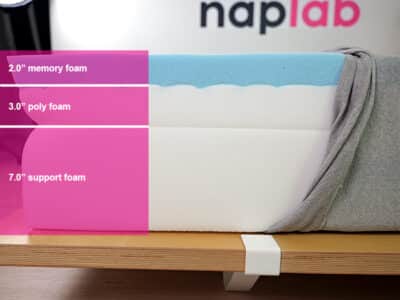
The Amerisleep AS2 is a 12″ memory foam mattress available in 1 firmness level—medium-firm. The AS2 has only moderate levels of sinkage and faster response. If you’re worried about feeling “stuck,” the AS2 can be a good option since sinkage isn’t as dramatic.
For Thinner Profile
Winkbed GravityLux
Three Firmness Options
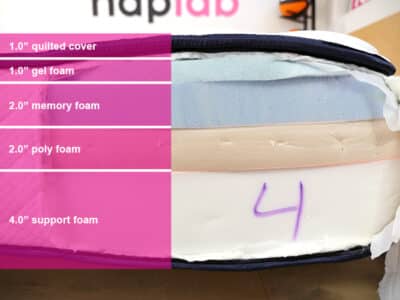
The Winkbed GravityLux is a 10″ memory foam mattress available in 3 firmness levels—soft, medium-firm, and firm. The GravityLux is a solid pick for sleepers who want a different firmness level, fast response, or exceptional edge support.
Frequently Asked Questions
Still have questions? Check out some of the top FAQs on the Tempurpedic Adapt mattress below and get the answers you’re looking for.
How much does a Tempurpedic Adapt mattress cost?
Here are the current prices of the Tempurpedic Adapt mattress, with any sales or promotions reflected below:
Twin: $1,799
Twin XL: $1,799
Full: $2,149
Queen: $2,299
King: $2,999
Cal. King: $2,999
Split King: $3,598
Split Cal. King: 3,598
*Note: Sales prices are subject to change without notice or warning.