So you need a new mattress, but you’re not sure where to start. For many sleepers, nailing down the right mattress firmness is the first, and arguably, most critical step towards better sleep.
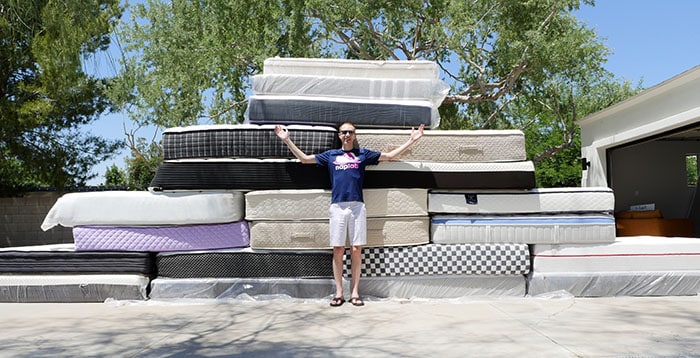
This mattress firmness guide will aim to put your mind at ease and help you get some sleep. To get started, here is a more detailed breakdown of who each firmness is best suited for.
In This Guide
Mattress Firmness Compared | What is mattress firmness? | What firmness is right for me? | FAQs
Mattress Firmness Compared
At NapLab, we use a 1-10 firmness scale, where 10 is the most firm.
| Firmness | Feel | Best Suited For |
|---|---|---|
| 3 / 10 | Extra Soft | Exclusive side sleepers, typically lighter weighted sleepers, very few sleepers need this firmness |
| 4 / 10 | Soft | Primarily side sleepers, typically lighter and more moderate weighted sleepers |
| 5 / 10 | Medium | Primary side sleepers and back sleepers, all weights (up to 300 pounds) |
| 6 / 10 | Medium Firm | All sleeping positions, all body weights (up to 300 pounds). The vast majority of sleepers need this firmness. |
| 7 / 10 | Slightly Firm | Primary back and stomach sleepers, all weights (up to 300 pounds) |
| 8 / 10 | Firm | Primary back and stomach sleepers, all weights (up to 300 pounds), very few sleepers need this firmness |
| 9 / 10 | Extra Firm | Primary back and stomach sleepers, all weights (up to 300 pounds), very few sleepers need this firmness |
Extra Soft: 3 out of 10
Extra soft mattresses are best for exclusive side sleepers, especially those who are lighter weighted. Heavier weighted sleepers will likely not be adequately supported by a mattress this soft. Even lightweight sleepers who sleep on their stomach or back may also not get enough support from this firmness.

You can find a complete list of mattresses with an extra soft firmness we’ve tested here.
Soft: 4 out of 10
Soft mattresses are best for those who primarily sleep on their side, though some back sleeping can also be fine. Stomach sleepers should avoid soft mattresses. Soft mattresses are best for lighter and moderate heavier sleepers. Larger sleepers will likely not be adequately supported by a mattress this soft.

You can find a complete list of mattresses with a soft firmness we’ve tested here.
Medium: 5 out of 10
Medium mattresses are appropriate for all sleeping positions and all body weights (up to 300 pounds). That said, the medium feel does make them slightly better for those who spend more time sleeping on their side and not very much time sleeping on the stomach.

You can find a complete list of mattresses with a medium firmness we’ve tested here.
Medium-Firm: 6 out of 10
Medium-firm mattresses are appropriate for all sleeping positions and all body weights (up to 300 pounds). The vast majority of sleepers should choose this firmness.

You can find a complete list of mattresses with a medium-firm firmness we’ve tested here.
Slightly Firm: 7 out of 10
Slightly firm mattresses are best for stomach and back sleepers, especially those who prefer more pushback and less sinkage. For some who suffer from back pain, the slightly firm feel can be an especially good fix. Side sleepers generally find the 7 out of 10 firmness to be a bit too firm to create ideal support.

You can find a complete list of mattresses with a slightly firm firmness we’ve tested here.
Firm: 8 out of 10
Firm mattresses are typically best for exclusive back and stomach sleepers. A firm mattress is typically not a good choice for a side sleeper. Some heavier weighted sleepers, especially those over 200 pounds, find the firmer feel can provide a more appropriate level of support and pressure relief. A relatively small percentage of sleepers should go with a firm feel.

You can find a complete list of mattresses with a firm firmness we’ve tested here.
Extra Firm: 9 out of 10
Extra firm mattresses are best for exclusive stomach and back sleepers. That said, the extra firm feel is incredibly firm and not a good choice for the vast majority of sleepers. Only pick this firmness if you are absolutely certain you want and need the firmest possible feel.

You can find a complete list of mattresses with an extra firm firmness we’ve tested here.
What is mattress firmness?
Mattress firmness is how soft or firm a mattress feels on your body. That said, exact firmness ratings can vary between sleepers, as it’s a subjective assessment.

There’s no real objective test we can do to get an official firmness number. That being said, our firmness scale is based on my personal subjective assessment of 470+ different mattresses.
Our mattress firmness scale goes from 1 to 10. However, we have never rated any mattress softer than 3 or firmer than a 9 out of 10.
A mattress that is a 10 out of 10 on the firmness scale would feel like sleeping on a concrete floor. Pure support, no pressure relief.
A mattress that is a 1 out of 10, would be like sleeping on a big pile pillow stuffing. Pure pressure relief, no support.
Mattress firmness matters because it directly affects how comfortable and supportive you find a mattress to be over time.

Firmness vs. Support
One important distinction—mattress firmness and mattress support are not the same things. A mattress may be firm… yet still feel unsupportive (or rather, the wrong type of support for you). By the same token, a soft mattress could be surprisingly supportive in all the right places.
- Firmness is how soft or firm a mattress feels when you lie on it.
- Support is how the mattress is able to support your body, avoid pressure points, and keep your spine in alignment.
What firmness is right for me?
Choosing the ideal mattress depends on two factors—both body weight and sleeping position. Both factors are incredibly important and must be considered together to choose the perfect firmness.
The table below shows a suggested firmness range, considering different sleeping positions and body weight ranges.

Based on my tests of 470+ mattresses and discussions with tens of thousands of sleepers over the years, it is my strong belief that the vast majority of sleepers need a medium to medium-firm feel. That’s a 5 or 6 firmness on our scale.
Very few sleepers need a soft feel. Very few need a firm feel.
If you’re unsure what to pick, go with a medium-firm feel (6 out of 10 firmness).
#1. Sleeping Position
Generally speaking, side sleepers prefer a softer mattress (to follow the contours of their side and keep their spine in alignment). Stomach and back sleepers both prefer firmer mattresses.
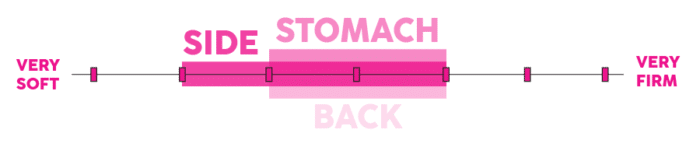
There can certainly be some overlap when you consider personal preference and body weight, but these are good guidelines to get started. The most important thing to remember is maintaining spinal alignment.
If you frequently wake up with back pain, that could be a sign that your spine isn’t staying in proper alignment throughout your sleep.
#2. Body Weight
In general, lightweight sleepers prefer softer mattresses since they engage with less of the comfort material. A sleeper under 150 pounds is not providing a high amount of pressure at any point of the mattress. Because their weight is lighter, they require mattress materials that “give” more easily in order to achieve ideal spinal alignment.
As a general rule, lightweight side sleepers often prefer softer mattresses than lightweight stomach or back sleepers.

Moderately weighted sleepers have the widest firmness preference range. The most common firmness preference is a 6 out of 10, where 10 is the most firm. If you’re not sure what firmness you need and you are of moderate weight, a medium-firm feel is likely the right target for you.
Again, similar to lightweight sleepers, side sleepers may prefer something slightly softer than back or stomach sleepers. Sleeping on your side provides more pushback, so you’ll need materials with a bit more “give” to achieve ideal pressure relief.

Heavyweight sleepers typically need a firmer mattress. With the highest amount of weight pushback, heavy-weight sleepers need a mattress with materials that can provide sufficient resistance.
Spinal alignment is the recurring theme here, but in order to maintain that spinal alignment with a heavier sleeper, materials will generally need to be zoned, reinforced, or specifically designed for plus-sized sleepers.
Need More Help?
Having trouble nailing down your ideal mattress firmness? We would love to help you figure out your ideal preferences.
Click here to fill out our 2-minute mattress quiz. With a few quick answers, we will have everything we need to make a custom mattress recommendation for you.
FAQs
What is the most popular firmness for a mattress?

Medium-firm is the most popular mattress firmness. Most mattress brands place medium-firm at a 6 out of 10 on the firmness scale, where 10 is the most firm. 72% of sleepers prefer a firmness in the 5-7 range (based on a survey of 36K sleepers).
Very few sleepers need a very soft or very firm mattress. As a result, medium, medium-firm, and slightly firm mattresses meet the needs of the vast majority of sleepers.
What firmness is best for side sleepers?

Side sleepers do best with a mattress that is a medium to medium-firm feel, which is a 5-6 firmness on our scale. Lighter-weight side sleepers may go as soft as a 4 firmness. Heavier side sleepers may go as high as 7 firmness, but I wouldn’t recommend higher.
Firmness beyond that can create support issues and spinal alignment problems. The vast majority of side sleepers should choose a medium to medium firm feel.
What firmness is best for back sleepers?

Back sleepers need a medium-firm to slightly firm feel, which is a 6-7 firmness on our scale. Lighter-weight back sleepers may go as low as a 5 firmness, but should not go much softer. Heavier-weight back sleepers may go as firm as an 7-8.
Back sleepers need enough pressure relief to create a comfortable sleeping surface, but otherwise are looking for a highly supportive mattress.
What firmness is best for stomach sleepers?

Stomach sleepers need a medium-firm to firm feel, which is a 6-8 firmness on our scale. Lighter-weight stomach sleepers may choose a firmness as soft as a 5, but should not go softer than that. Heavier-weight stomach sleepers may prefer a firmness up to an 8, but in general, shouldn’t go firmer. Any firmer, and you begin to experience a lack of pressure relief.
Stomach sleepers need a mattress that creates excellent support so as to keep the spine in a flat alignment while lying on the stomach. You also want to make sure you have a very thin pillow. Consider hanging your feet off the mattress. The combination of these factors will create the best support and a neutral spinal alignment.
How do I know if my bed is too firm?

If your mattress is too firm, you may wake with back pain, neck pain, shoulder pain, or cramps. This is often due to poor spinal alignment while you sleep.
Mattresses that are too firm most often push the spine out of a neutral alignment in a side sleeping position. This creates pressure points at night that can build into pain.
How do I know if my bed is too soft?

A mattress that is too soft may sink too much, contour too deeply, and leave you feeling unsupported. Similar to a mattress that is too firm, a mattress that is too soft can also cause improper spinal alignment.
This can result in waking up with lower back pain, shoulder pain, and/or neck pain.
Is it better to sleep on a firm or soft mattress?
The best mattress for you depends on your body weight, sleeping position, and personal preference. Generally, heavier sleepers require a firmer mattress, and lighter sleepers prefer a softer mattress. Side sleepers often like softer mattresses as well and back or stomach sleepers prefer something firmer.
What firmness of mattress do hotels use?
Hotel mattresses are typically medium to medium-firm to appeal to the widest range of sleepers.
How do you make a soft bed harder?
To change the firmness of a mattress without buying a completely new mattress, consider adding a mattress topper. Adding a topper can help make a soft bed feel firmer as well as make a firm bed feel softer. While this may not change the overall support of the mattress, it can help to improve the feel.