Best For
- Great pressure relief and traditional memory foam feel
- Excellent cooling despite being an all-foam mattress
- Limited motion transfer, good for couples who are sensitive to movement
Considerations
- Very slow material recovery speed
- Very low bounce doesn’t do this mattress any favors for the sex score
- $175 return fee if you decide to send the mattress back
Our Verdict
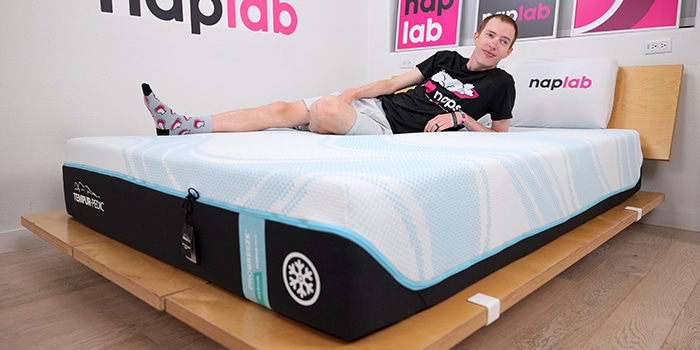
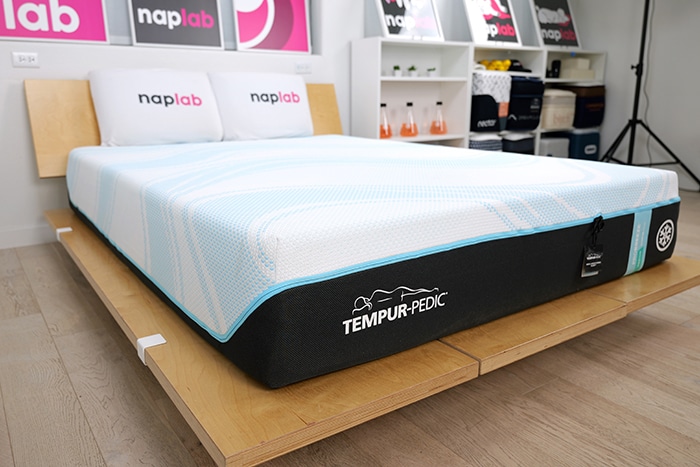
The Tempurpedic Pro Breeze is an 11.75″ memory foam mattress made of a blend of memory foam and poly foam. It has a thin cover and is an all-foam construction. The Pro Breeze is also available in a hybrid version.
The Tempurpedic Pro Breeze (all-foam) is available in one firmness level, Medium, which has a medium-firm feel. In our tests, this mattress had a firmness of 6 out of 10, where 10 is the most firm.
This mattress has minimal sinkage and very low levels of bounce. The level of contour on this mattress is pretty dramatic and sensitive sleepers may find that they feel a bit “stuck”. That said, if you are looking for a more traditional memory foam feel, the extra contour may be a good thing for some sleepers.
In our performance tests, this mattress earned an overall score of 8.45, ranking the mattress in the bottom 36% of all mattresses tested to date.
The Tempurpedic Pro Breeze is $4,399 for a queen-sized mattress, which is significantly more expensive than the average memory foam mattress we’ve tested. Among all memory foam mattresses tested, the average price is $1,031, so the Pro Breeze is over three times the average cost.
While the Pro Breeze excellent in terms of pressure relief, motion transfer, edge support, and cooling, it struggles with response time, sex, and company. If Response, sex, and company terms aren’t as important to you then you may be able to overlook those weaknesses, especially if you prefer the classic and dramatic body contouring hug that Tempurpedic’s memory foam is known for.
Type: Memory Foam
Firmness: Medium-Firm (6)
Best For: All Sleeping Positions, All Body Weights

In This Review
Performance Tests | Firmness | Support & Sleeping Positions | Design | Materials | Comparisons | FAQs
Performance Tests
At NapLab, we put each mattress to the test.
We test 10 different factors that impact the performance, comfort, and feel of the mattress. We then take the results of those tests and compare them to every mattress we’ve tested to date.
Check out the full performance table below to see how this mattress ranks:
| Factor | Tempurpedic Pro Breeze | Average |
|---|---|---|
| Overall Score | 8.45 | 8.52 |
| Price (Queen) | $4,399 | $1,032 (Memory Foam only) |
| Cooling – Score | 9.0 | 8.6 |
| Sinkage – Depth | 1.89″ | 2.25″ |
| Sinkage – Feel | Minimal | Moderate |
| Motion Transfer – Score | 9.3 | 8.2 |
| Motion Transfer – Acceleration | 6.56 m/s² | 8.77 m/s² |
| Response Time – Score | 5.9 | 8.8 |
| Response Time – Mostly Recovered | 0.8 sec. | 0.4 sec. |
| Response Time – Fully Recovered | 2.5 sec. | 1.0 sec. |
| Bounce – Height | 4.38″ | 8.69″ |
| Bounce – Feel | Very Low | Moderate |
| Edge Support – Score | 9.4 | 8.7 |
| Edge Support – Sitting | 3.25″ | 3.84″ |
| Edge Support – Lying | Excellent | Good |
| Sex – Score | 6.8 | 8.2 |
| Pressure Relief – Score | 10 | 8.6 |
| Comfort Layer Thickness | 3.75″ | 4.35″ |
| Mattress Thickness | 11.75″ | 12.32″ |
| Off-Gassing – Score | 8.1 | 8.0 |
| Off-Gassing – Smell | Strong | Strong |
| Off-Gassing – Days | 7 days | 7 days |
| Company – Score | 6.4 | 8.8 |
| Trial | 90 nights | 192 nights |
| Warranty | 10 years | 40% have lifetime warranties, average of other 60% of mattresses is 13 years |
How is Tempurpedic Pro Breeze Different?
The Tempurpedic Pro Breeze is a 11.75″ memory foam mattress with an overall performance level that is slightly lower than average, and the price is significantly higher than the average (over 3 times more than the average memory foam mattress).
Advantages
Specific advantages of the Pro Breeze include better cooling performance, limited motion transfer, great edge support, and exceptional pressure relief. It has a 3.75″ comfort layer, which is thinner than the average, but pressure relief is fantastic (10/10).
Neutral Factors
This mattress has minimal sinkage and very low bounce. As you lie on the Pro Breeze for longer, the sleeper will engage more deeply with the layers, as traditional memory foam tends to do.
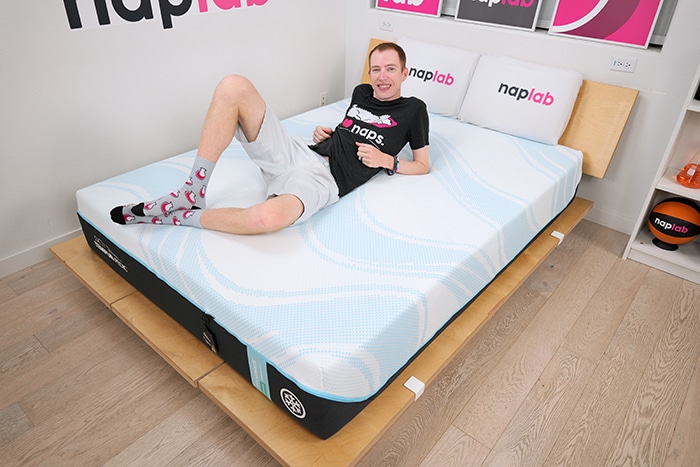
The Pro Breeze has a dramatic contour that some sleepers will love, but other sleepers may hate. If you want your mattress to “hug you”, this type of contour could be a great fit for you.
Disadvantages
Disadvantages of the Pro Breeze include a very slow material response time and lower sex score. The low bounce hurts intimacy, but again, this is certainly more common with traditional memory foam mattresses.
I will add that Tempurpedic also has a lower company score. It has a shorter trial period (90 nights) and a shorter warranty (10 years). In addition, if you decide that you want to return your Pro Breeze, it’s going to cost you $175, which is among the most costly return we’ve seen to date.
Cooling Test
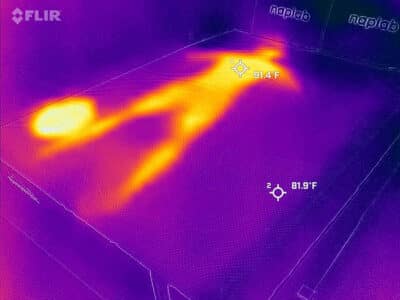
The Tempurpedic Pro Breeze has excellent cooling. During our tests, I did not feel any significant level of heat retention around my body.
Baseline Temp.
78.5° F
Max. Temp.
91.4° F
Ending Temp.
82.3° F
Arguably, the most impactful cooling feature is the cooling cover. The cover is thin, non-quilted, and woven with cooling fibers.
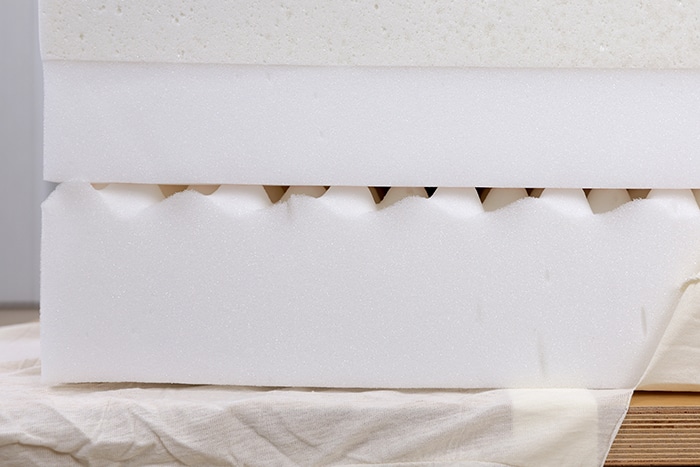
The cover creates a notable cool-to-the-touch feel, and the thin design helps to improve breathability and airflow. In addition, the support layer on the base is a convoluted foam, which has airflow channels cut into the foam.
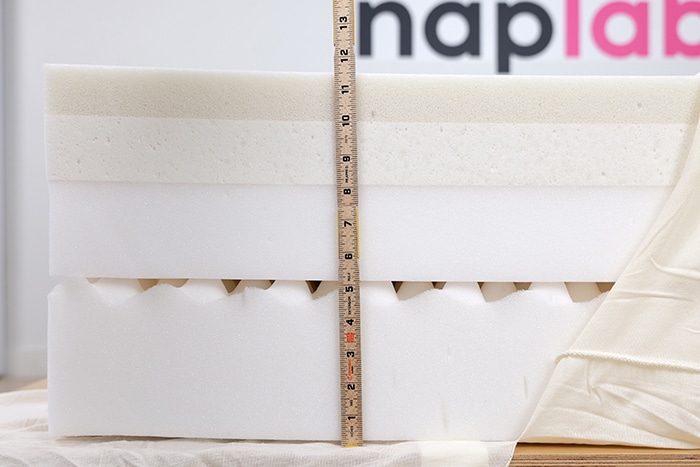
These air channels help to improve breathability and cooling.
Max. Temp.
Ending Temp.
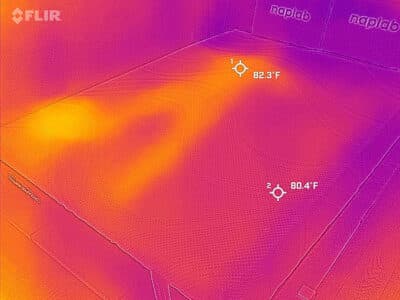
- Baseline Temperature – the temperature of the mattress before anyone lies on it
- Maximum Temperature (0 minute) – the temperature of the mattress after lying on it for 15 minutes
- Ending Temperature (5 minute) – the temperature of the mattress after being lied upon and having no one on it for 5 minutes
While these design and material choices are absolutely helping, it’s also clear that cooling performance didn’t rise to the same performance level as the more expensive Tempurpedic Luxe Breeze (that we recently tested here).
The all-foam design of the Pro Breeze model seems to struggle a bit more with breathability, and the cooling feel of the cover wasn’t quite as high-performance as the Luxe Breeze.
To be fair, we tested the hybrid version of the Luxe Breeze. I would expect the hybrid version of the Pro Breeze would have better cooling performance.
In our objective temperature tests, we measured a max surface level temperature of 91.4° F. This is 1.2° warmer than the average of 90.2° F, based on all of our tests to date.
After getting off the mattress, the temperature declined by 6.2 degrees from minutes 0 to 1, which is 1.4 degrees cooler than the average 0 to 1 minute decline of 4.8 degrees.
Heat Dissipation Over Time
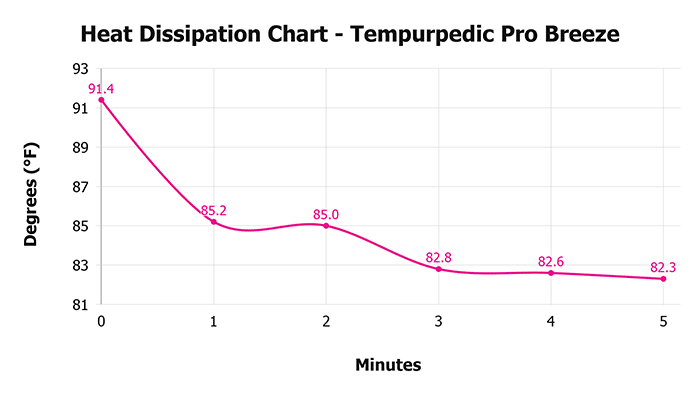
When we consider the combination of objective data, my subjective experiences, and an analysis of the materials, I’m confident in my view that cooling is excellent.
Sinkage Test
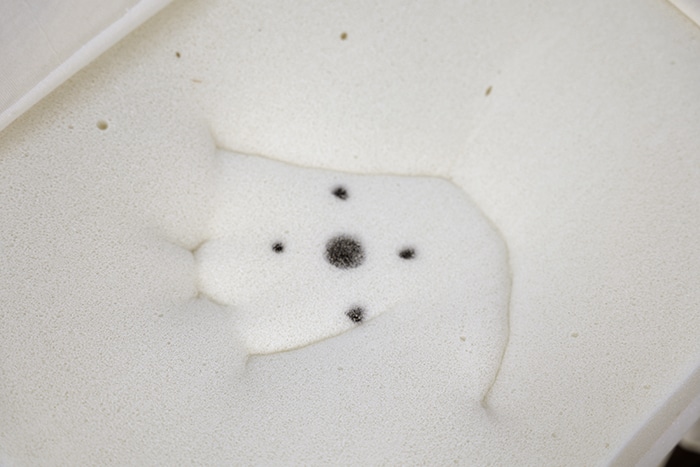
The Tempurpedic Pro Breeze has minimal sinkage. During our tests, we measured a pressure point sinkage depth of 1.89″. This is 0.37″ less sinkage than the average sinkage depth of 2.26″, based on all of our tests to date.
Sinkage Depth
1.89″
Sinkage Feel
Minimal
Body Contour
Dramatic
The level of sinkage is documented in the image below.
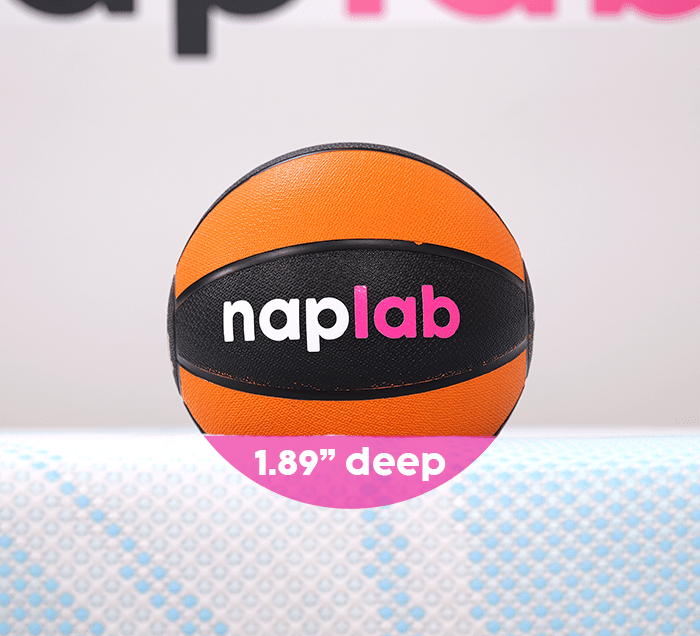
The mattress creates a dramatic body contouring hug, while at the same time also creating more of a floating feel. The minimal sinkage means the body simply doesn’t sink very deeply into the mattress. Instead, the body lies more “on” the mattress as opposed to sinking down “in” the mattress.
This more buoyant feel helps to avoid an excessive hug around the body, which is useful in a memory foam mattress.
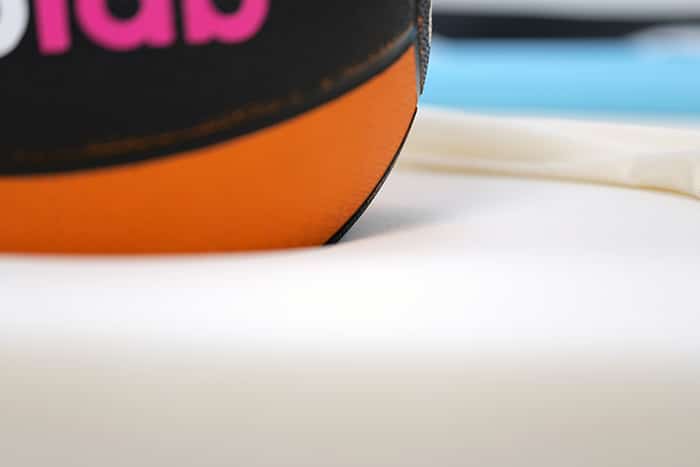
While the sinkage depth is more restrained, this is still fundamentally a memory foam mattress with a classic memory foam feel. That simply means we have a more dramatic and exact hug around the body, as the foams form to the precise shape of your body.
This feel is neither good nor bad, but it is a more specific and polarizing feel. To be comfortable on this mattress, you’ll need to strongly prefer the feel of classic memory foam: slower response, dramatic hug, and a more buoyant feel.
Motion Transfer Test
The Tempurpedic Pro Breeze has a very low level of motion transfer. During our tests, we measured a total acceleration range of 6.56 m/s². This is 25% less motion transfer than the average of 8.78 m/s².
Accel. Range
6.56 m/s²
Motion Duration
0.95 seconds
Memory foam mattresses typically create less motion transfer and that’s exactly what we measured here as well.
The more traditional and classic memory foam feels highly viscoelastic and has a slow material recovery speed. These material attributes are able to greatly mitigate energy and bounce, thereby minimizing motion transfer.
The level of motion transfer is also documented in the video below.
In our motion transfer chart, which visualizes our accelerometer data, we can see the highest motion peaks from 0 to 0.18 seconds. Motion begins to gradually decline thereafter.
By 0.95 seconds, we’ve returned to near-zero levels of energy, which is 0.05 seconds longer than the average motion duration of 0.90 seconds.
Motion Transfer Over Time
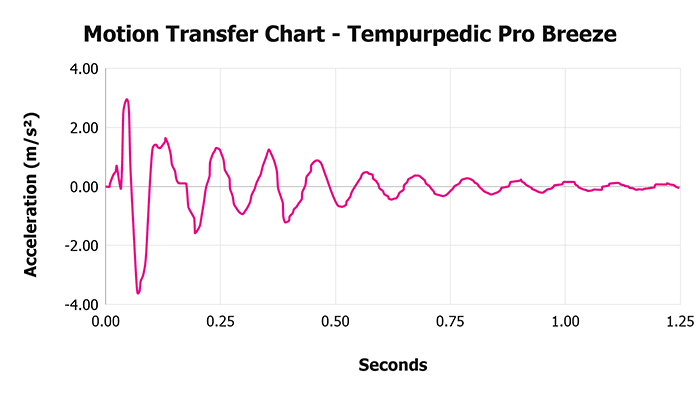
While motion duration is a whisper beyond the average, the motion intensity is considerably better than average. Overall, I’m more than pleased with this level of motion transfer and expect most sleepers will find it more than satisfactory.
Response Test
The Tempurpedic Pro Breeze has a slow mostly recovered response time and a very slow fully recovered response time.
Mostly Recovered
0.8 sec.
Fully Recovered
2.5 sec.
In our mostly recovered test, we measured a recovery speed of 0.8 seconds, which is 0.38 seconds slower than the average of 0.42 seconds, based on all of our tests to date.
In our fully recovered responsiveness test, we measured a recovery speed of 2.5 seconds, which is 1.47 seconds slower than the average of 1.03 seconds. The Pro Breeze is ranked #21 among the slowest-responding mattresses we’ve tested to date (there are 414 mattresses that respond faster).
The level of responsiveness is documented in the video below.
Tempurpedic uses a more classic and traditional feeling memory foam. That type of memory foam has more viscoelastic properties, which slows the responsiveness and material recovery speed.
This slower material recovery speed makes this mattress harder to move around, change positions, and get in / out of bed.
That negative impact is somewhat blunted by the minimal sinkage depth. Nevertheless, I still found it more difficult to move around on this mattress compared to most others we’ve tested.
Bounce Test
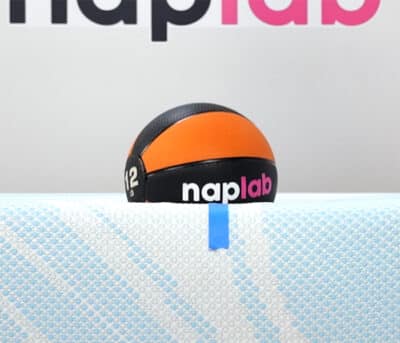
The Tempurpedic Pro Breeze has a very low level of bounce. During our tests, we measured a total bounce height of 4.38″. This is 4.31″ less bounce than the average of 8.69″, based on all of our tests to date.
Max. Depth
3.26″
Max. Rebound
1.12″
Total Bounce
4.38″
The considerably lower-than-average bounce is the product of the all-foam design and dense, thick memory foam layers.
Memory foam, but especially more traditional-feeling memory foam, has more viscoelastic properties and a slower material recovery speed.
These attributes do a great job at absorbing energy, which means there is simply less energy that can be returned as bounce.
The lower bounce is a major reason why motion transfer is so low.
Max. Sinkage Depth
Max. Bounce Height
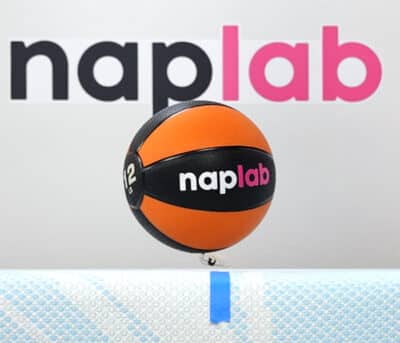
The level of bounce is also documented in the video below.
However, that lower bounce also means sex performance and ease of movement are negatively impacted.
When thinking about the Pro Breeze, you should consider what’s most important to you: lower motion transfer or better ease of movement and sex performance?
Edge Support Test
The Tempurpedic Pro Breeze has excellent sitting edge support and excellent lying edge support.
Max. Sinkage
3.25″
Lying Support
Excellent
Reinforced Edge
No
In our sitting edge support test, we measured a sitting sinkage compression of 3.25″. This is 0.59″ less sitting sinkage than the average of 3.84″, based on all of our tests to date.
The level of edge support while seated is documented in the images below.
Sitting, 140 lbs.

Sitting, 200 lbs.
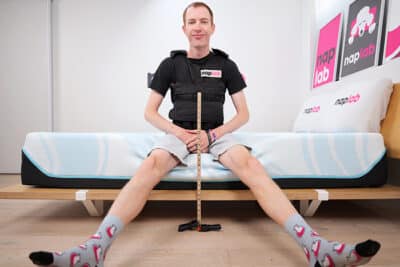
While lying directly on the edge of the mattress, I felt that the support was excellent in all sleeping positions. Notably, the all-foam version (which is the model we tested) of the Pro Breeze does not have any type of reinforced support foam along the perimeter of the mattress.
However, the hybrid version of the Pro Breeze is equipped with a perimeter-reinforcing support foam.
Certainly, I would have liked to have a reinforced support foam in the all-foam version. Given the price point, I think that’s a reasonable design choice to look for. To be fair, it’s pretty rare to see reinforced edge foam in an all-foam mattress.
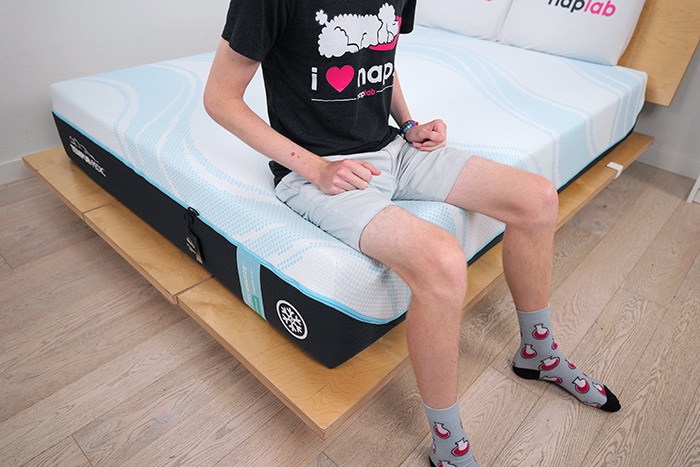
In addition to the lack of reinforced support foam, the thick memory foam layers in this mattress are also slightly negatively impacting edge support. Memory foam creates a high degree of body contouring and hug. While lying in the middle of the mattress, that hug is ideal.
However, along the edge where we don’t have enough material to fully support and contour the body, that same contouring hug can create a slight weakening of edge support.
The level of edge support while lying is documented in the images below.
Lying on Edge, 140 lbs.
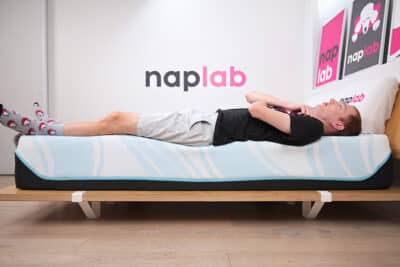
Lying on Edge, 200 lbs.
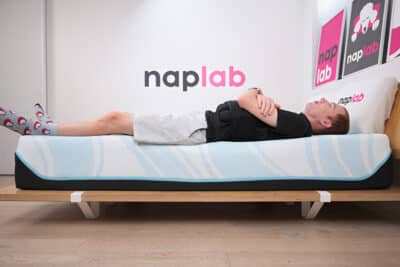
This isn’t a problem exclusive to Tempurpedic, but rather most memory foam mattresses. All that said, and to be fair, both sitting and lying edge support are better than average on the Pro Breeze.
Could edge support be slightly better with a reinforced foam along the perimeter? Probably so. And yet, for most sleepers this level of edge support should be more than satisfactory.
Sex Test
The Tempurpedic Pro Breeze has mediocre sex performance. On the positive side, noise is minimal, pressure relief is outstanding, and both cooling and edge support are excellent.
In our sitting edge support test we measured a sitting sinkage compression of 3.25”. This is better than average and means we have an edge that’s supportive enough for amorous activities.
While 4 of the 5 sex testing categories were excellent or outstanding, bounce struggled greatly. In our bounce tests, we measured just 4.38” of total bounce height.
This is considerably less bounce than average. In the world of sex, more bounce is almost always better.
| Sex Factor | Factor Weight | Score | Rating |
|---|---|---|---|
| Bounce | 65% | 5.2 | Very Low |
| Edge Support | 20% | 9.7 | Excellent |
| Noise | 5% | 10 | Minimal |
| Pressure Relief | 5% | 10 | Outstanding |
| Cooling | 5% | 9.0 | Excellent |
The more restrained level of bounce simply makes sex more strenuous, tiring, and less fun. That’s especially true in a case like this where the dense and thick memory foam layers return such a low level of bounce.
Overall, sex performance simply leaves much to be desired on this mattress.
Pressure Relief Test
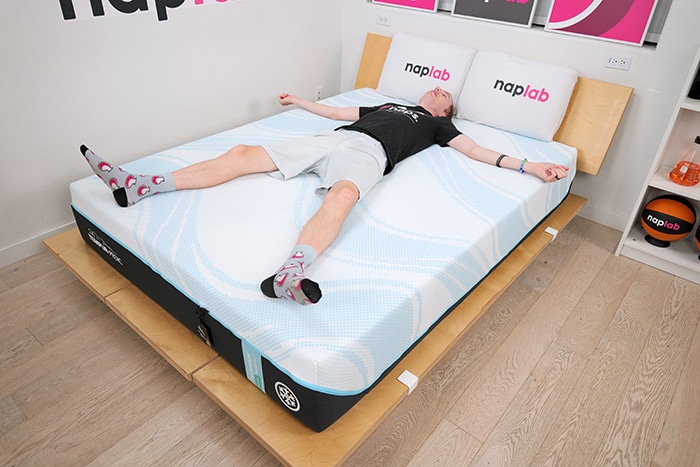
The Tempurpedic Pro Breeze has an outstanding level of pressure relief. During our tests, I felt no significant pressure points on my body. Quite the opposite, I found this mattress to be incredibly comfortable to lie on, even for extended periods of time.
Comfort Layer
3.75″
Support Layer
8.00″
The mattress is equipped with 3.75″ of comfort material, which is 0.57″ less comfort material than the average comfort layer thickness of 4.32″, based on all of our tests to date.
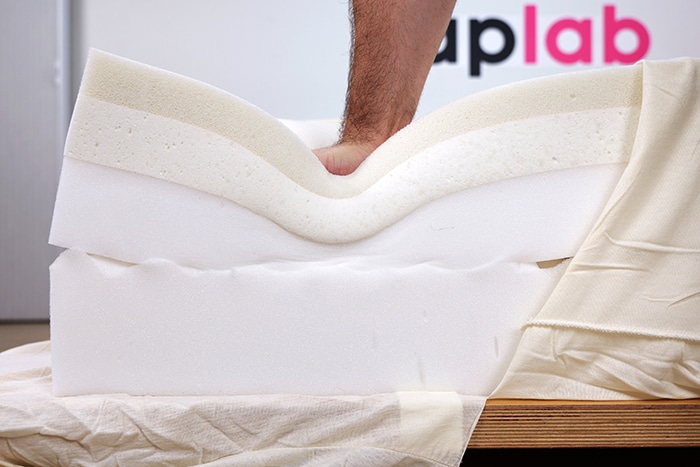
While the comfort layer is slightly thinner than average, the quality of the comfort foams is outstanding.
In our foam density tests, we measured a density of 5.00 PCF and 4.47 PCF for the memory foam layers. In general, higher is better, but ideally, I want to see at least a 2.5 PCF for memory foam.
These foams far exceed that and, as such, give me great confidence in their ability to remain comfortable, durable, and sag-free over a long period of time.
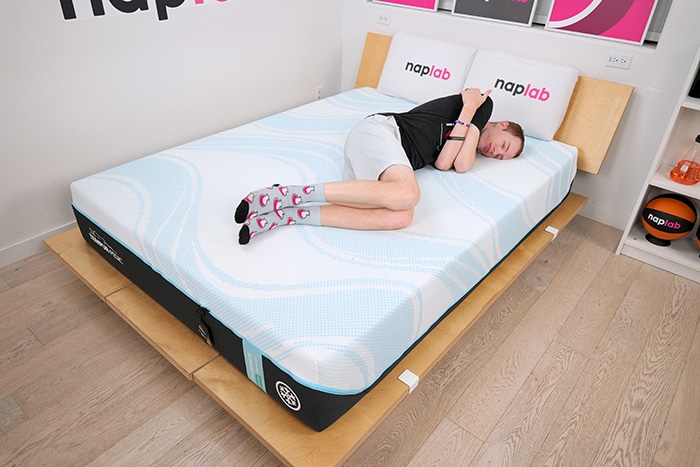
The Pro Breeze uses a thin, non-quilted cover that creates more direct and intense engagement with the memory foam layers below. Which is sort of the whole point of this mattress.
It’s for those who really love the feel of memory foam and want to experience that dramatic, exacting, and precise contouring hug around the body.
In our objective pressure mapping tests, we measured a max PSI of 0.89, which is within the 1.0 PSI threshold I want to see all mattresses within.
Pressure Map – Side Sleepers
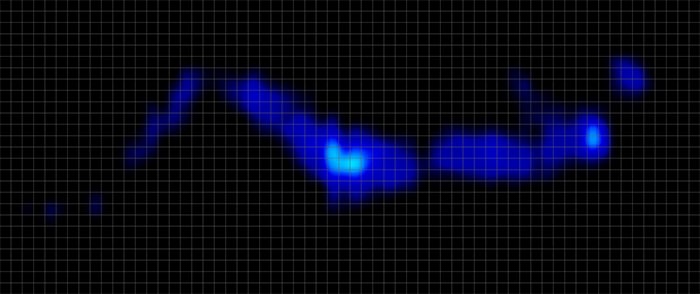
| Pressure Relief (PSI) | Average | Maximum |
|---|---|---|
| Side Sleepers | 0.11 | 0.89 |
Pressure Map – Back Sleepers
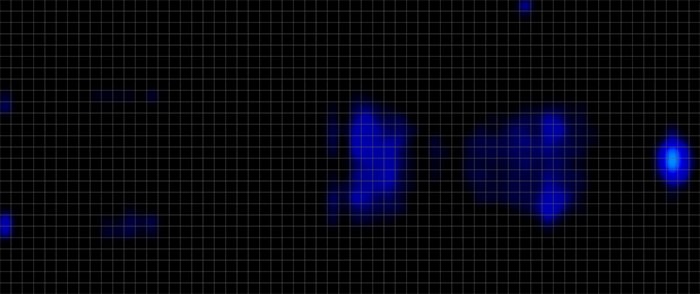
| Pressure Relief (PSI) | Average | Maximum |
|---|---|---|
| Back Sleepers | 0.07 | 0.58 |
Pressure Map – Stomach Sleepers
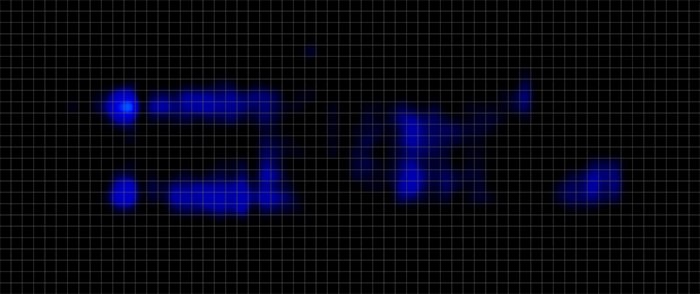
| Pressure Relief (PSI) | Average | Maximum |
|---|---|---|
| Stomach Sleepers | 0.06 | 0.46 |
When I consider our objective pressure mapping tests, material thickness, material quality, and my subjective experience on the mattress, I’m confident most sleepers will find the pressure relief to be outstanding.
Off-Gassing Test
The Tempurpedic Pro Breeze had a strong smell upon the initial arrival. The mattress smelled for 7 days. This is 0.4 days shorter than the average smell duration of 7.4 days.
Initial Smell Strength
Strong
Off-Gassing Period
7 days
Company
Tempurpedic mattresses come with a 90-night trial period and a 10-year warranty. Shipping is free. Returns are $175.
The return fee is a pretty big strike against Tempurpedic, simply because return fees at this level are more unexpected to see. Among over 400+ mattresses that I’ve tested, only 3.5% of mattresses have a return fee of $175 or higher. And 77.5% of mattresses have completely free returns.
| Company Factor | Factor Weight | Score | Data |
|---|---|---|---|
| Returns | 40% | 5.0 | $175 |
| Trial Period | 30% | 6.0 | 90 nights |
| Warranty | 20% | 8.0 | 10 years |
| Shipping | 10% | 10 | $0 |
| Country of Origin | 0% | USA |
Comparing 116+ brands tested to date, the average trial period is 192 nights, over 100 nights longer than Tempurpedic offers.
Lastly, the average warranty is 13 years, which is 3 years longer than Tempurpedic’s 10-year warranty. And that’s if we exclude the 42% of mattresses that offer lifetime warranties.
Given the premium price of this mattress, I think it’s fair to expect more consumer-friendly terms than this.
How firm is Tempurpedic Pro Breeze?
The Tempurpedic Pro Breeze comes in one firmness option—Medium, which is a 6 out of 10 in our tests.

This mattress is also available in a Medium Hybrid version that has a similar medium-firm feel. Instead of being all-foam, the support base of the Hybrid version is a pocketed coil system.
Support & Sleeping Positions
Support on the Tempurpedic Pro Breeze is outstanding. During our tests, I felt well supported in all sleeping positions. The mattress is equipped with an 8.0″ support layer.
This is 0.02″ thicker than the average support layer thickness of 7.98″, based on all of our tests to date.
For a mattress to create ideal support, it needs to keep the spine in a neutral alignment, while also creating plenty of comfort and pressure relief. The Pro Breeze passed both of these tests without any issues.
| Support Factor | Data |
|---|---|
| Comfort Layer | 3.75″ |
| Support Layer | 8.00″ |
| Firmness | Medium-Firm |
| Body Contour | Dramatic |
| Zoned Support | No |
| Reinforced Edge | No |
The mattress is available in medium and medium hybrid variants. We tested the medium variant (which is an all-foam design) and found it to have a medium-firm feel, 6 out of 10 on our firmness scale.
We would expect the medium hybrid to have a similar firmness level. The medium-firm feel is ideal for all sleeping positions and the vast majority of sleepers. It creates a balance of support and comfort that works well for most sleepers.
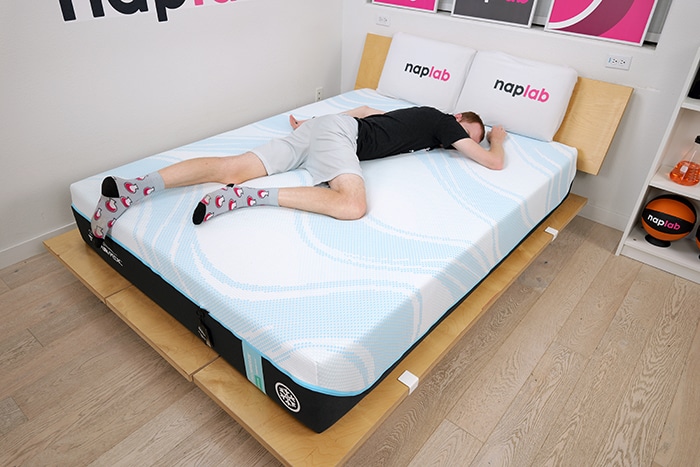
Lastly, in our foam density tests, we measured a 5.00 PCF for the top memory foam and a 4.47 PCF for the 2nd memory foam layer. These are well within the best and highest quality tier of memory foam we’ve tested.
Check out the table below to see the sleeper weights and sleeping positions that would be best suited for this mattress.
Medium (All-Foam)
| Sleeper Weight | Stomach Sleeper | Side Sleeper | Back Sleeper |
|---|---|---|---|
| Under 150 lbs. | Yes | Yes | Yes |
| 150-250 lbs. | Yes | Yes | Yes |
| 250-300 lbs. | Yes | Yes | Yes |
Medium Hybrid
| Sleeper Weight | Stomach Sleeper | Side Sleeper | Back Sleeper |
|---|---|---|---|
| Under 150 lbs. | Yes | Yes | Yes |
| 150-250 lbs. | Yes | Yes | Yes |
| 250-300 lbs. | Yes | Yes | Yes |
Higher density foams typically last longer, sag less, and perform better. While Tempurpedic mattresses are indeed expensive, they are also made with high-quality, high-density foams that will last.
Based on all of my tests to date, an analysis of the materials, and my subjective experiences, I’m confident most sleepers will find support on the Tempurpedic Pro Breeze is outstanding.
Design
The Tempurpedic Pro Breeze is an 11.75″ memory foam mattress that comes in a single firmness—Medium-Firm. There is an all-foam version (which we tested) and a hybrid version.
| Design Factor | Data |
|---|---|
| Type | Memory Foam |
| Thickness | 11.75″ |
| Cover Type | Thin |
| Weight | 122 lbs. |
| Has Handles | No |
| Fiberglass-Free | Yes |
| Ships in a Box | No |
It has a thinner profile, only 11.75″ thick, with a thin cover and lacking handles on the sides of the mattress. In my view, this is the quintessential example of a traditional memory foam mattress.
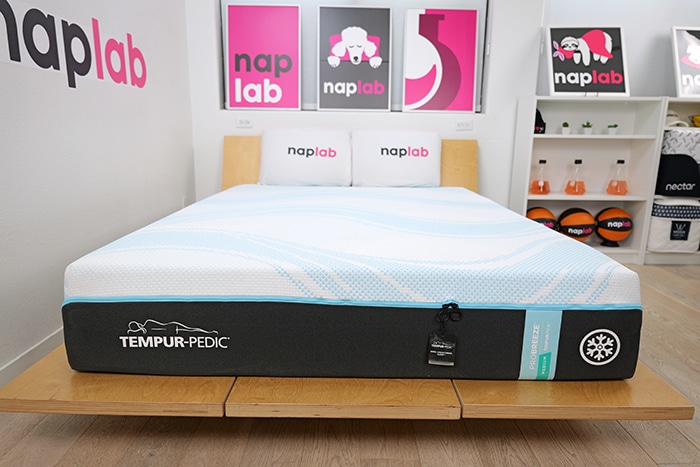
Materials
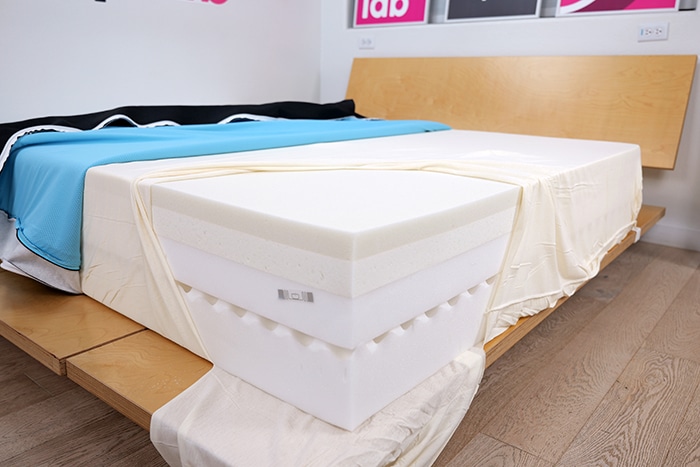
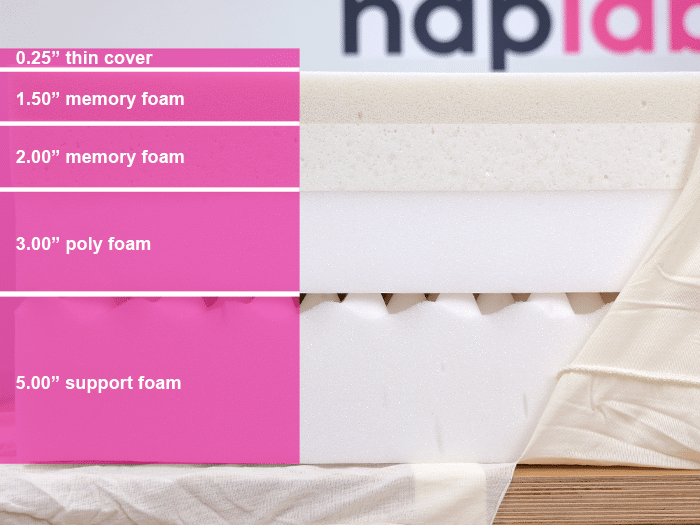
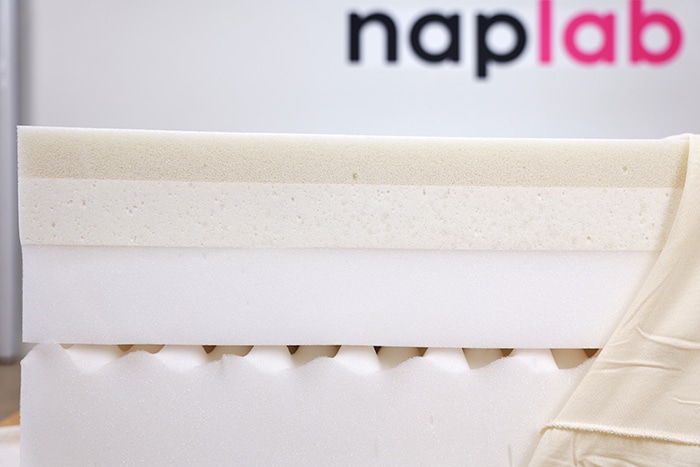
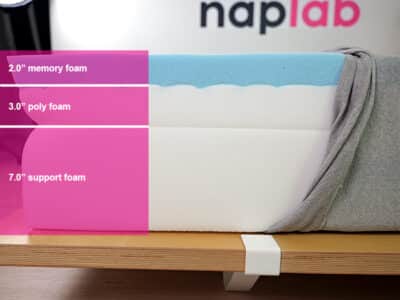
The Tempurpedic Pro Breeze is 11.75″ thick and contains different types of foams, primarily with a classic memory foam feel. From top to bottom, here is a full list of the materials used in this mattress:
| Layer Type | Thickness | Manufacturer’s Specs | Tested Specs |
|---|---|---|---|
| Thin Cover | 0.25″ | Not Available | Not Available |
| Memory Foam | 1.50″ | Not Available | 5.00 PCF |
| Memory Foam | 2.00″ | Not Available | 4.47 PCF |
| Poly Foam | 3.00″ | Not Available | 1.67 PCF |
| Support Foam | 5.00″ | Not Available | 1.64 PCF |
The Law Tag outlines the full breakdown of materials included in this mattress.
- Materials
- 56% Visco Elastic Polyurethane Foam Pad
- 44% Polyurethane Foam Pad
- Made For: Tempurpedic Management LLC 1000 Tempur Way
- Lexington, KY 40511
- Finished Size: 80 X 60 X 12
- Net Weight Of Filling Materials 86 lbs.
- Made In: USA
- Manufacture By: Tempur production USA LLC 12907 Comfort Way Albuquerque, NM 87120
- Date Of Manufacture: L1 12/04/2025 10:33:33 PM
- Model: ProBreeze 2.0 Med Q
- Prototype ID: K3A7
The Cover
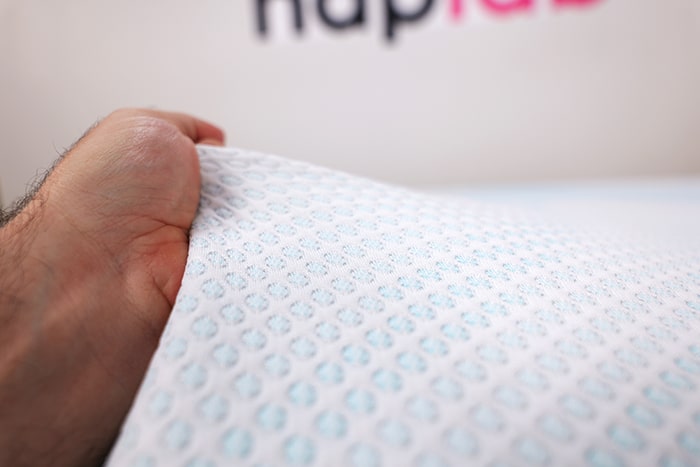
The Tempurpedic Pro Breeze has a 0.25″ thin cover that is integrated with cooling fibers, which gives the mattress a cool-to-the-touch feel.
This cover is removable and machine washable, which also helps with keeping your mattress cover clean.
The Comfort Layer
The comfort layer is 3.75″ thick and includes the cover and two layers of foam. Directly below the 0.25″ cover is a 1.5″ memory foam followed by a 2.0″ memory foam.
The Support Layer
The support layer is 8.00″ thick and made of two layers of foam. Acting as a bit of a transitional layer, there is a 3.0″ poly foam below the memory foam layers, which can ease pressure points between comfort layers and support layers.
Lastly, there is a 5.0″ convoluted support foam. This foam sits at the base of the mattress and is designed to support the comfort materials above.
Product Evolution
Tempurpedic first started selling mattresses in 1992. The original Tempurpedic memory foams were more traditional by today’s modern standards.
They were extremely slow to respond, slept hot, had very little bounce, and created dramatic contour.
Today, Tempurpedic manufactures a mix of all-foam and hybrid mattresses. The hybrids contain a pocketed coil base, which helps create faster response time and better edge support.
But concerning the Pro Breeze model we tested here, it maintains more of the traditional feel that Tempurpedic’s were originally known for, with the exception of having better cooling.
If you’re looking for that very traditional memory foam feel, the Pro Breeze could be a good option, but if you’re worried about slow response time or feeling stuck, this mattress is likely not your best option.
Other Mattresses to Consider
Not sure if the Tempurpedic Pro Breeze is the right pick for you? Check out these three other top-rated memory foam mattresses for alternatives you may want to consider.
For Value
Novosbed
3 Firmness Options
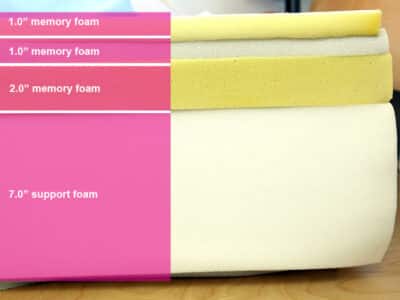
The Novosbed is an 11″ memory foam mattress available in 3 firmness levels—soft, medium-firm, and firm. This is the #1 best memory foam mattress we’ve tested to date and has minimal sinkage and low bounce. It outperforms the Pro Breeze in 5 out of 8 tests and is also under $1,000 for a queen mattress.
For Side Sleepers
Dreamcloud Luxe
Deep Sinkage, Very Low Bounce
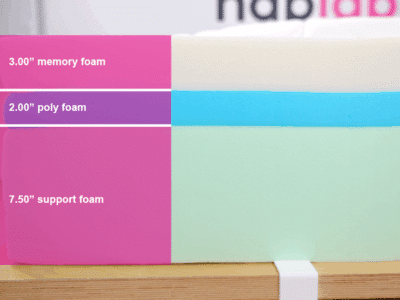
The Dreamcloud Luxe is a 14.5″ memory foam mattress available in 1 firmness level—medium-firm. This mattress has significantly deeper sinkage than the Pro Breeze, making it a better option for side sleepers who want to sleep “in” the mattress. This mattress is also comfortably under $2K for a queen.
For Faster Response
Amerisleep AS2
20 Year Warranty
The Amerisleep AS2 is a 12″ memory foam mattress available in 1 firmness level—medium-firm. It has moderate sinkage and low bounce, with a similar near-$1,000 price tag, like the Novosbed. For memory foam on a budget, the AS2 would be a great alternate to consider.
Frequently Asked Questions
Still have questions? Check out some of the top FAQs on the Tempurpedic Pro Breeze mattress below and get the answers you’re looking for.
How much does a Tempurpedic Pro Breeze mattress cost?
Here are the current prices of the Tempurpedic Pro Breeze mattress, with any sales or promotions reflected below:
Twin Long: $3,599
Queen: $4,099
King: $4,799
Cal. King: $4,799
Split King: $7,198
Split Cal. King: $7,198
*Note: Sales prices are subject to change without notice or warning.