Best For
- Low price, under $400 for a queen-size mattress
- Dramatic contour and traditional memory foam feel
- Sleepers who prefer a deeper level of sinkage
Considerations
- Slower material response time than the average mattress
- Lower sex score, may not be ideal for all couples
- Pressure relief is good, but also far from great
Our Verdict
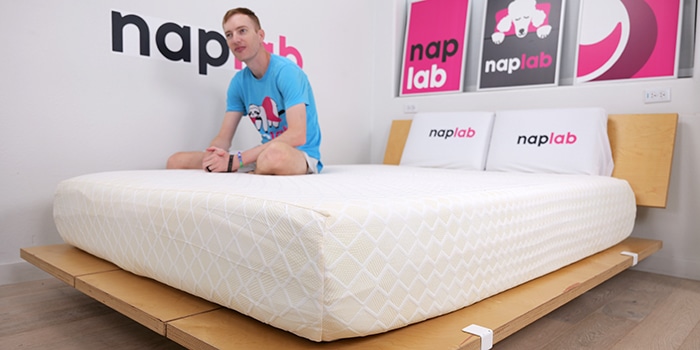
The Chime 12″ Memory Foam is a 12.00″ memory foam mattress made of memory foam and a support foam base. This all-foam design creates a mattress with a lower price tag but also lacks some advantages that we would otherwise likely see on hybrid mattresses (ie: faster material response time, better edge support, etc).
The Chime 12″ Memory Foam is available in a single firmness level — medium-firm. On our firmness scale, this is a 6 out of 10, where 10 is the most firm. For many sleepers, this is one of the most widely preferred firmness levels.
This mattress has deep sinkage and low levels of bounce. It offers a dramatic level of body contour, which provides a more exacting hug for sleepers lying on this mattress.
In our performance tests, this mattress earned an overall score of 8.03, ranking the mattress in the bottom 19% of all mattresses tested to date. If we look exclusively at memory foam mattresses, the rank does rise a little bit, scoring in the bottom 39% of all memory foam mattresses that we’ve tested. For memory foam on a budget, this is certainly not a bad pick, but it is a below average performer, considering all mattress types.
The Chime 12″ Memory Foam is $349 for a queen sized mattress, which is 69% less expensive than the average memory foam mattress. If you are on a very tight budget or looking for a short term mattress solution with a classic memory foam feel, the Chime could be worth considering, as long as you fully factor in this performance weak spots.
Type: Memory Foam
Firmness: Medium-Firm (6)
Best For: All Sleeping Positions, All Body Weights
In This Review
Performance Tests | Firmness | Support & Sleeping Positions | Design | Materials | Comparisons | FAQs
Performance Tests
At NapLab, we put each mattress to the test.
We test 10 different factors that impact the performance, comfort, and feel of the mattress. We then take the results of those tests and compare them to every mattress we’ve tested to date.
Check out the full performance table below to see how this mattress ranks:
| Factor | Chime 12″ Memory Foam | Average |
|---|---|---|
| Overall Score | 8.03 | 8.54 |
| Price (Queen) | $349 | $1,129 (Memory Foam only) |
| Cooling – Score | 8.0 | 8.6 |
| Sinkage – Depth | 2.31″ | 2.27″ |
| Sinkage – Feel | Deep | Moderate |
| Motion Transfer – Score | 8.3 | 8.3 |
| Motion Transfer – Acceleration | 8.82 m/s² | 8.78 m/s² |
| Response Time – Score | 6.3 | 8.8 |
| Response Time – Mostly Recovered | 0.8 sec. | 0.4 sec. |
| Response Time – Fully Recovered | 1.6 sec. | 1.0 sec. |
| Bounce – Height | 7.06″ | 8.59″ |
| Bounce – Feel | Low | Moderate |
| Edge Support – Score | 8.4 | 8.8 |
| Edge Support – Sitting | 4.00″ | 3.82″ |
| Edge Support – Lying | Good | Good |
| Sex – Score | 7.5 | 8.2 |
| Pressure Relief – Score | 8.0 | 8.6 |
| Comfort Layer Thickness | 2.00″ | 4.39″ |
| Mattress Thickness | 12.00″ | 12.37″ |
| Off-Gassing – Score | 8.1 | 7.9 |
| Off-Gassing – Smell | Strong | Strong |
| Off-Gassing – Days | 7 days | 8 days |
| Company – Score | 9.6 | 9.0 |
| Trial | 180 nights | 243 nights |
| Warranty | 10 years | 40% have lifetime warranties, average of other 60% of mattresses is 13 years |
How is Chime 12″ Memory Foam Different?
The Chime 12″ Memory Foam is a 12.00″ memory foam mattress with an overall performance level that is below average but paired with a price that is also significantly below average, 70% less than average for a savings of $780 on a queen-size mattress.
Advantages
The price advantage is the largest benefit you will see with the Chime memory foam mattress. The overall performance score is quite a bit less than the average, but if you’re looking for deep sinkage, dramatic contour, and slightly faster off-gassing (7 days versus an 8-day average), then the Chime memory foam could be a reasonable pick.
Neutral Factors
This mattress has deep sinkage and low levels of bounce. Both of these factors are more preferential than anything else, but this is worth mentioning here in case you have a strong opinion about what type of feel you’re looking for.
Disadvantages
There are many areas where the Chime Memory Foam fell short of our average performance level. This mattress scored below average for cooling, slower material response time, weaker edge support, a lower sex score, and disappointing pressure relief.
This mattress only has a 2.00″ comfort layer, where the average comfort layer is 4.39″ thick. All of these individual factors add up to paint a not-so-pretty picture about the overall performance of the Chime Memory Foam mattress.
Cooling Test
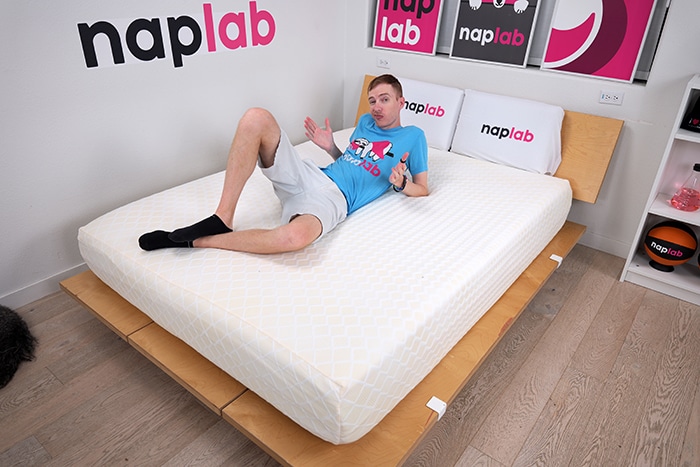
The Chime 12″ Memory Foam has good cooling. During our tests, I felt a slight level of heat retention around my body.
Baseline Temp.
79.2° F
Max. Temp.
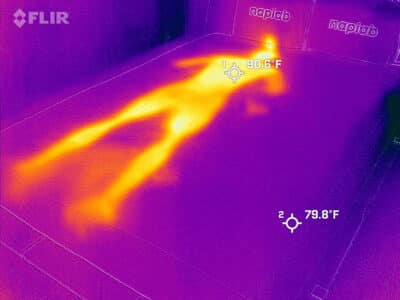
90.6° F
Ending Temp.
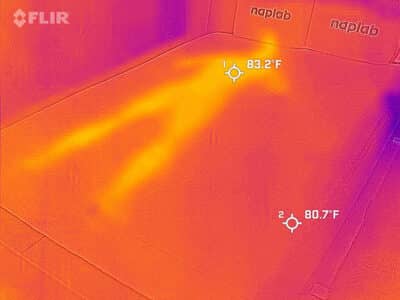
83.2° F
When we look at the material design, it’s easy to see why. First up, this is an all-foam mattress. All-foam mattress designs simply don’t breathe as well as hybrid and other mattress types that contain coils.
The more limited airflow naturally means we have a little more heat retention.
Max. Temp.
Ending Temp.
- Baseline Temperature – the temperature of the mattress before anyone lies on it
- Maximum Temperature (0 minute) – the temperature of the mattress after lying on it for 15 minutes
- Ending Temperature (5 minute) – the temperature of the mattress after being lied upon and having no one on it for 5 minutes
In addition, the comfort layer is memory foam. Memory foam typically retains more heat than poly foam and latex foam, and that’s exactly what we measured in our objective temperature tests.
In our objective temperature tests, we measured a max surface level temperature of 90.6° F. This is 0.3° warmer than the average of 90.3° F, based on all of our tests to date.
After getting off the mattress, the temperature declined by 4.6 degrees from minutes 0 to 1, which is 0.2 degrees less cool than the average 0 to 1 minute decline of 4.8 degrees.
Heat Dissipation Over Time
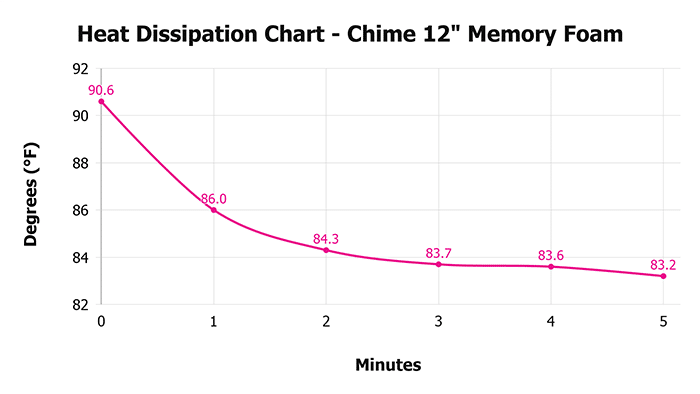
When we consider the combination of objective data, my subjective experiences, and an analysis of the materials, I’m confident in my view that cooling is good.
Sinkage Test
The Chime 12″ Memory Foam has deep sinkage. During our tests, we measured a pressure point sinkage depth of 2.31″. This is 0.04″ more sinkage than the average sinkage depth of 2.27″, based on all of our tests to date.
The mattress creates a dramatic body contouring hug.
Sinkage Depth
2.31″
Sinkage Feel
Deep
Body Contour
Dramatic
The level of sinkage is documented in the image below.
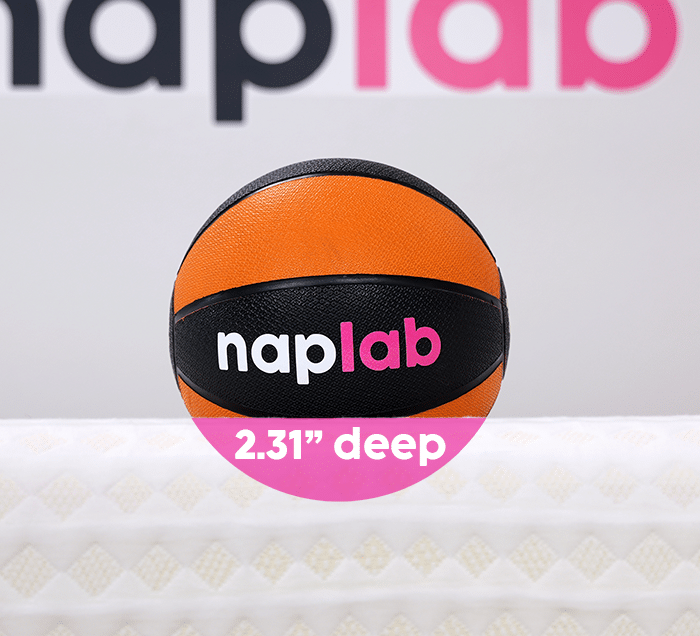
Despite the more modest sinkage depth, the mattress still creates an exacting and precise hug. The mattress uses a 2.0” memory foam as the primary and only comfort layer. This layer of foam hugs the precise shape of the body.
However, because there is only 2.0” of comfort material, the body doesn’t sink down as deeply. This helps to restrain and balance out the hug, while still maintaining a notable memory foam feel.
While there are pressure relief and comfort problems that will be created by the limited 2.0” comfort layer, at least with respect to creating a less polarizing hug, the thinner memory foam comfort layer is beneficial.
Motion Transfer Test
The Chime 12″ Memory Foam has a low level of motion transfer. During our tests, we measured a total acceleration range of 8.82 m/s². This is 0.3% more motion transfer than the average of 8.79 m/s².
Accel. Range
8.82 m/s²
Motion Duration
0.72 seconds
Typically, all-foam mattresses handle motion transfer well, and that’s exactly what we measured here also. Foam, especially memory foam, does a nice job at absorbing and dispersing energy.
The memory foam design of this mattress greatly reduces bounce, and that lower level of bounce means there is less energy that can be easily transferred from side to side on the mattress.
The level of motion transfer is also documented in the video below.
In our motion transfer chart, which visualizes our accelerometer data, we can see the highest motion peaks from 0 to 0.2 seconds. Motion declined immediately thereafter.
By 0.72 seconds, we’ve returned to near-zero energy levels, 0.20 seconds shorter than the average motion duration of 0.92 seconds.
Motion Transfer Over Time
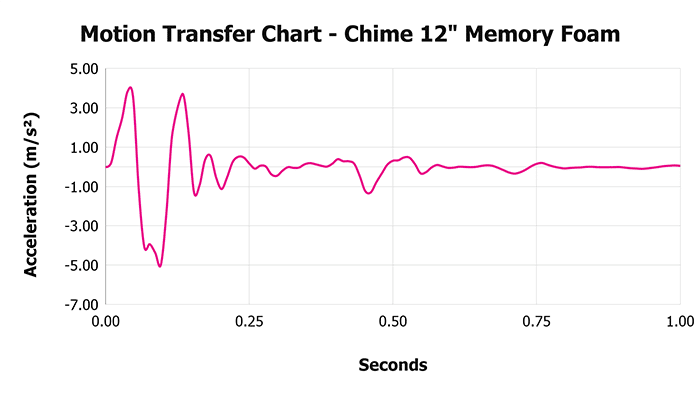
When we look at the complete picture of motion data, we see that it’s excellent. Both motion intensity and motion duration are considerably better than average. As a result, I expect most sleepers will find this level of motion transfer to be more than satisfactory.
Response Test
The Chime 12″ Memory Foam has a slow material response.
Mostly Recovered
0.8 sec.
Fully Recovered
1.6 sec.
In our mostly recovered test, we measured a recovery speed of 0.8 seconds, which is 0.38 seconds slower than the average of 0.42 seconds, based on all of our tests to date. In our fully recovered responsiveness test, we measured a recovery speed of 1.6 seconds, which is 0.58 seconds slower than the average of 1.02 seconds.
The level of responsiveness is documented in the video below.
This slower material recovery speed is a product of the all-foam design, but especially the 2.0” memory foam layer on top. Memory foam, by its nature, simply takes a little bit longer to recover to its original shape after it has been compressed. The slower responsiveness makes ease of movement worse on the mattress.
If there is a silver lining, it’s that the sinkage depth is moderate, meaning you won’t feel overly enveloped by the mattress, which can help to mitigate ease of movement issues.
Bounce Test
The Chime 12″ Memory Foam has a low level of bounce. During our tests, we measured a total bounce height of 7.06″. This is 1.52″ less bounce than the average of 8.58″, based on all of our tests to date.
Max. Depth
5.10″
Max. Rebound
1.96″
Total Bounce
7.06″
The lower bounce is a product of the all-foam design, but especially resulting from the 2.0” memory foam layer on top. Foam greatly absorbs and disperses energy. This is especially true of memory foam.
Max. Sinkage Depth
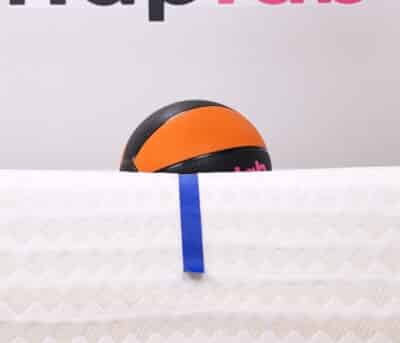
Max. Bounce Height
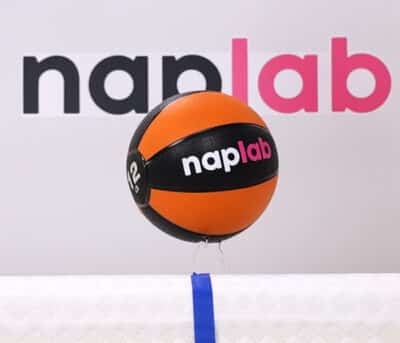
The level of bounce is also documented in the video below.
As a result, there is less energy returned to the surface as bounce. A lower level of bounce negatively impacts ease of movement and sex performance. That said, the lower bounce is also the primary reason that motion transfer is quite low as well.
Edge Support Test
The Chime 12″ Memory Foam has good sitting edge support and good lying edge support.
Max. Sinkage
4.00″
Lying Support
Good
Reinforced Edge
No
In our sitting edge support test, we measured a sitting sinkage compression of 4.00″. This is 0.18″ more sitting sinkage than the average of 3.82″, based on all of our tests to date.
The level of edge support while seated is documented in the images below.
Sitting, 140 lbs.

Sitting, 200 lbs.
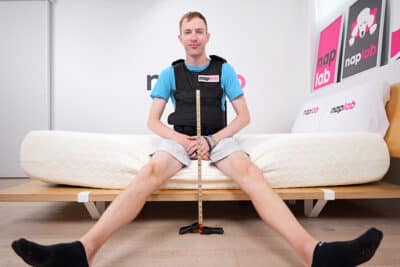
While lying directly on the edge of the mattress, I felt that the support was good in all sleeping positions. Notably, this mattress is not equipped with any type of reinforced edge support material.
The level of edge support while lying is documented in the images below.
Lying on Edge, 140 lbs.

Lying on Edge, 200 lbs.

The lack of reinforced foam, in combination with the relative quality of these material layers, sets the stage for good, but far from great, edge support. To be fair, it’s wholly unexpected for a mattress at this price point to utilize reinforced edges.
While this level of edge support has plenty of room for improvement, it’s also perfectly reasonable given the price.
Sex Test
The Chime 12″ Memory Foam has fair sex performance. First up, let’s start with the biggest pro, which was noise. We rated noise at a minimal level, so if nothing else, this is a quiet mattress for stealthier amorous encounters.
With middling performance, we have cooling, pressure relief, and edge support, all of which earned good scores, but scores that are far from great.
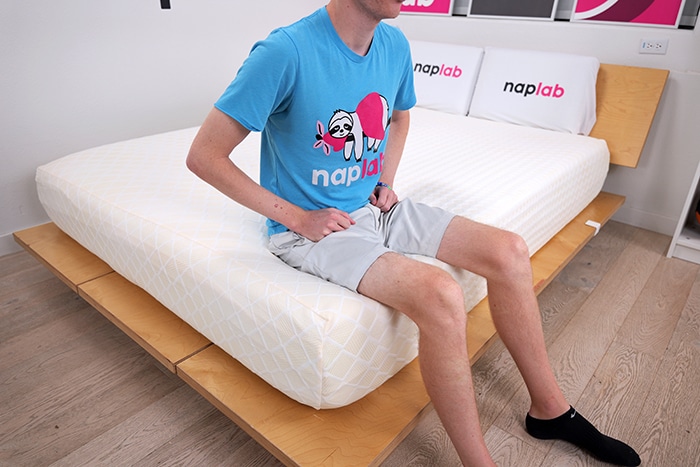
In our edge test, we measured a sitting sinkage compression of 4.00”. That’s worse than average and simply means the edge isn’t as ideally robust or supportive as we’d like to see. A less supportive edge means the usable surface area is reduced.
| Sex Factor | Factor Weight | Score | Rating |
|---|---|---|---|
| Bounce | 65% | 6.9 | Low |
| Edge Support | 20% | 8.8 | Good |
| Noise | 5% | 10 | Minimal |
| Pressure Relief | 5% | 8.0 | Good |
| Cooling | 5% | 8.0 | Good |
Last but not least, we need to talk about the one big weak area: bounce. In our bounce tests, we measured a total bounce height of 7.06”. That level of bounce is considerably lower than average, and as a result, sex is more strenuous, more tiring, and simply less fun.
To be fair, the lower level of bounce isn’t unique to the Chime mattress, but rather a problem that many all-foam mattresses struggle with. Overall, this level of sex performance is well below average.
Pressure Relief Test
The Chime 12″ Memory Foam has a good level of pressure relief. During our tests, I felt a slight level of pressure, but it was nothing extreme.
Comfort Layer
2.00″
Support Layer
10.00″
The mattress is equipped with 2.0″ of comfort material, which is 2.38″ less comfort material than the average comfort layer thickness of 4.38″, based on all of our tests to date. The thinner comfort layer means there is simply less pressure-relieving foam between sleeper bodies and the support foam.
As a result, you’ll be in greater contact with the support foam, which can increase discomfort. This mattress offers moderate sinkage and a dramatic body-contouring hug. Given the price point, I think it’s actually doing a reasonably good job at creating comfort and pressure relief.
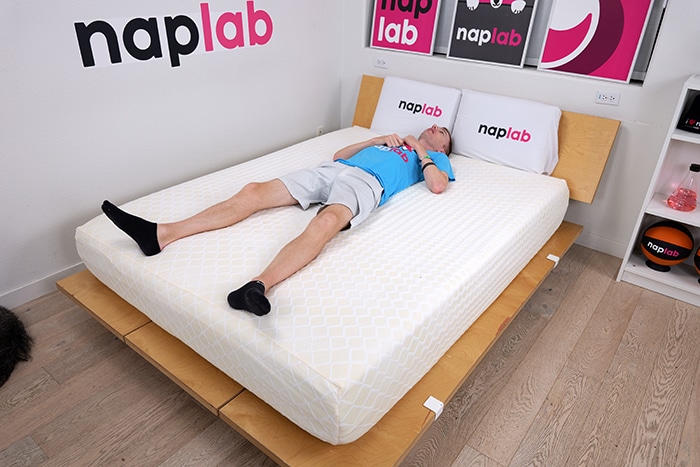
Certainly, it doesn’t rise to the excellent or outstanding levels of pressure relief, but it’s not bad either. The 2.0” memory foam comfort layer creates an exacting and precise hug around the body.
However, the thinner-than-average comfort layer limits sinkage depth. In our objective pressure mapping tests, we don’t see any notable hot spots. Overall, the mattress does a good job of evenly distributing the body’s weight.
Pressure Map – Side Sleepers

| Pressure Relief (PSI) | Average | Maximum |
|---|---|---|
| Side Sleepers | 0.21 | 0.61 |
Pressure Map – Back Sleepers

| Pressure Relief (PSI) | Average | Maximum |
|---|---|---|
| Back Sleepers | 0.14 | 0.54 |
Pressure Map – Stomach Sleepers

| Pressure Relief (PSI) | Average | Maximum |
|---|---|---|
| Stomach Sleepers | 0.13 | 0.65 |
When I consider our objective pressure mapping tests, material thickness, material quality, and my subjective experience on the mattress, I’m confident most sleepers will find the pressure relief to be good.
Off-Gassing Test
The Chime 12″ Memory Foam had a strong smell upon the initial unboxing. The mattress smelled for 7 days. This is 0.6 days shorter than the average smell duration of 7.6 days.
Initial Smell Strength
Strong
Off-Gassing Period
7 days
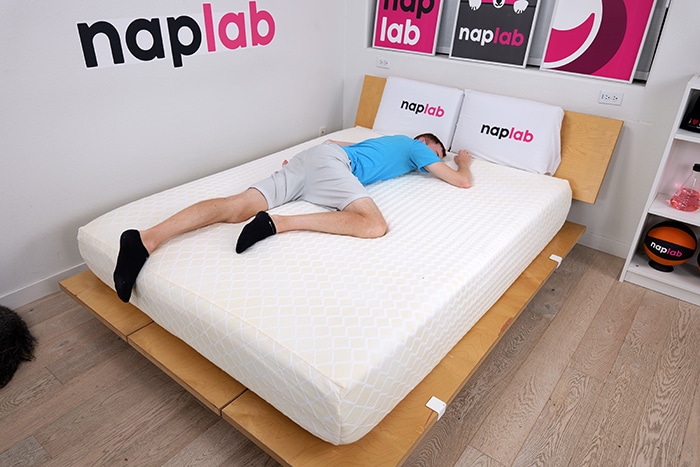
Company
Chime mattresses come with a 180-night trial period and a 10-year warranty. Shipping and returns are both free.
| Company Factor | Factor Weight | Score | Data |
|---|---|---|---|
| Returns | 40% | 10 | $0 |
| Trial Period | 30% | 10 | 180 nights |
| Warranty | 20% | 8.0 | 10 years |
| Shipping | 10% | 10 | $0 |
| Country of Origin | 0% | USA |
Comparing 122+ brands tested to date, the average trial period is 243 nights and the average warranty is 13 years (excluding the 43% of mattresses which offer lifetime warranties).
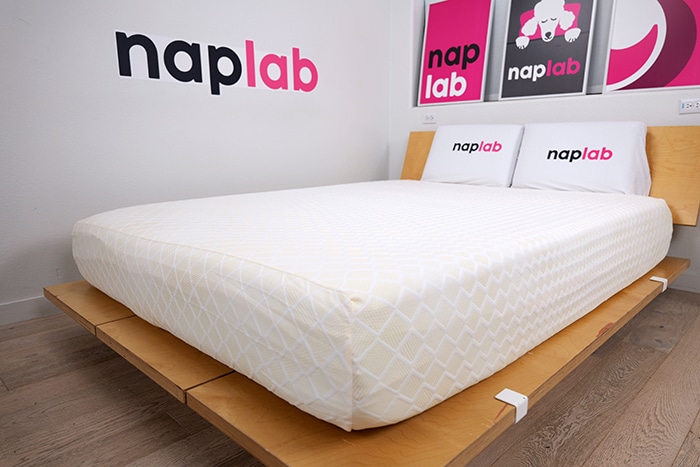
Both the average trial period and average warranty are longer than what we see on the Chime mattress. That said, these are certainly not the shortest terms that we’ve seen from other brands.
How firm is Chime 12″ Memory Foam?
The Chime 12″ Memory Foam mattress is only available in a single firmness option—medium-firm. This is a firmness rating of 6 out of 10 on the firmness scale, where 10 is the most firm

This firmness level suits the vast majority of sleepers and sleeping positions.
I will add that Chime describes the feel of this mattress as “ultra soft”. I have tested over 600 mattresses to date and I feel confident that this mattress has a medium-firm feel, notably firmer than the brand suggests it to be.
Support & Sleeping Positions
Support on the Chime 12″ Memory Foam is good. During our tests, I felt well supported in all sleeping positions. That being said, it’s also clear support did not rise to the “excellent” or “outstanding” level.
| Support Factor | Data |
|---|---|
| Comfort Layer | 2.00″ |
| Support Layer | 10.00″ |
| Firmness | Medium-Firm |
| Body Contour | Dramatic |
| Zoned Support | No |
| Reinforced Edge | No |
The mattress is equipped with a 10.0″ support layer. This is 2.02″ thicker than the average support layer thickness of 7.98″, based on all of our tests to date. Mattresses that create the ideal support do so by delivering a neutral spinal alignment for the body and providing ample comfort.
The Chime mattress does a reasonably good job at both. That said, pressure relief leaves something to be desired. This is mainly because the thinner-than-average comfort layer puts the body in greater contact with the support layer. That support foam is quite firm and hard and just doesn’t feel great on the body.
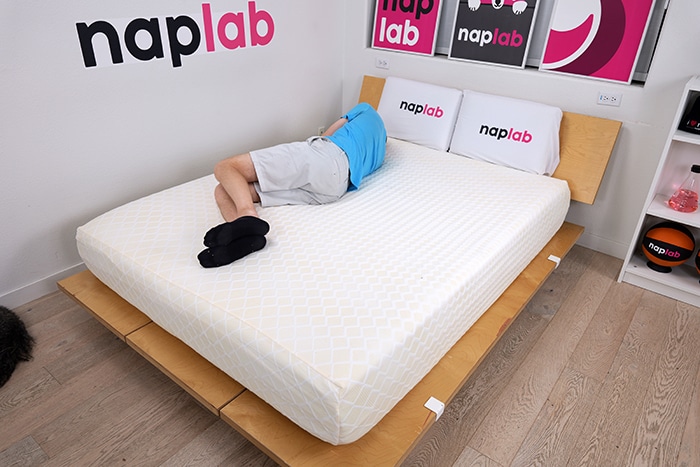
Moving on, let’s talk about firmness. This mattress is available in a single firmness, which we rated as medium-firm. That’s a 6 out of 10 on our firmness scale. A medium-firm feel works well for most sleepers and all sleeping positions.
Check out the table below to see the sleeper weights and sleeping positions that would be best suited for this mattress.
| Sleeper Weight | Stomach Sleeper | Side Sleeper | Back Sleeper |
|---|---|---|---|
| Under 150 lbs. | Yes | Yes | Yes |
| 150-250 lbs. | Yes | Yes | Yes |
| 250-300 lbs. | Yes | Yes | Yes |
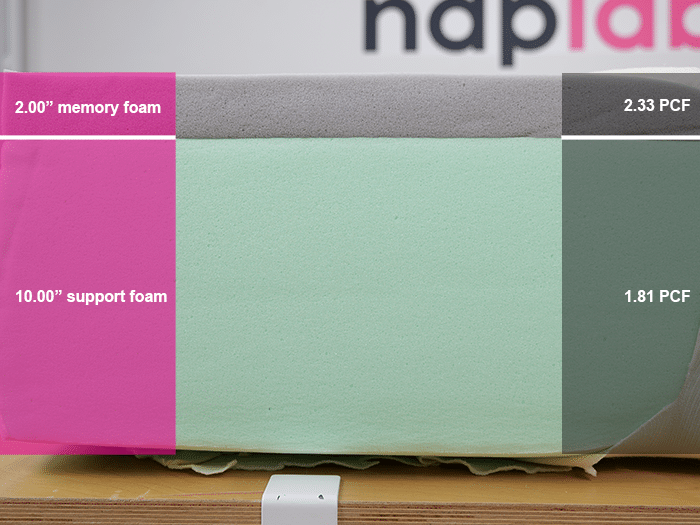
In all mattress tests, we make it a point to cut the mattress open to assess the material quality. In doing so, we measured the memory foam at a density of 2.33 PCF (pounds per cubic foot). That’s well short of the 4.0 PCF we ideally want to see for memory foam.
Denser foams typically perform better, last longer, and sag less. Certainly, we’d like to see denser foams, especially for a memory foam mattress. That being said, given the price point, these foam density levels are as good as we can realistically expect to see. If you want to see higher quality, higher density foams, you’ll need to step up the budget.
Based on all of my tests to date, an analysis of the materials, and my subjective experiences, I’m confident most sleepers will find support on the Chime 12″ Memory Foam to be good.
Design
The Chime 12″ Memory Foam is a 12.00″ memory foam mattress with a single firmness option: Medium-Firm. This mattress is the thickest memory foam mattress by Chime and provides a more traditional memory foam feel and a dramatic level of body contouring
| Design Factor | Data |
|---|---|
| Type | Memory Foam |
| Thickness | 12.00″ |
| Cover Type | Thin |
| Weight | 62.9 lbs. |
| Has Handles | No |
| Fiberglass-Free | Yes |
| Ships in a Box | Yes |
Within the Chime collection, there are both memory foam mattresses and hybrid models. Mattress thickness ranges from 8.0″ up to 12.0″ thick.
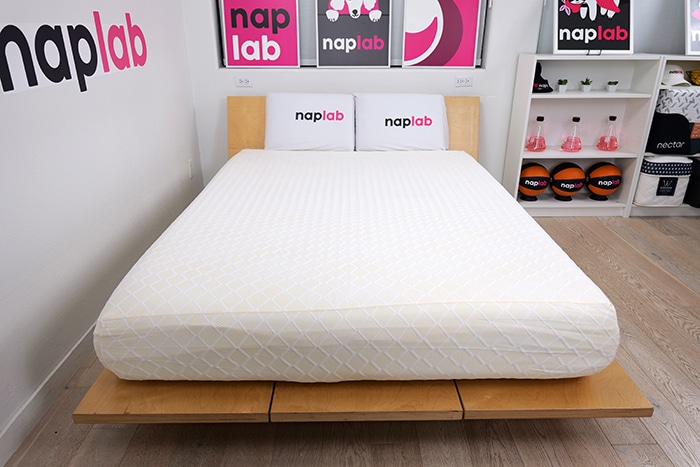
This puts this 12.0″ memory foam mattress at the higher end of Chime memory foam performers.
Materials
The Chime 12″ Memory Foam is 12.00″ thick and contains a combination of memory foam and support foam. From top to bottom, here is a full list of the materials used in this mattress:
| Layer Type | Thickness | Manufacturer’s Specs | Tested Specs |
|---|---|---|---|
| Memory Foam | 2.00″ | 2.5 PCF | 2.33 PCF |
| Support Foam | 10.00″ | 1.50 PCF | 1.81 PCF |
The Law Tag outlines the full breakdown of materials included in this mattress.
- Materials:
- 100% polyurethane foam pad
- Outer Covering:
- 69% polyester
- 26% viscose
- 6% barrier coating
- 6% filament poly
- Made By: Ashley Furniture Industries, LLC 5380 HWY 145 South, Tupelo, MS 38801 USA
- Date of Delivery: Left Blank
- Finished Size: 79.5 IN. X 60.00 IN.
- Net Wgt. of Filling Mat’l: 55 lbs. 14 oz
- Made In: USA
- Manufactured By: Ashley Furniture Industries, LLC 5380 HWY 145 South, Tupelo, MS 38801 USA
- Date of Manufacture: 09/2026
- Model: M72731
- Prototype ID: 26MIL72701
- Lot: 2609150
- MO: MA2GMZ0
The Cover
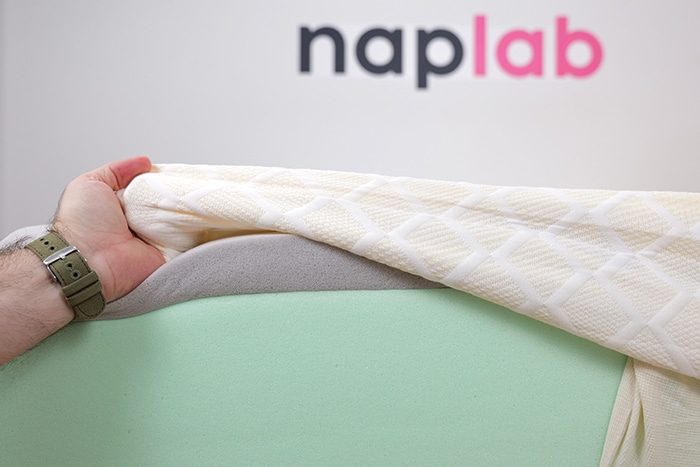
The Chime 12″ Memory Foam has a four-way stretch knit cover made of a blend of polyester, viscose, a barrier coating, and filament poly. It has an embossed diamond pattern, which gives the mattress cover some geometric interest while still remaining budget-friendly.
The Comfort Layer
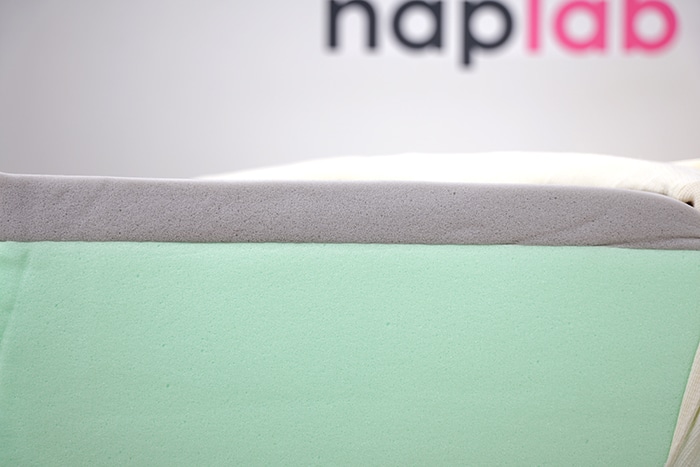
The comfort layer is 2.00″ thick and made of a single 2.0″ memory foam layer (gray foam). This layer is certainly thinner than I would have liked to see on this mattress, but given the ultra-low price point, it’s also about what we expect.
The Support Layer
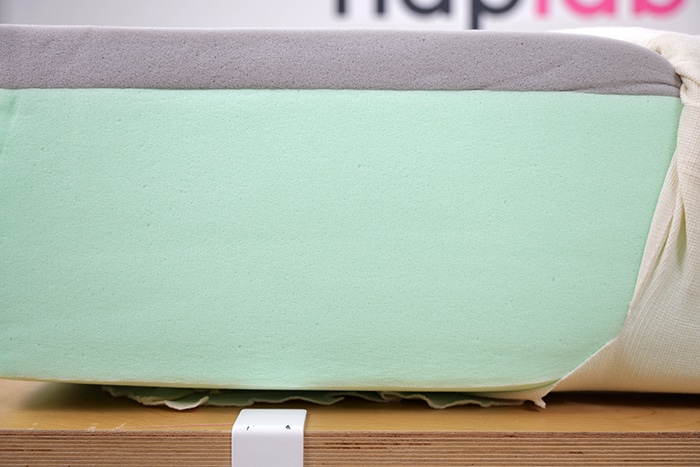
The support layer is 10.00″ thick and made of a single 10.0″ support foam (green foam). The thinner comfort layer does mean that heavier sleepers may engage more deeply with this support layer.
Product Evolution
The Chime Memory Foam mattress was originally introduced in Jan 2018, under the parent umbrella of Ashley Sleep.
The website, Sleep On Chime, launched in the summer of 2026 as a direct-to-consumer initiative from Ashley.
Our research suggests that earlier versions of the Chime memory foam mattress may have had an 8.0″ support foam foundation, a 2.0″ transitional foam layer, and a 2.0″ top memory foam layer.
The present-day Chime memory foam mattress has a 10.0″ support foundation and a 2.0″ top comfort layer. Ashley virtually eliminated the transitional layer and moved that material to the support core.
Other Mattresses to Consider
Not sure if the Chime 12″ Memory Foam is the right pick for you? Check out these three other top-rated memory foam mattresses for budget-friendly alternatives you may want to consider.
For Performance
Siena Signature 10″
Under $400 for a Queen Mattress
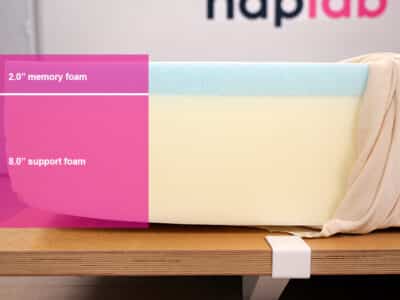
The Siena Signature is a 10″ memory foam mattress available in 1 firmness level—medium-firm. While this mattress has a similar 10.0″ design construction to the Chime memory foam mattress, the overall performance of the Siena is a step above in many areas.
For Pressure Relief
Brooklyn Bedding Copperflex
Thick 7.0″ Comfort Layer
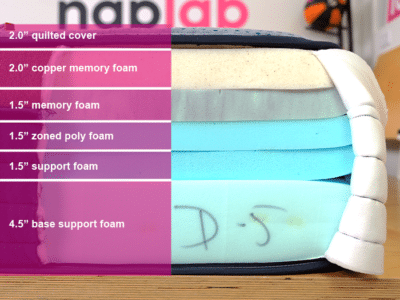
The Brooklyn Bedding Copperflex is a 13″ memory foam mattress available in 1 firmness level—medium-firm. This mattress is priced around $600 for a queen mattress but offers significantly better performance than the Chime. It has a robust 7-inch comfort layer, which dramatically improves overall performance and pressure relief.
For Response Time
Silk & Snow
Gel Memory Foam For Cooling
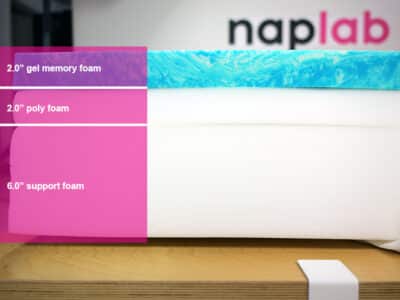
The Silk & Snow is a 10″ memory foam mattress available in 3 firmness levels—soft, medium-firm, and firm. This mattress had a faster response time, better pressure relief, and better overall performance. If your budget is flexible, the Silk and Snow would be an upgrade over the Chime 12″ memory foam mattress.
Frequently Asked Questions
Still have questions? Check out some of the top FAQs on the Chime 12″ Memory Foam mattress below and get the answers you’re looking for.
How much does a Chime 12″ Hybrid mattress cost?
Here are the current prices of the Chime 12″ Memory Foam mattress, with any sales or promotions reflected below:
Twin: $259
Full: $299
Queen: $349
King: $419
Cal. King: $469
*Note: Sales prices are subject to change without notice or warning.