Best For
- Great pressure relief, better than average
- Deep sinkage and a dramatic contour
- Better edge support, especially for an all-foam mattress
Considerations
- Lower performance, scores in the bottom 13% of all mattresses
- Very slow material response time
- Below-average scores for cooling, motion transfer, and sex as well
Our Verdict
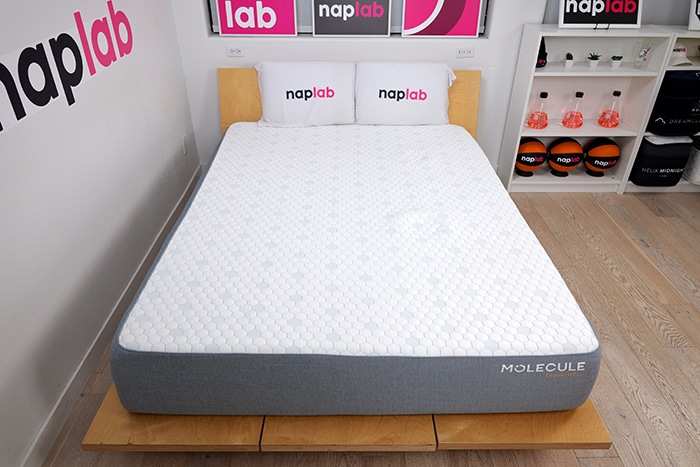
The Molecule CopperWell is a 12.00″ memory foam mattress made of memory foam, poly foam, and support foam. It has a basic 3-layer design that helps keep the price low, while retaining a classic memory foam feel.
The Molecule CopperWell is available in a single firmness level — medium-firm. In our tests, this is a 6 out of 10 on our firmness scale, where 10 is the most firm.
This mattress has deep sinkage and very low levels of bounce. The contour on this mattress is more dramatic and has an exacting hug around the precise shape of your body.
In our performance tests, this mattress earned an overall score of 7.77, ranking the mattress in the bottom 13% of all mattresses tested to date.
The Molecule CopperWell is $999 for a queen-sized mattress, which is 3% less expensive than the average memory foam mattress. The price is reasonable, but the performance is certainly lower than I would have liked to have seen from this mattress.
Type: Memory Foam
Firmness: Medium-Firm (6)
Best For: All Sleeping Positions, All Body Weights

In This Review
Performance Tests | Firmness | Support & Sleeping Positions | Design | Materials | Comparisons | FAQs
Performance Tests
At NapLab, we put each mattress to the test.
We test 10 different factors that impact the performance, comfort, and feel of the mattress. We then take the results of those tests and compare them to every mattress we’ve tested to date.
Check out the full performance table below to see how this mattress ranks:
| Factor | Molecule CopperWell | Average |
|---|---|---|
| Overall Score | 7.77 | 8.51 |
| Price (Queen) | $999 | $1,032 (Memory Foam only) |
| Cooling – Score | 7.0 | 8.6 |
| Sinkage – Depth | 2.33″ | 2.25″ |
| Sinkage – Feel | Deep | Moderate |
| Motion Transfer – Score | 7.5 | 8.2 |
| Motion Transfer – Acceleration | 10.62 m/s² | 8.80 m/s² |
| Response Time – Score | 5.1 | 8.8 |
| Response Time – Mostly Recovered | 1.3 sec. | 0.4 sec. |
| Response Time – Fully Recovered | 1.9 sec. | 1.0 sec. |
| Bounce – Height | 5.49″ | 8.70″ |
| Bounce – Feel | Very Low | Moderate |
| Edge Support – Score | 8.9 | 8.7 |
| Edge Support – Sitting | 3.25″ | 3.87″ |
| Edge Support – Lying | Good | Good |
| Sex – Score | 7.1 | 8.2 |
| Pressure Relief – Score | 9.0 | 8.6 |
| Comfort Layer Thickness | 4.00″ | 4.32″ |
| Mattress Thickness | 12.00″ | 12.23″ |
| Off-Gassing – Score | 8.6 | 8.0 |
| Off-Gassing – Smell | Strong | Strong |
| Off-Gassing – Days | 5 days | 7 days |
| Company – Score | 9.0 | 8.8 |
| Trial | 100 nights | 192 nights |
| Warranty | 15 years | 40% have lifetime warranties, average of other 60% of mattresses is 13 years |
How is Molecule CopperWell Different?
The Molecule CopperWell is a 12.00″ memory foam mattress with an overall performance level that is significantly below average and a price that is just slightly below average.
Advantages
Specific advantages of the Molecule CopperWell include better edge support, better pressure relief, and faster off-gassing.
The mattress is also backed by a strong company score, which offers a 15-year warranty (longer than the 13-year average). Note: This excludes the 40% of mattress brands that offer lifetime warranties.
Neutral Factors
The CopperWell has deep sinkage and very low levels of bounce. Sinkage and bounce are largely considered “neutral factors” since different sleepers will have different preferences on what is “good” or “bad” in these areas.
Disadvantages
Disadvantages include below-average cooling performance, higher levels of motion transfer, and a very slow material response time. In our tests, the materials took 1.9 seconds to fully recover, nearly double the length of the average response time.
Cooling Test
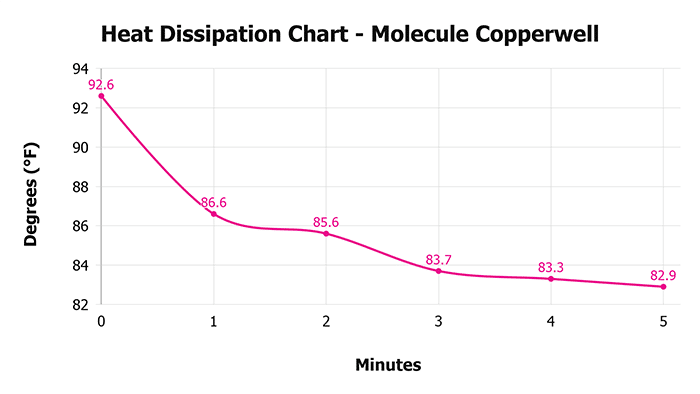
The Molecule Copperwell has fair cooling. During our tests, I felt a notable level of heat retention on my body.
Baseline Temp.
75.3° F
Max. Temp.
92.6° F
Ending Temp.
82.9° F
This is an all-foam mattress that’s equipped with a 2.0” memory foam layer on top. All-foam mattresses typically struggle more with airflow and breathability, and that’s exactly what we see here.
In addition, the memory foam layer on top is also problematic. Memory foam typically retains more heat compared to other foam types, and that was certainly our experience with this foam.
Max. Temp.

Ending Temp.

- Baseline Temperature – the temperature of the mattress before anyone lies on it
- Maximum Temperature (0 minute) – the temperature of the mattress after lying on it for 15 minutes
- Ending Temperature (5 minute) – the temperature of the mattress after being lied upon and having no one on it for 5 minutes
Lastly, according to the product page, the top cover has “cool touch fiber woven into the fabric”. While the cover did create a slight cooling feel initially when lying down, it did not maintain the cool feel for very long.
By the end of our cooling tests, it had no cooling feel, and I felt significant warming of the mattress layers that made contact with my body.
In our objective temperature tests, we measured a max surface level temperature of 92.6° F. This is 2.4° warmer than the average of 90.2° F, based on all of our tests to date.
After getting off the mattress, the temperature declined by 6.0 degrees from minutes 0 to 1, which is 1.2 degrees cooler than the average 0 to 1 minute decline of 4.8 degrees.
Heat Dissipation Over Time
When we consider the combination of objective data, my subjective experiences, and an analysis of the materials, I’m confident in my view that cooling is fair.
Sinkage Test
The Molecule Copperwell has deep sinkage. During our tests, we measured a pressure point sinkage depth of 2.33″. This is 0.08″ more sinkage than the average sinkage depth of 2.25″, based on all of our tests to date.
Sinkage Depth
2.33″
Sinkage Feel
Deep
Body Contour
Dramatic
The level of sinkage is documented in the image below.
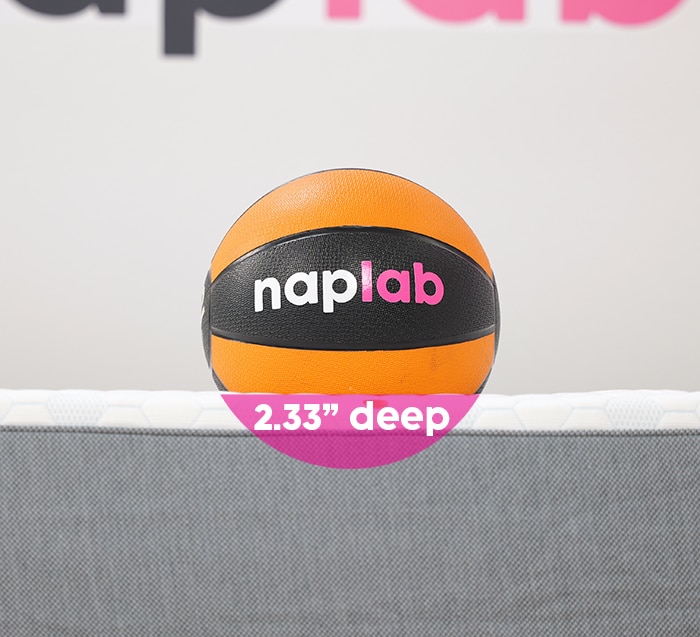
The mattress creates a dramatic body contouring hug. The Copperwell has a classic memory foam feel, which means lots of hug, lots of contour, and a slower material recovery speed. Fortunately, it also has a more restrained sinkage depth, only breaking into the “deep” sinkage tier by 0.03”.
Ultimately, this is a memory foam mattress and one that creates a more classic memory foam feel. To be comfortable on this mattress, you’ll need to prefer the feel of classic memory foam, which means lots of hug, contour, and slower material responsiveness.
This feel isn’t good or bad, but it is a specific feel, one you’ll want to love in order to enjoy the Molecule.
Motion Transfer Test
The Molecule Copperwell has a moderate level of motion transfer. During our tests, we measured a total acceleration range of 10.62 m/s². This is 20% more motion transfer than the average of 8.81 m/s².
Accel. Range
10.62 m/s²
Motion Duration
0.75 seconds
Typically, memory foam mattresses have less motion transfer than average, but that’s not what we measured here. The extra motion seems to be coming from the taut cover. When sleepers (or in our case, a 12 pound medicine ball) move around on the mattress the taut cover can abruptly tug from side-to-side.
That tugging motion can be felt across the mattress as part of the larger motion transfer picture. Fortunately, it’s a very quick motion sensation and the all foam design with memory foam on top does a nice job of mitigating any additional motion.
In our motion transfer chart, which visualizes our accelerometer data, we can see the highest motion peaks from 0 to 0.15 seconds. Motion drops off dramatically immediately thereafter.
Motion Transfer Over Time
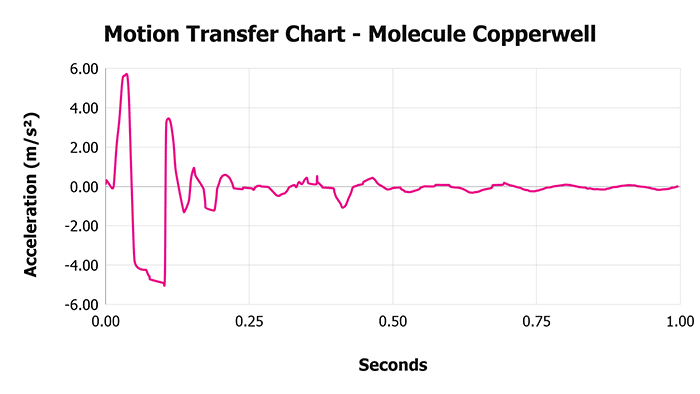
By 0.75 seconds, we’ve returned to near-zero levels of energy, which is 0.14 seconds shorter than the average motion duration of 0.89 seconds. Overall, motion transfer performance is fair.
Response Test
The Molecule Copperwell has a very slow material response.
Mostly Recovered
1.3 sec.
Fully Recovered
1.9 sec.
In our mostly recovered test, we measured a recovery speed of 1.3 seconds, which is 0.88 seconds slower than the average of 0.42 seconds, based on all of our tests to date.
In our fully recovered responsiveness test, we measured a recovery speed of 1.9 seconds, which is 0.88 seconds slower than the average of 1.02 seconds.
This is an all-foam mattress that utilizes a 2.0” memory foam layer on top. All-foam designs typically have a slower material recovery speed than many other mattress types.
The level of responsiveness is documented in the video below.
The same is doubly true when those foams are memory foam. The slower material recovery speed makes this mattress harder to move around on and harder to change positions.
For some sleepers, it can also create a sense of feeling “stuck” in the mattress, due to the dramatic body contouring hug of memory foam in combination with the slower material recovery speed.
Bounce Test
The Molecule Copperwell has a very low level of bounce. During our tests, we measured a total bounce height of 5.49″. This is 3.22″ less bounce than the average of 8.71″, based on all of our tests to date.
Max. Depth
4.99″
Max. Rebound
0.50″
Total Bounce
5.49″
The Copperwell design is all-foam, no coils, and uses memory foam on top. Foam simply doesn’t return as much energy, which means less bounce, and this is doubly true when it comes to memory foam. Memory foam greatly absorbs and dissipates energy, which means there is simply less energy available for bounce.
Max. Sinkage Depth

Max. Bounce Height
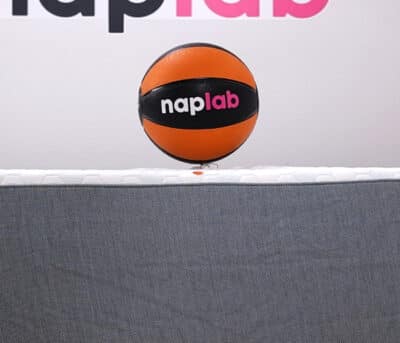
The level of bounce is also documented in the video below.
The lower bounce is a notable reason that motion transfer levels were kept to a more reasonable level (though to be fair, motion transfer was far from great). However, that lower bounce also means that sex performance is negatively impacted.
Edge Support Test
The Molecule Copperwell has excellent sitting edge support and good lying edge support.
Max. Sinkage
3.25″
Lying Support
Good
Reinforced Edge
No
In our sitting edge support test, we measured a sitting sinkage compression of 3.25″. This is 0.62″ less sitting sinkage than the average of 3.87″, based on all of our tests to date.
The level of edge support while seated is documented in the images below.
Sitting, 140 lbs.

Sitting, 200 lbs.

While lying directly on the edge of the mattress, I felt that the support was good in all sleeping positions.
Notably, this mattress does not utilize any type of reinforced edge support foam. Given the all-foam design and price point, that’s to be expected. While sitting, edge support was solid, lying edge support didn’t quite rise to the same level. Memory foam, by its nature, creates a higher degree of body contouring hug.
The level of edge support while lying is documented in the images below.
Lying on Edge, 140 lbs.

Lying on Edge, 200 lbs.

While in the middle of the mattress, that contouring hug is excellent. However, while lying near the edge, that contouring sensation causes a weakening of the support. This is simply because there isn’t enough material to fully contour and support the body at the edge.
To be fair, this isn’t a problem with Molecule specifically, but rather most memory foam mattresses we’ve tested. Lying edge support simply isn’t amazing for memory foam.
Sex Test
The Molecule Copperwell has fair sex performance. On the positive side, noise is minimal, pressure relief is excellent, and sitting edge support is solid.
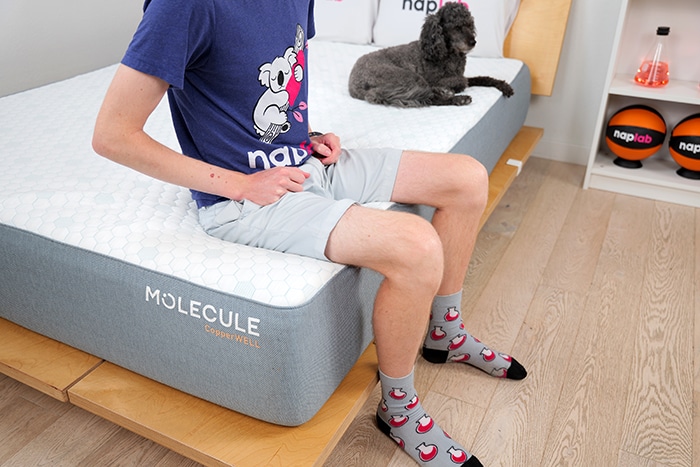
Sitting edge support measured in at 3.25” of sitting edge sinkage. This creates a robust enough edge to extend the usable surface area of the mattress for amorous activities.
All that said, where the mattress isn’t so great is cooling and bounce. Bounce, in particular, really leaves something to be desired. In our bounce tests, we measured a total bounce height of 5.49”. This is considerably less bounce than the average. When it comes to sex, more bounce is almost always better.
| Sex Factor | Factor Weight | Score | Rating |
|---|---|---|---|
| Bounce | 65% | 5.9 | Very Low |
| Edge Support | 20% | 9.7 | Excellent |
| Noise | 5% | 10 | Minimal |
| Pressure Relief | 5% | 9.0 | Excellent |
| Cooling | 5% | 7.0 | Fair |
The lower level of bounce makes it more strenuous and tiring to have sex on this mattress, as the foam layers simply absorb much of your amorous energies. Overall, the sex performance simply isn’t good.
Pressure Relief Test
The Molecule Copperwell has an excellent level of pressure relief. During our tests, I felt no significant pressure points on my body. Overall, I found the Molecule to be a comfortable mattress.
Comfort Layer
4.00″
Support Layer
8.00″
The mattress is equipped with 4.0″ of comfort material, which is 0.31″ less comfort material than the average comfort layer thickness of 4.31″, based on all of our tests to date.
In all mattress tests, we make it a point to cut the mattress open to look at the material quality. Overall, I’m pleased with the quality of the foam layers. Foams look and feel reasonably good quality, both on the body and in-hand. To be fair, they are far from the best we’ve seen, but relative to the price point, they look and feel fine.
This mattress is equipped with a thin, non-quilted cover. This cover allows for more immediate and pronounced body contouring and engagement with the memory foam comfort layer.
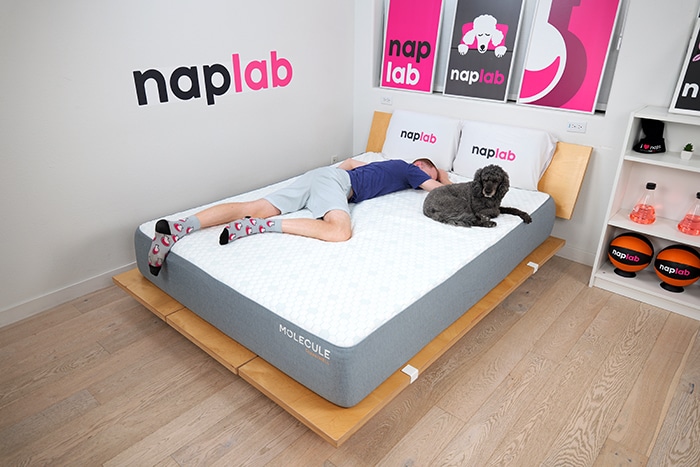
While sinkage is more balanced, the traditional memory foam feel creates a high degree of contouring hug. This isn’t good or bad, but it is a more specific feel. To enjoy the comfort and pressure relief of this mattress, you’ll need to strongly prefer the feel of memory foam.
Lastly, in our objective pressure mapping tests, we measured a max PSI of 0.48, which is well within the 1.0 PSI threshold we ideally want to see.
Pressure Map – Side Sleepers

| Pressure Relief (PSI) | Average | Maximum |
|---|---|---|
| Side Sleepers | 0.09 | 0.48 |
Pressure Map – Back Sleepers

| Pressure Relief (PSI) | Average | Maximum |
|---|---|---|
| Back Sleepers | 0.08 | 0.35 |
Pressure Map – Stomach Sleepers

| Pressure Relief (PSI) | Average | Maximum |
|---|---|---|
| Stomach Sleepers | 0.06 | 0.37 |
When I consider our objective pressure mapping tests, material thickness, material quality, and my subjective experience on the mattress, I’m confident most sleepers will find the pressure relief to be excellent.
Off-Gassing Test
The Molecule Copperwell had a strong smell upon the initial unboxing. The mattress smelled for 5 days. This is 2.3 days shorter than the average smell duration of 7.3 days.
Initial Smell Strength
Strong
Off-Gassing Period
5 days
Company
Molecule mattresses come with a 100-night trial period and a 15-year warranty. Shipping and returns are both free.
| Company Factor | Factor Weight | Score | Data |
|---|---|---|---|
| Returns | 40% | 10 | $0 |
| Trial Period | 30% | 8.0 | 100 nights |
| Warranty | 20% | 8.0 | 15 years |
| Shipping | 10% | 10 | $0 |
| Country of Origin | 0% | USA |
Comparing 113+ brands tested to date, the average trial period is 192 nights, 92 nights more than Molecule offers.
The average warranty is 13 years, which is 2 years less than that of this mattress. I will note that this excludes the 40% of mattresses that offer lifetime warranties.
How firm is Molecule CopperWell?
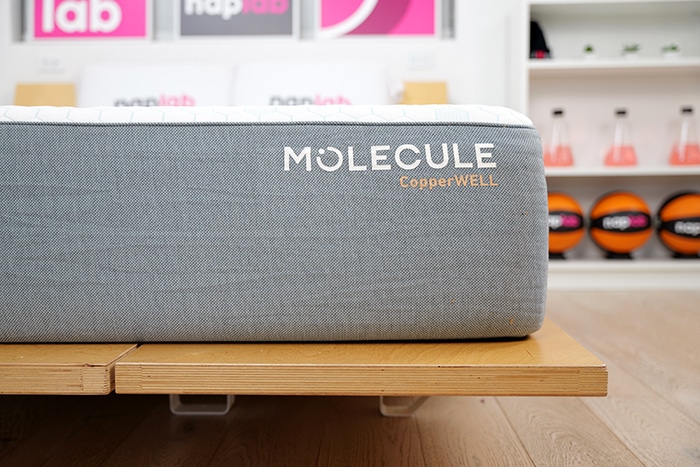
The Molecule CopperWell comes in a single firmness option—Medium-Firm, which we rate at a 6 out of 10 on the firmness scale.

This firmness and feel are generally suitable for a wide range of sleepers and preferences.
Support & Sleeping Positions
Support on the Molecule Copperwell is excellent. During our tests, I felt well supported in all sleeping positions. The mattress is equipped with an 8.0″ support layer.
This is 0.09″ thicker than the average support layer thickness of 7.91″, based on all of our tests to date.
This mattress is available in a single firmness, which we rated a medium-firm feel, 6 out of 10 on our firmness scale, where 10 is the most firm. Medium-firm is ideal for most sleepers and all sleeping positions. It creates the right balance of comfort and support to help create appropriate support and spinal alignment for the body.
| Support Factor | Data |
|---|---|
| Comfort Layer | 4.00″ |
| Support Layer | 8.00″ |
| Firmness | Medium-Firm |
| Body Contour | Dramatic |
| Zoned Support | Yes |
| Reinforced Edge | No |
In our assessment of the foams, I found their quality to be good. Certainly, the foam quality is far from perfect, and I do wish we had a slightly thicker comfort layer. Even so, given the price point, the foam quality and quantity are what can be reasonably expected.
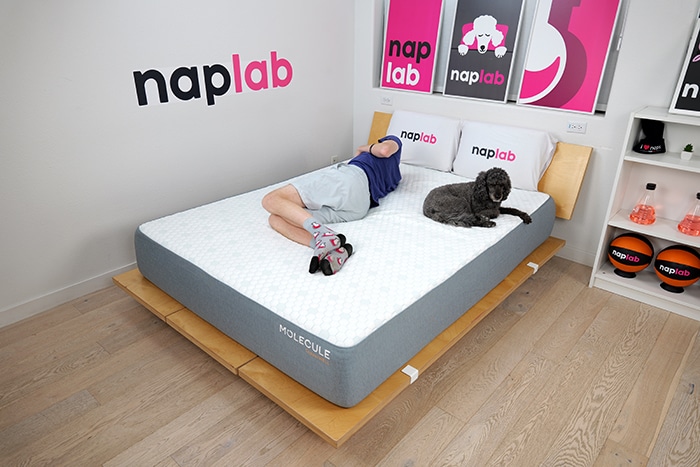
According to the product page, Molecule states that “Our precision contoured 3D geometric surface provides anatomically zoned channels, self-adjusting support for different parts of the body.”
While this is technically a type of zoned support, in my view, it is the least effective version of zoned support.
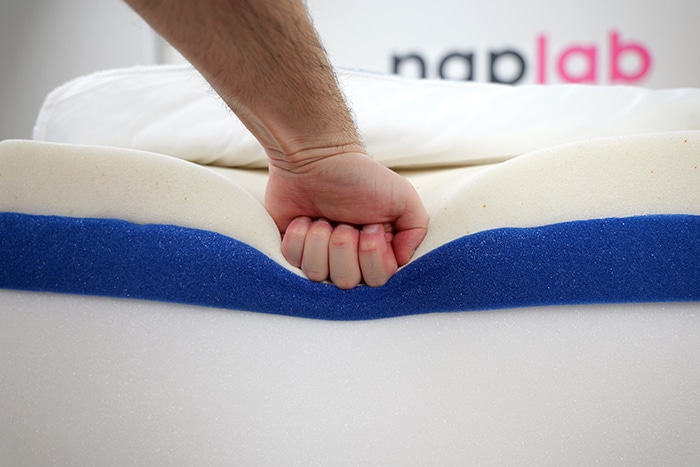
Zoned coil units and/or larger dedicated zoned foam layers have performed better compared to this type of zoned support (which is typically created through a specialized machine that cuts the zonal patterns) based on my years of testing, data, and broader experience.
Check out the table below to see the sleeper weights and sleeping positions that would be best suited for this mattress.
| Sleeper Weight | Stomach Sleeper | Side Sleeper | Back Sleeper |
|---|---|---|---|
| Under 150 lbs. | Yes | Yes | Yes |
| 150-250 lbs. | Yes | Yes | Yes |
| 250-300 lbs. | Yes | Yes | Yes |
Lastly, we should talk about the memory foam feel. This is fundamentally a memory foam mattress that creates a classic memory foam feel with lots of hug, contour, and a slower material recovery speed.
This is a more polarizing type of feel, with some sleepers loving it and some hating it. You’ll need to carefully consider whether you like a pronounced memory foam feel.
Those who like the memory foam feel will feel well supported by this support dynamic, while those who do not will likely find it too polarizing to feel comfortable and supportive. This isn’t a problem for Molecule specifically, but rather a problem with memory foam mattresses in general.
It’s simply a more polarizing material that not all people love. Based on all of my tests to date, an analysis of the materials, and my subjective experiences, I’m confident that most sleepers will find support on the Molecule Copperwell is excellent.
Design
The Molecule CopperWell is a 12.00″ memory foam mattress that comes in a single firmness option—Medium-Firm. It has a simple design with a 3-layer foam construction and a thin cover. It is relatively light (under 70 lbs. for a queen mattress), and there are no carrying handles on the sides of the mattress.
| Design Factor | Data |
|---|---|
| Type | Memory Foam |
| Thickness | 12.00″ |
| Cover Type | Thin |
| Weight | 69 lbs. |
| Has Handles | No |
| Fiberglass-Free | Yes |
| Ships in a Box | Yes |
There are four available collections from Molecule—Core, CopperWell, Reflex, and Engage, ranging from basic to high-end.
The Core is the most basic collection and the CopperWell is one tier above the Core. You can see our full review of the Molecule Core here.
Materials
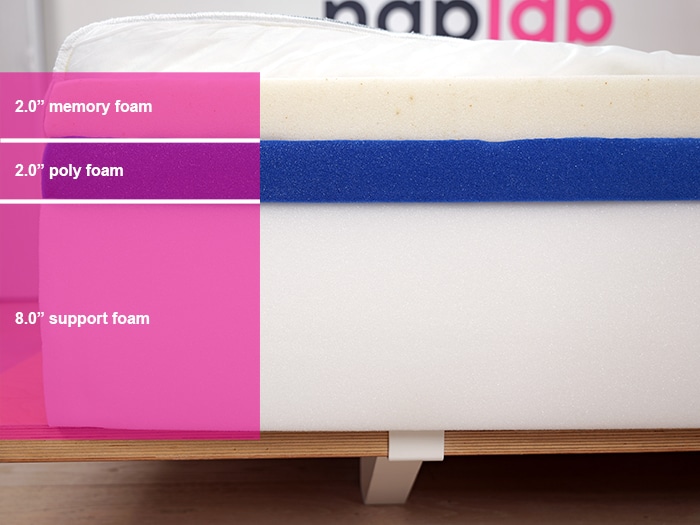
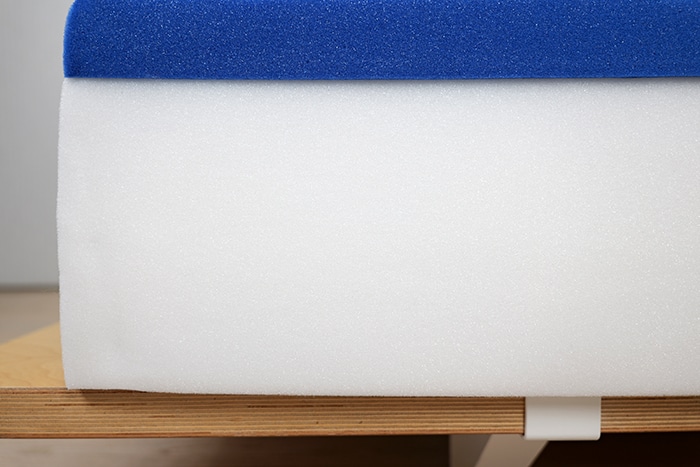
The Molecule CopperWell is 12.00″ thick and contains a combination of different foam types. From top to bottom, here is a full list of the materials used in this mattress:
| Layer Type | Thickness | Manufacturer’s Specs | Tested Specs |
|---|---|---|---|
| Memory Foam | 2.00″ | Not Available | 2.40 PCF |
| Poly Foam | 2.00″ | Not Available | 1.80 PCF |
| Support Foam | 8.00″ | Not Available | 1.65 PCF |
The Law Tag outlines the full breakdown of materials included in this mattress.
- Materials
- 100% polyurethane foam pad
- Cover
- Top
- 50% polyester
- 20% polyethylene
- 30% nylon
- Border
- 100% polyester
- Top
- Made for: FXI 100 MatsonFord Road, 5 Radnor Corporate Center, Suite 300, Radnor, PA, 19087-4560
- Date of Delivery: N/A
- FInished Size: Queen 60 in x 80 in x 12 in (152 cm x 203 cm x 30 cm)
- Net Weight of Filling Mat: 56 lbs 6 oz
- Federal RN#: 129151
- Made in USA of Imported and Domestic Components
- Manufactured by: FXI 2211 South Wayne St., Auburn, IN, 46707
- Date of Manufacture: 12/10/2025
- Model: Molecule 12” Copperwell
The Cover
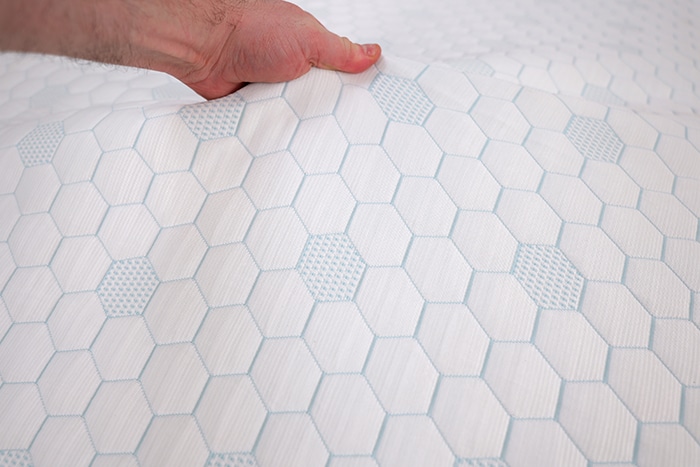
The Molecule CopperWell has a thin cover that is soft and stretchy. Molecule says their cover uses a “Cool to the touch fabric…”
While the cover is thin (which helps with breathability), the overall cooling performance wasn’t great. This mattress scores below-average in our cooling tests.
I have tested a wide variety of mattresses, both with and without cooling covers. With a cooling score of 7/10, the Molecule scores among the bottom 12% for cooling performance.
The Comfort Layer
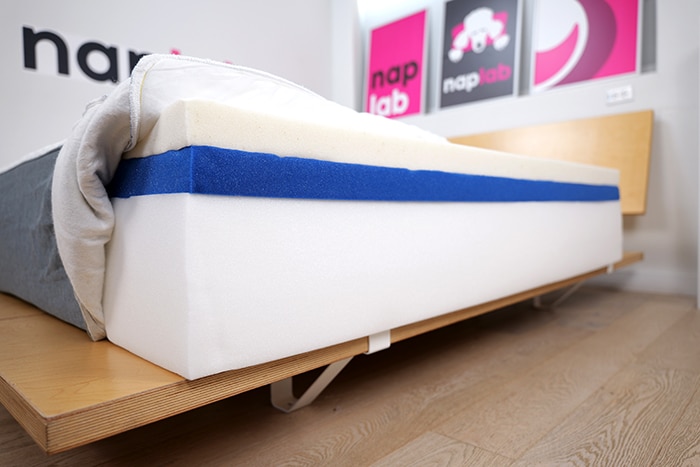
The comfort layer is 4.00″ thick and made of two layers of foam. Directly below the cover is a 2.0″ memory foam (pale yellow foam) followed by a 2.0″ poly foam (blue foam).
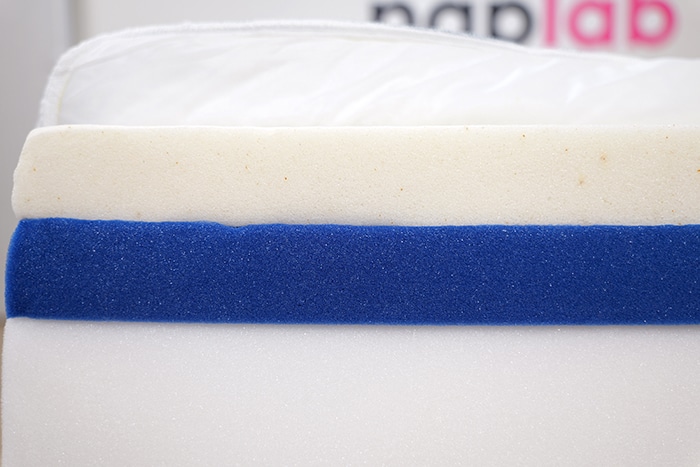
These layers work together to provide comfort and transitional support into the support layer below.
The Support Layer
The support layer is 8.00″ thick and made of an 8.0″ support foam (white foam). This is pretty typical for a standard all-foam mattress and is basically what I would expect from this layer.
Product Evolution
Molecule launched in April 2018.
The CopperWell collection appears to have launched around 2021 and there don’t seem to been any major design changes made to the mattress since its release.
Other Mattresses to Consider
Not sure if the Molecule CopperWell is the right pick for you? Check out these three other top-rated memory foam mattresses for alternatives you may want to consider.
For Performance
Novosbed
Under $1K for Queen
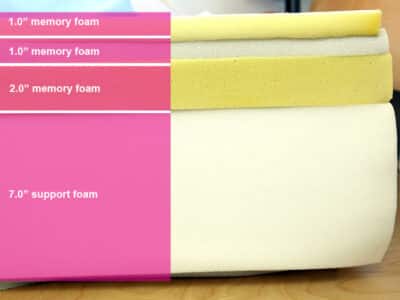
The Novosbed is an 11″ memory foam mattress available in 3 firmness levels—soft, medium-firm, and firm. This would be a good option if you want minimal sinkage and low bounce. It has a value-packed price, and the different firmness levels make it an attractive option for sleepers with different preferences.
For Faster Response Time
Puffy Cloud
4.0″ Comfort Layer
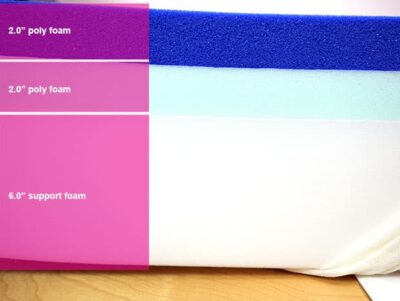
The Puffy Cloud is a 10″ memory foam mattress available in 1 firmness level—medium (5 out of 10). This mattress has deep sinkage and moderate bounce. If you’re looking for something slightly softer than Molecule and with a dramatically faster response time, the Puffy Cloud is a good pick that still won’t break the budget.
For Savings
BedInABox Original
Under $800 For Queen
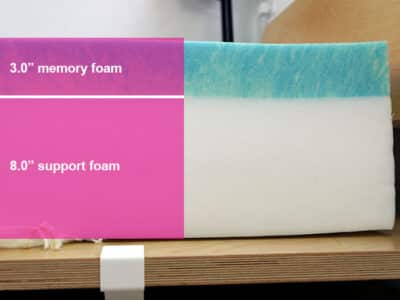
The BedInABox Original is an 11″ memory foam mattress available in 1 firmness level—medium-firm. This is the same firmness as the CopperWell, but BedInABox has significantly less sinkage. For back and stomach sleepers in particular, this mattress may be a better pick.
Frequently Asked Questions
Still have questions? Check out some of the top FAQs on the Molecule CopperWell mattress below and get the answers you’re looking for.
How much does a Molecule CopperWell mattress cost?
Here are the current prices of the Molecule CopperWell, with any sales or promotions reflected below:
Twin: $799
Twin XL: $799
Full: $899
Queen: $999
King: $1,199
Cal. King: $1,199
*Note: Sales prices are subject to change without notice or warning.