October 14, 2026 Update – The contents of this review are disputed by Eco Terra. Please see here for more information about the dispute and the steps NapLab has taken to provide a remedy to the dispute.
Best For
- Very fast material response time
- Great cooling performance
- Priced under $1K for queen
Considerations
- Higher levels of motion transfer
- Edge support is lacking for both sitting or lying at the edge
- Mattress has a strong smell and took 28 days to stop smelling
Our Verdict
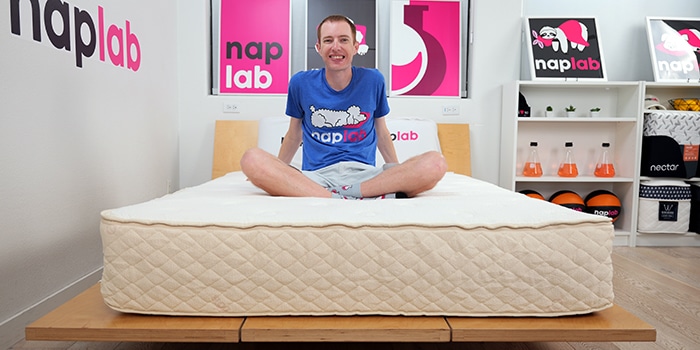
The Eco Terra is an 11.00″ latex hybrid mattress made of latex foam and pocketed coils. It has a simple, two-layer design and a thin cover.
The Eco Terra is available in two firmness levels — Medium and Medium-Firm. We tested the “Medium” version, which was a 6 out of 10 on our firmness scale (giving it a medium-firm feel). I would estimate the “Medium-Firm” version to have more of a slightly firm feel (7 out of 10).
The Medium version of this mattress has moderate sinkage and high levels of bounce. There is only a slight contour on this mattress. It has a more generalized hug than the exacting hugging contour you’d find on many memory foam mattresses.
In our performance tests, this mattress earned an overall score of 7.98, placing it in the bottom 19% of all mattresses tested to date. Specifically looking at latex hybrids, the Eco Terra is in the bottom 1% of all latex hybrids. This is certainly not where we want to see any mattress.
That said, the Eco Terra is only $999 for a queen-sized mattress, which is 50% less expensive than the average latex hybrid. If you know that you want a latex hybrid and can’t afford the steep average price, the Eco Terra could still be a good option.
Type: Latex Hybrid
Firmness: Medium-Firm (6), Slightly Firm (7)
Best For: All Sleeping Positions, All Body Weights

In This Review
Performance Tests | Firmness | Support & Sleeping Positions | Design | Materials | Comparisons | FAQs
Performance Tests
At NapLab, we put each mattress to the test.
We test 10 different factors that impact the performance, comfort, and feel of the mattress. We then take the results of those tests and compare them to every mattress we’ve tested to date.
Check out the full performance table below to see how this mattress ranks:
| Factor | Eco Terra | Average |
|---|---|---|
| Overall Score | 7.98 | 8.52 |
| Price (Queen) | $999 | $1,980 (Latex Hybrid only) |
| Cooling – Score | 9.0 | 8.6 |
| Sinkage – Depth | 2.19″ | 2.25″ |
| Sinkage – Feel | Moderate | Moderate |
| Motion Transfer – Score | 6.5 | 8.2 |
| Motion Transfer – Acceleration | 12.79 m/s² | 8.77 m/s² |
| Response Time – Score | 10 | 8.8 |
| Response Time – Mostly Recovered | 0.2 sec. | 0.4 sec. |
| Response Time – Fully Recovered | 0.3 sec. | 1.0 sec. |
| Bounce – Height | 10.92″ | 8.69″ |
| Bounce – Feel | High | Moderate |
| Edge Support – Score | 7.6 | 8.7 |
| Edge Support – Sitting | 4.50″ | 3.84″ |
| Edge Support – Lying | Fair | Good |
| Sex – Score | 8.9 | 8.2 |
| Pressure Relief – Score | 8.0 | 8.6 |
| Comfort Layer Thickness | 2.00″ | 4.35″ |
| Mattress Thickness | 11.00″ | 12.32″ |
| Smell – Score | 2.2 | 8.0 |
| Smell – Intensity | Strong | Strong |
| Smell- Days | 28 days | 7 days |
| Company – Score | 8.4 | 8.8 |
| Trial | 90 nights | 192 nights |
| Warranty | 15 years | 40% have lifetime warranties, average of other 60% of mattresses is 13 years |
How is Eco Terra Different?
The Eco Terra is an 11.00″ latex hybrid mattress with an overall performance level that is below average, but with a price that is also significantly below the average latex hybrid. The result is a lower performance, but also more affordable natural mattress.
Advantages
Aside from the low price, other advantages of the Eco Terra include better cooling, faster material response time, and better sex score. Another big advantage of the Eco Terra is the sheer number of organic certifications, given the low price tag.
This mattress is GOTS, GOLS, and Oeko-Tex certified. At this price, it’s pretty uncommon to find a latex hybrid with this many reputable organic certifications.
Neutral Factors
The Eco Terra mattress has moderate sinkage and high levels of bounce. There is also a more generalized contour on the Eco Terra, due to the natural contour of latex. The reality is that some sleepers will love this while others will hate it.
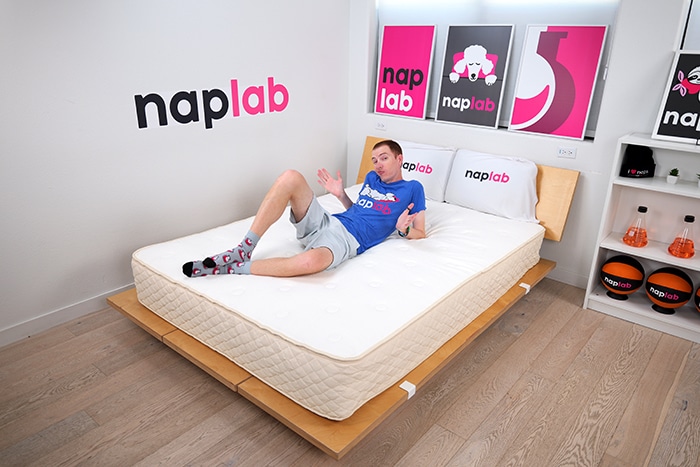
All of these factors are considered “neutral” since different sleepers will have different preferences in these areas. These factors don’t really make a mattress “good” or “bad”, but depending on what you’re looking for, the factors certainly come into play.
Disadvantages
Strong disadvantages for the Eco Terra mattress include higher levels of motion transfer and weaker edge support. For couples or sleepers who find themselves often sleeping on the edge, this could be a larger issue to consider.
In addition, this mattress has a strong smell when it arrives and it took a long time for that smell to go away (28 days).
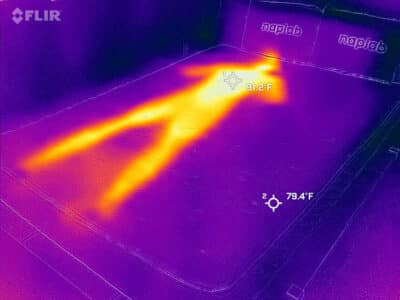
Cooling Test
The Eco Terra has excellent cooling. During our tests, I did not feel any significant level of heat retention around my body.
Baseline Temp.
76.7° F
Max. Temp.
91.2° F
Ending Temp.
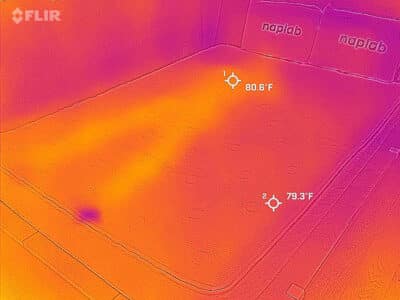
80.6° F
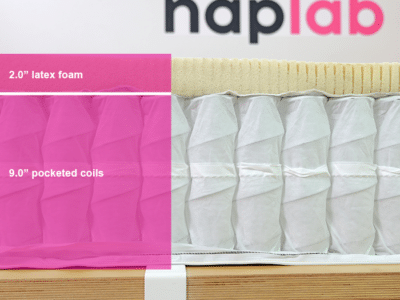
This mattress uses a simple but proven design with a 2.0” layer of latex sitting atop a 9.0” pocketed coil unit. The latex naturally resists heat retention, while the layer of coils brings plenty of airflow into the mattress.
Max. Temp.
Ending Temp.
- Baseline Temperature – the temperature of the mattress before anyone lies on it
- Maximum Temperature (0 minute) – the temperature of the mattress after lying on it for 15 minutes
- Ending Temperature (5 minute) – the temperature of the mattress after being lied upon and having no one on it for 5 minutes
In addition, having a more limited 2.0” comfort layer means there is less material in which heat can be easily retained. While that thinner comfort layer isn’t great for pressure relief, it is beneficial for cooling.
Lastly, the organic cotton cover seems to breathe reasonably well, further facilitating cooling performance.
In our objective temperature tests, we measured a max surface level temperature of 91.2° F. This is 1.0° warmer than the average of 90.2° F, based on all of our tests to date.
After getting off the mattress, the temperature declined by 4.4 degrees from minutes 0 to 1, which is 0.4 degrees less cool than the average 0 to 1 minute decline of 4.8 degrees.
Heat Dissipation Over Time
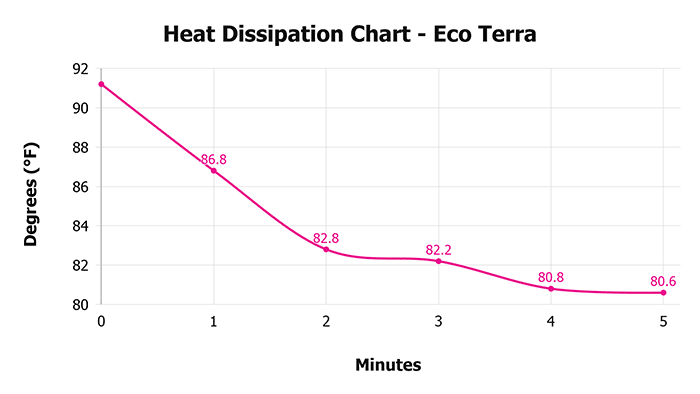
When we consider the combination of objective data, my subjective experiences, and an analysis of the materials, I’m confident in my view that cooling is excellent.
Sinkage Test
The Eco Terra has moderate sinkage. During our tests, we measured a pressure point sinkage depth of 2.19″. This is 0.07″ less sinkage than the average sinkage depth of 2.26″, based on all of our tests to date.
The mattress creates a more restrained body contouring hug. This is a product of the latex comfort layer.
Sinkage Depth
2.19″
Sinkage Feel
Moderate
Body Contour
Slight
The level of sinkage is documented in the image below.
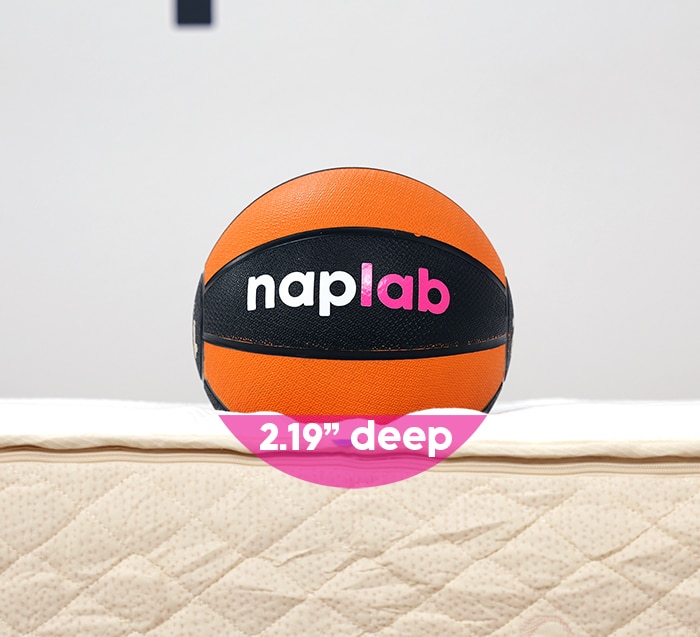
Latex creates a more generalized circular depression around the body. This is in contrast to memory foam and many types of poly foam, which create a more exacting and dramatic body contouring hug.
Neither feel is good or bad, but they are a specific feel. The latex hybrid sinkage and body-hugging dynamic is more restrained, generalized, and highly responsive.
Motion Transfer Test
The Eco Terra has a high level of motion transfer. During our tests, we measured a total acceleration range of 12.79 m/s². This is 46% more motion transfer than the average of 8.78 m/s².
Accel. Range
12.79 m/s²
Motion Duration
1.28 seconds
Latex hybrid mattresses typically have higher motion transfer and that’s exactly what we measured here.
The combination of a thinner-than-average 2.0” comfort layer, tall 9.0” coil unit, notably higher-than-average level of bounce, and highly resilient latex and coil unit set the stage for lots of motion transfer.
The level of motion transfer is also documented in the video below.
In our motion transfer chart, which visualizes our accelerometer data, we can see the highest motion peaks from 0 to 0.25 seconds. Motion declines thereafter, but we then see a significant secondary energy spike from 0.6 to 0.7 seconds.
By 1.28 seconds, we’ve returned to near-zero levels of energy, which is 0.38 seconds longer than the average motion duration of 0.90 seconds.
Motion Transfer Over Time
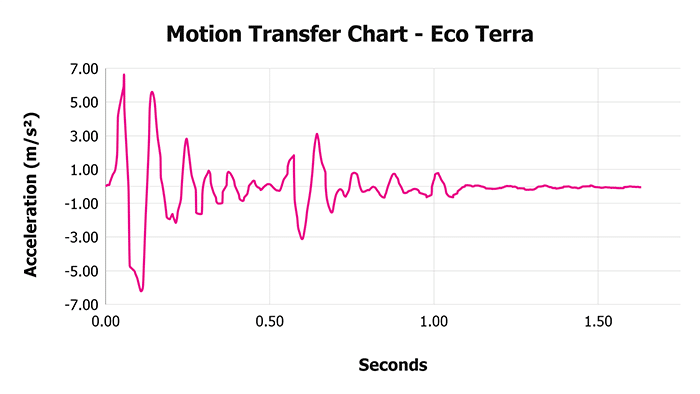
Both motion duration and motion intensity are considerably worse than average. As a result, the total motion transfer experience simply isn’t great. To be fair, this isn’t a problem with Eco Terra specifically, but rather most latex hybrid mattresses.
If you want a latex hybrid, you should be prepared to deal with higher motion transfer.
Response Test
The Eco Terra has an extremely fast material response.
Mostly Recovered
0.2 sec.
Fully Recovered
0.3 sec.
In our mostly recovered test, we measured a recovery speed of 0.2 seconds, which is 0.22 seconds faster than the average of 0.42 seconds, based on all of our tests to date.
In our fully recovered responsiveness test, we measured a recovery speed of 0.3 seconds, which is 0.73 seconds faster than the average of 1.03 seconds.
The level of responsiveness is documented in the video below.
These are effectively instant material recovery speeds. Eco Terra is tied for 1st with the fastest responsiveness mattresses we’ve tested to date.
The extremely fast material recovery speed means the mattress is easy to move around on; you’ll never feel stuck, and it’s easy to get in and out of bed.
Bounce Test
The Eco Terra has a high level of bounce. During our tests, we measured a total bounce height of 10.92″. This is 2.23″ more bounce than the average of 8.69″, based on all of our tests to date.
Max. Depth
6.15″
Max. Rebound
4.77″
Total Bounce
10.92″
The higher level of bounce is the result of the thinner-than-average 2.0” comfort layer and latex hybrid design. Both latex and coils are highly responsive, springy, and resilient materials.
They recover back to their original shapes quickly, as shown in the responsiveness tests, and are able to deliver a notably higher than average level of bounce.
Max. Sinkage Depth
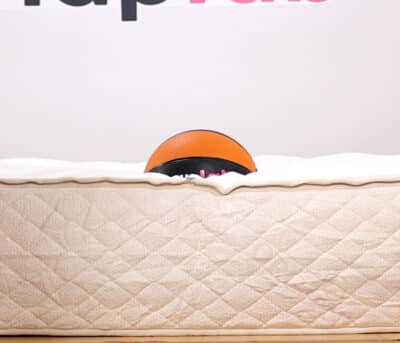
Max. Bounce Height
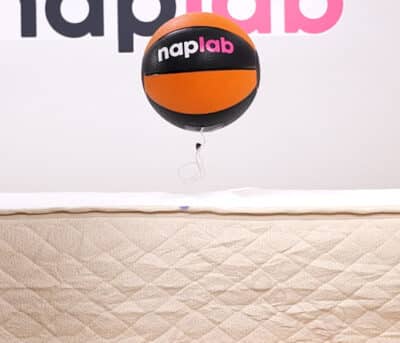
The level of bounce is also documented in the video below.
That extra bounce is the most significant reason that motion transfer is worse than average.
That said, the extra bounce also means sex performance and ease of movement are greatly enhanced, so there are pros and cons to consider here.
Edge Support Test
The Eco Terra has good sitting edge support and fair lying edge support.
Max. Sinkage
4.50″
Lying Support
Fair
Reinforced Edge
No
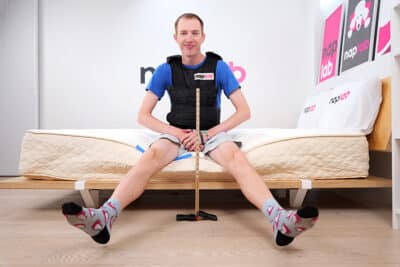
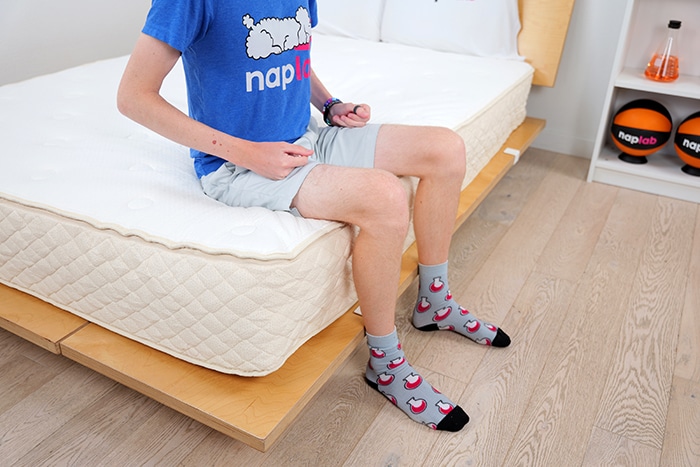
In our sitting edge support test, we measured a sitting sinkage compression of 4.50″. This is 0.66″ more sitting sinkage than the average of 3.84″, based on all of our tests to date.
The level of edge support while seated is documented in the images below.
Sitting, 140 lbs.

Sitting, 200 lbs.
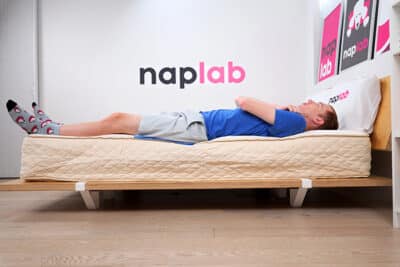
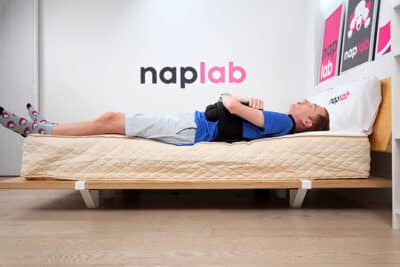
While lying directly on the edge of the mattress, I felt that the support was fair in all sleeping positions. Notably, this mattress is equipped with reinforced edge support coils.
Seemingly, those coils run along the entire perimeter. The coils use a 13.5-gauge wire and a more narrow coil diameter design.
The level of edge support while lying is documented in the images below.
Lying on Edge, 140 lbs.
Lying on Edge, 200 lbs.
Certainly, the reinforced edge coils are helping to improve edge support. Nevertheless, they alone just aren’t able to deliver especially great edge support overall.
As with motion transfer, less-than-great edge support isn’t an exclusive problem with Eco Terra, but rather a challenge that many latex hybrid mattresses have.
All that to say, if you want to go with a latex hybrid, especially a more budget-friendly latex hybrid, you should be prepared for edge support to be lacking.
Sex Test
The Eco Terra has good sex performance. On the positive side, cooling is excellent, and bounce is very high. In our bounce tests, we measured a 10.92” of total bounce height.
This is notably more bounce than average. When it comes to sex, more bounce is almost always better. The extra bounce makes sex easier, less tiring, less strenuous, and more fun.
Moving on with good, but not scores, we have moderate noise from the coil unit, and good pressure relief and edge support.
| Sex Factor | Factor Weight | Score | Rating |
|---|---|---|---|
| Bounce | 65% | 9.3 | Very High |
| Edge Support | 20% | 8.1 | Good |
| Noise | 5% | 8.0 | Moderate |
| Pressure Relief | 5% | 8.0 | Good |
| Cooling | 5% | 9.0 | Excellent |
In our sitting edge support test, we measured a sitting sinkage compression of 4.50”. This is notably worse than average and means the edge of the mattress just isn’t as robust and supportive as we’d like to see it.
That weaker edge means that you simply have less usable surface area on the mattress for amorous activities.
Pressure Relief Test
The Eco Terra has a good level of pressure relief. During our tests, I felt no significant pressure points on my body.
Comfort Layer
2.00″
Support Layer
9.00″
That said, it’s also clear that the pressure relief performance doesn’t rise to the excellent or outstanding level.
The mattress is equipped with 2.0″ of comfort material, which is 2.32″ less comfort material than the average comfort layer thickness of 4.32″, based on all of our tests to date.
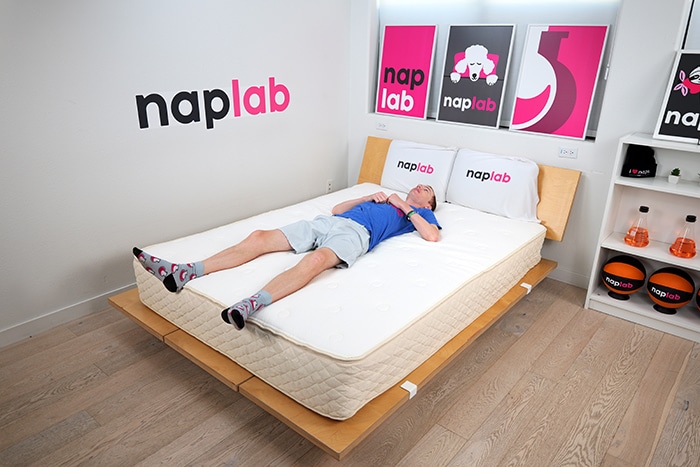
The quality of the latex seems fine, though I absolutely wish there was more of it. With only 2.0” of latex and a fairly thin wool quilted cover, there’s just not a ton of material between sleepers and coil unit.
The moderate sinkage depth means you’re sinking at a decent level, therefore making greater contact with the coil unit. All things considered, the Eco Terra has a typical latex hybrid feel.
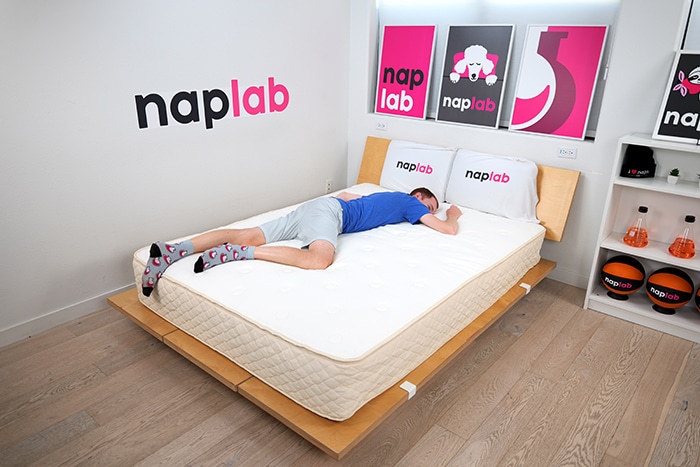
It has got a more generalized body contouring hug, a more relaxed feel, but it’s also highly responsive. That feel is neither good nor bad, but I do think it’s more polarizing. Some sleepers love it, and some really don’t.
As with many other performance areas on this mattress, it’s not an issue exclusive to Eco Terra, but rather to all latex hybrids. You’ll want to be sure your body is compatible with that type of comfort dynamic in order to enjoy the feel of this mattress.
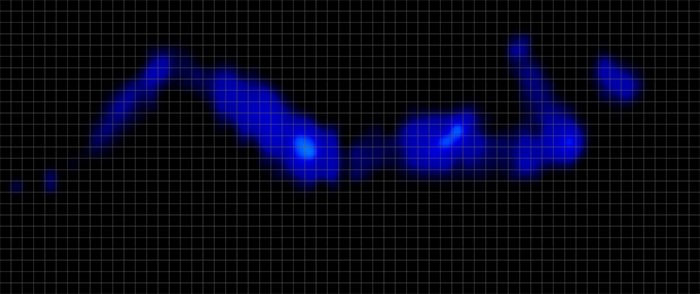
Pressure Map – Side Sleepers
| Pressure Relief (PSI) | Average | Maximum |
|---|---|---|
| Side Sleepers | 0.10 | 0.52 |
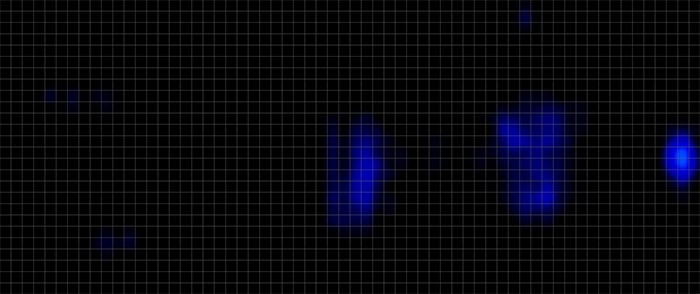
Pressure Map – Back Sleepers
| Pressure Relief (PSI) | Average | Maximum |
|---|---|---|
| Back Sleepers | 0.06 | 0.44 |
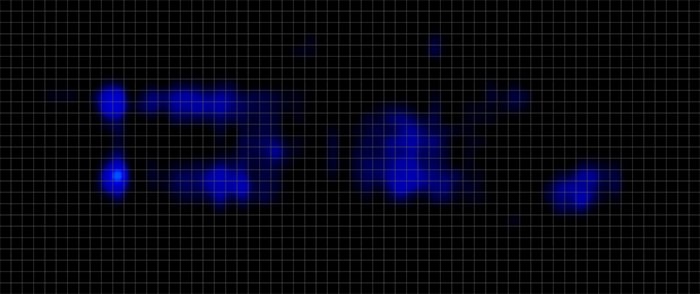
Pressure Map – Stomach Sleepers
| Pressure Relief (PSI) | Average | Maximum |
|---|---|---|
| Stomach Sleepers | 0.06 | 0.48 |
Lastly, in our objective pressure mapping tests, we measured a max PSI of 0.52, which is well within the 1.0 PSI threshold we ideally want to see.
When I consider our objective pressure mapping tests, material thickness, material quality, and my subjective experience on the mattress, I’m confident most sleepers will find the pressure relief to be good.
Smell Test
The Eco Terra had a strong smell upon the initial unboxing. The mattress smelled for 28 days. This is 20.6 days longer than the average smell duration of 7.4 days.
Initial Smell Strength
Strong
Smell Period
28 days
Company
Eco Terra mattresses come with a 90-night trial period and a 15-year warranty. Shipping and returns are both free.
| Company Factor | Factor Weight | Score | Data |
|---|---|---|---|
| Returns | 40% | 10 | $0 |
| Trial Period | 30% | 6.0 | 90 nights |
| Warranty | 20% | 8.0 | 15 years |
| Shipping | 10% | 10 | $0 |
| Country of Origin | 0% | USA |
Comparing 116+ brands tested to date, the average trial period is 183 nights, 93 nights more than Eco Terra offers. The 15-year warranty is 2 years longer than the 13-year average warranty. Of course, this does exclude 42% of mattresses that offer lifetime warranties.
How firm is Eco Terra?
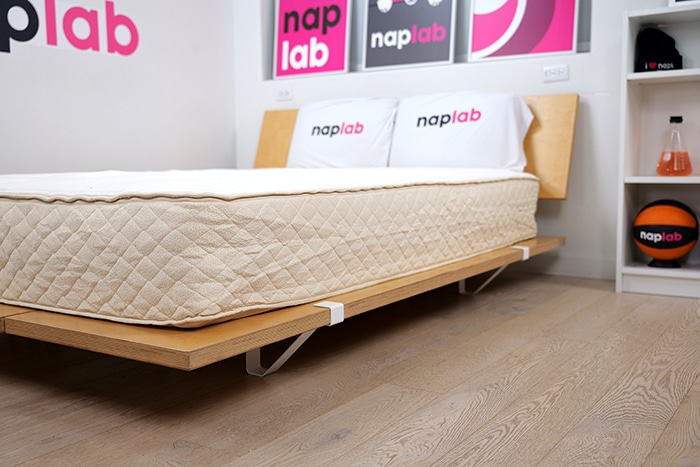
The Eco Terra mattress comes in two firmness options—medium and medium-firm. We tested the medium version for this review.
The Medium version has a medium-firm feel, and we rate it at a 6 out of 10, where 10 is the most firm. This is the recommended option for the vast majority of sleepers.

The Medium-Firm version we did not test personally, but I would estimate it has a firmness rating of 7 out of 10, which makes it a slightly firm feel.

Support & Sleeping Positions
Support on the Eco Terra is good. During our tests, I felt well supported in all sleeping positions. The mattress is equipped with a 9.0″ support layer. This is 1.02″ thicker than the average support layer thickness of 7.98″, based on all of our tests to date.
While I found the support dynamic to be good, it’s also clear that it doesn’t rise to the excellent or outstanding level. Part of that more limited support performance is due to the limited 2.0” comfort layer.
| Support Factor | Data |
|---|---|
| Comfort Layer | 2.00″ |
| Support Layer | 9.00″ |
| Firmness | Medium-Firm and Slightly Firm |
| Body Contour | Slight |
| Zoned Support | No |
| Reinforced Edge | No |
Less foam and other comfort material simply means there is less material between sleepers and the coil unit. That limits pressure relief and overall comfort, which can make it harder to sleep comfortably in the same positions for extended periods of time.
To be fair, Eco Terra provides a support dynamic that is perfectly fine, but it’s also fair to say there is plenty of room for improvement (Eco Terra’s sister brand, Plushbeds, offered a much better supportive experience, in my view).
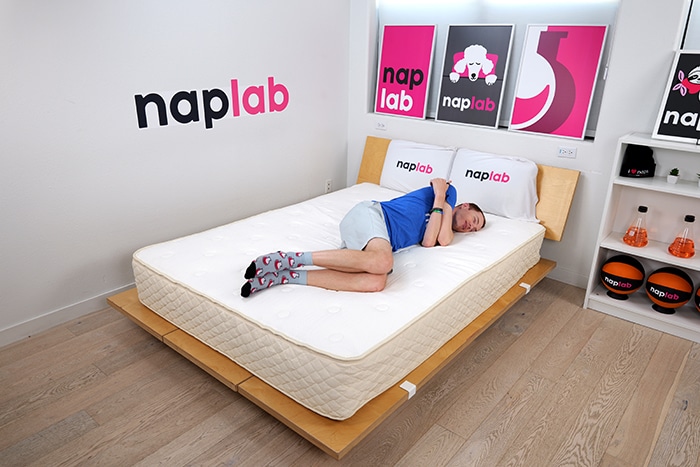
Eco Terra is available in 2 firmnesses, medium and medium-firm. We tested the medium version and found it had a medium-firm feel, 6 out of 10 on our firmness scale. For the vast majority of sleepers, that medium version is going to be the best choice.
It creates an ideal balance of comfort and support that is appropriate for all sleeping positions and most sleepers. That said, if you’re heavier weighted, an exclusive back or stomach sleeper, and/or simply want it to be firmer, then the medium-firm version could be a better choice.
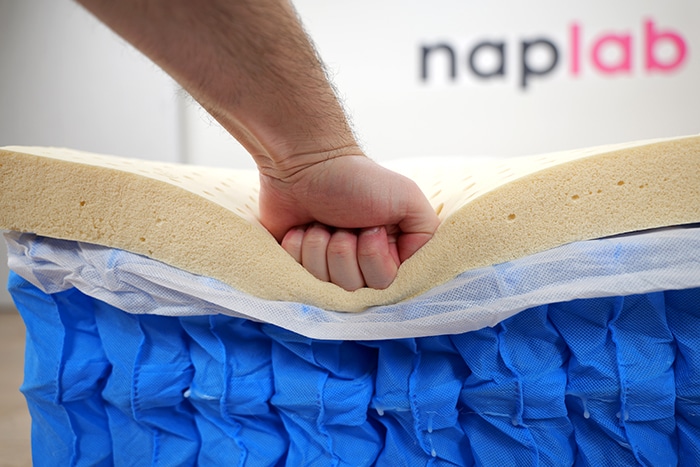
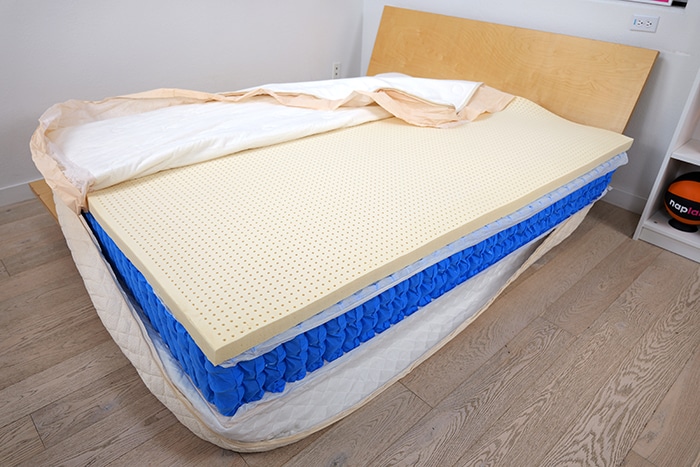
Moving on, in all mattress tests, we make it a point to cut the mattress open and examine the material quality. In doing so, I’m pleased with what I see. The materials look and feel high quality, both on the body and in-hand. My only complaint is the limited 2.0” comfort layer.
I would have liked to have seen either a thicker quilted wool cover and/or a thicker latex layer, which I believe would have improved pressure relief, comfort, and support.
Check out the table below to see the sleeper weights and sleeping positions that would be best suited for this mattress.
Medium
| Sleeper Weight | Stomach Sleeper | Side Sleeper | Back Sleeper |
|---|---|---|---|
| Under 150 lbs. | Yes | Yes | Yes |
| 150-250 lbs. | Yes | Yes | Yes |
| 250-300 lbs. | Yes | Yes | Yes |
Medium-Firm
| Sleeper Weight | Stomach Sleeper | Side Sleeper | Back Sleeper |
|---|---|---|---|
| Under 150 lbs. | Yes | Yes | Yes |
| 150-250 lbs. | Yes | Yes | Yes |
| 250-300 lbs. | Yes | Yes | Yes |
Notably, this mattress does not use zoned support. Instead, we have a single support zone of 14-gauge coils (based on our testing data) with 13.5-gauge coils running along the edge.
While I prefer to see zoned support coils, their absence feels less dramatic given the thicker gauge of wire that Eco Terra is using.
Based on all of my tests to date, an analysis of the materials, and my subjective experiences, I’m confident that most sleepers will find support on the Eco Terra to be good.
Design
The Eco Terra is an 11.00″ latex hybrid mattress that comes in two firmness options—Medium-Firm and Slightly Firm.
| Design Factor | Data |
|---|---|
| Type | Latex Hybrid |
| Thickness | 11.00″ |
| Cover Type | Quilted |
| Weight | 100 lbs. |
| Has Handles | No |
| Fiberglass-Free | Yes |
| Ships in a Box | Yes |
It has a simple design with a thin quilted cover. There are no handles or fancy bells and whistles, but it’s the simple design that keeps the price low.
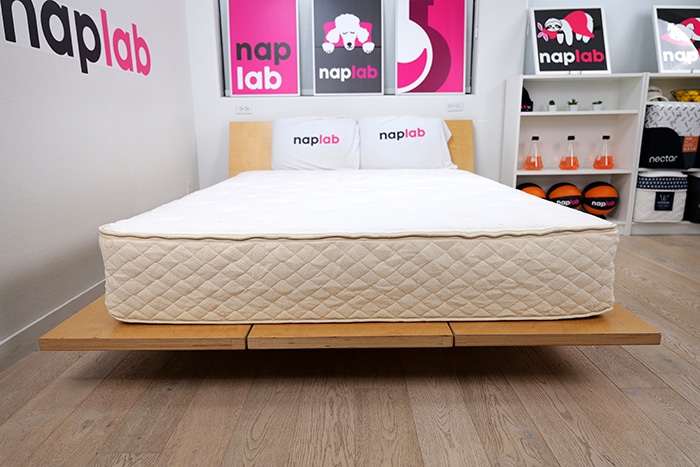
In addition, this mattress is GOLS, GOTS, and Oeko-Tex certified. Priced at only $1,000 for a queen mattress, the Eco Terra is one of the most affordable organic mattresses with multiple certifications on the market.
Materials
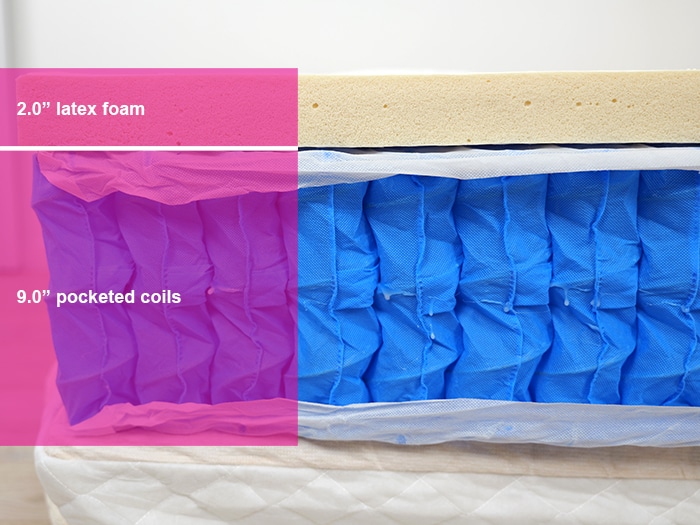
The Eco Terra is 11.00″ thick and contains a combination of latex foam and pocketed coils. From top to bottom, here is a full list of the materials used in this mattress:
| Layer Type | Thickness | Manufacturer’s Specs | Tested Specs |
|---|---|---|---|
| Latex Foam | 2.00″ | 24-26 ILD | 4.88 PCF |
| Pocketed Coils | 9.00″ | 15.0 Gauge (Center), 13.5 Gauge (Edge) | 14 Gauge (Center), 13.5 Gauge (Edge) |
The Law Tag outlines the full breakdown of materials included in this mattress.
- Materials
- 73% latex foam rubber
- 21% wool
- 6% cotton batting
- Spring unit
- Made by: The Natural Latex Company, 3233 Mission Oaks Blvd., Bldg. C, Camarillo, CA 93012
- Date of Delivery: 3/1/2026
- Finished Size: 60 x 80 IN (152.4 x 203.2 cm) 100 LBS
- Made in USA
- Manufactured By: The Natural Latex Company, 3233 Mission Oaks Blvd., Ste. C, Camarillo, CA 93012
- Model: Eco Terra Hybrid
The Cover
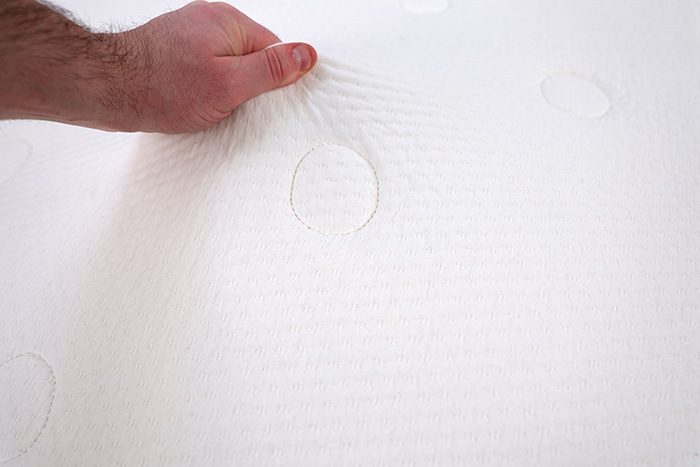
The Eco Terra has an organic cotton quilted cover with organic wool quilted into the middle. It is soft to the touch and has a bit of stretch with round quilted accents that attach the cover to the rest of the mattress.
The Comfort Layer
The comfort layer is 2.00″ thick and made of a single layer of latex and sits directly below the organic cotton and wool cover.
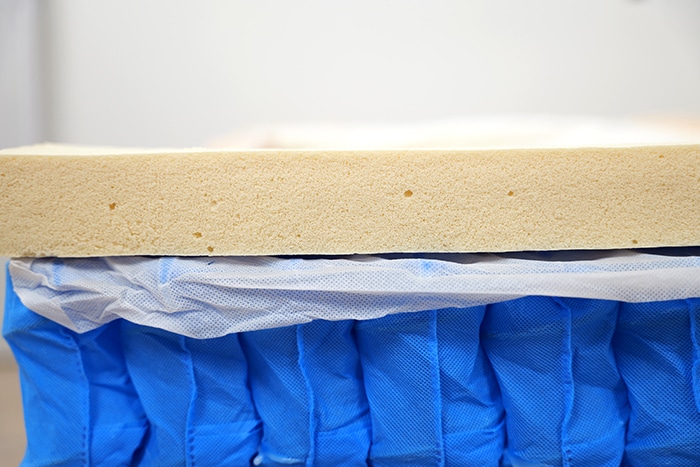
The latex within this layer is GOLS-certified, making it a great option for sleepers who want more natural materials.
The Support Layer
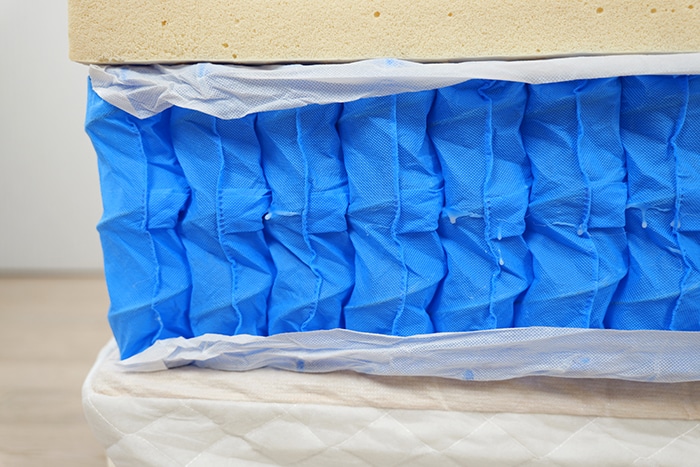
The support layer is 9.00″ thick and made of a pocketed coil unit. There are strong coils at the edge of the mattress and more standard coils towards the center of the mattress.
Product Evolution
Eco Terra was founded around 2016 and it looks like the 11″ latex hybrid was launched around 2019. That said, our first test of this mattress happened in May 2026.
It is unclear what, if any, changes this mattress has undergone from its initial launch to its current version that is manufactured and distributed.
Other Mattresses to Consider
Not sure if the Eco Terra is the right pick for you? Check out these three other top-rated latex hybrid mattresses under $1000 for alternatives you may want to consider.
For Performance
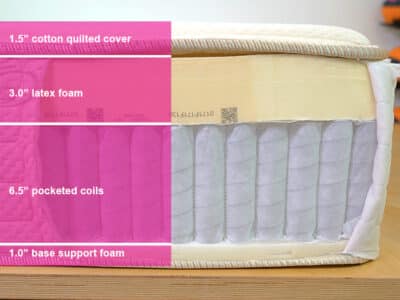
Latex Mattress Factory Luxerion Hybrid
3.0″ Latex Comfort Layer
The Latex Mattress Factory Luxerion Hybrid is a 12″ latex hybrid mattress available in 1 firmness level—medium-firm. This mattress has a thicker cover and a thicker latex layer (33% thicker than the Eco Terra). For less motion transfer and better edge support, it’s hard to bear the Luxerion.
For Moderate Bounce
Awara
GOLS-Certified Latex
The Awara is an 11″ latex hybrid mattress available in 1 firmness level—medium-firm. It has a similar firmness and similar generalized contour to what we tested on the Eco Terra.
For Three Firmness Levels
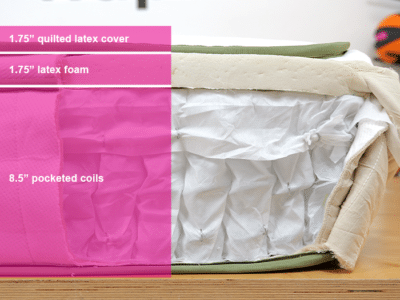
Silk & Snow Organic
GOTS + GOLS Certified
The Silk & Snow Organic is a 12″ latex hybrid mattress available in 3 firmness levels—soft, medium, and slightly firm. For sleepers who want a different firmness (or a split configuration), the Silk & Snow Organic can be an attractive option.
Frequently Asked Questions
Still have questions? Check out some of the top FAQs on the Eco Terra mattress below and get the answers you’re looking for.
How much does an Eco Terra mattress cost?
Here are the current prices of the Eco Terra mattress, with any sales or promotions reflected below:
Twin: $699
Twin XL: $799
Full: $899
Queen: $999
King: $1,299
Cal. King: $1,299
*Note: Sales prices are subject to change without notice or warning.
Explanation of Eco Terra’s Dispute
Below is a timeline of the dispute and the steps NapLab has taken along the way.
February 12, 2026 – Eco Terra asked if they could send NapLab a mattress for review. We agreed to accept the mattress and complete our tests / review. The mattress arrived some days later and we began testing thereafter.
May 29, 2026 – the Eco Terra review was published to NapLab.com.
July 6, 2026 – a representative from Eco Terra informed NapLab that the mattress we tested was shipped with the wrong cover. They asked NapLab if we could re-test the mattresses with the correct cover. We agreed to that re-test. They also asked NapLab to delete the review. We declined to delete the review. Later that same day Eco Terra informed NapLab that it may have been the wrong mattress entirely.
July 8, 2026 – a representative from Eco Terra asked us to delete the review a second time. We declined to delete the review. Eco Terra reiterated that they believe the mattress that was sent to us is not an Eco Terra.
July 8, 2026 – Editor’s Note – Based on the information we have, I believe the Eco Terra sent to us is indeed an Eco Terra. The mattress arrived to us with clear and prominent Eco Terra labeling. In addition, the law tag attached to the mattress lists the model name as “ECO TERRA HYBRID”. The other information on the law tag confirms the manufacturer and materials information that I would expect for this mattress. Nevertheless, we have agreed to re-test this mattress. As of today, we are waiting for Eco Terra to ship the replacement mattress for testing.
October 14, 2026 – On July 6, 2026 Eco Terra’s representative informed us that they would ship a replacement mattress. Later on July 6, 2026 they reiterated that they would “ship [NapLab] the correct mattresses immediately.” On July 8, 2026 Eco Terra further reiterated that they would “send [NapLab] the correct mattresses.” On July 22, 2026 I followed up via email asking if the mattresses had shipped yet. Eco Terra did not respond. On August 8, 2026 I followed up again asking about the replacement mattress. Eco Terra’s representative responded that they “will contact them again now.” At this point, NapLab has waited 98 days for a replacement mattress to arrive. NapLab remains happy to re-test Eco Terra if / when Eco Terra chooses to send a replacement mattress.