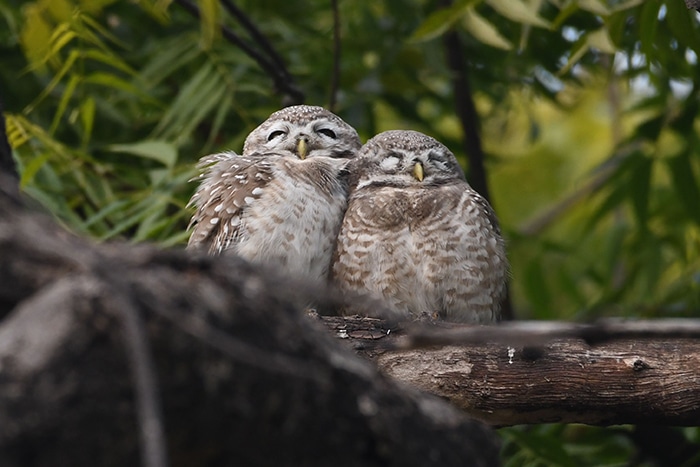
Imagine walking outside just after sunset and hearing a soft hoot from a nearby tree. You look up but can’t see much in the fading light. Meanwhile, an owl may already be watching you.
Owls are some of the world’s best nighttime hunters. Their large eyes, sharp talons, and quiet flight help them move through the dark while searching for food. More than 200 owl species live around the world, making their homes in forests, deserts, grasslands, and many other habitats.
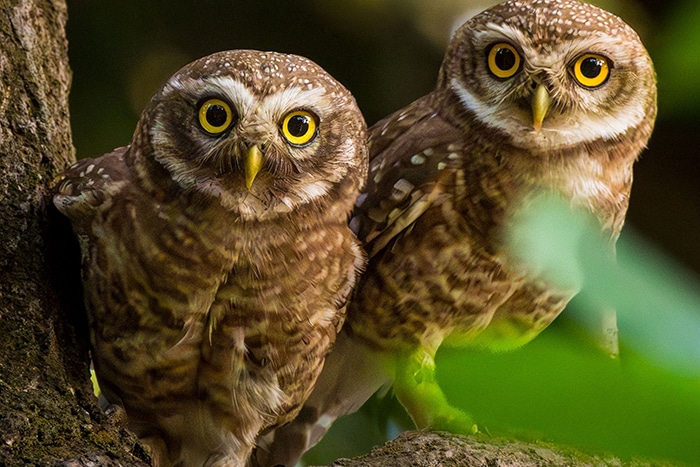
Like hawks and eagles, owls are birds of prey. Most species are active at night, although some hunt during the day or around sunrise and sunset. Owls belong to two main families: barn owls, which have heart-shaped faces, and all other owls, which usually have round faces.
Since most owls are active after sunset, daytime is usually reserved for sleep and rest. They spend those hours roosting in safe places that help protect them from weather and temperature changes before heading out to hunt at night. Their ability to see, hear, and move through the dark helps them find food when many other predators are inactive.
Basic Owl Facts
- Most owls have large eyes and flat faces, which make them easy to recognize.
- Barn owls are especially easy to spot because of their heart-shaped faces.
- There are about 200 owl species found around the world.
- Most owls are active at night, although some species hunt during the day.
- A group of owls is called a parliament.
- Owls can turn their heads up to 270 degrees to look around.
- They can see distant objects almost as well as nearby things.
- Their feathers help them fly very quietly.
- Feather colors and patterns help many owls blend into their surroundings.
- Strong talons allow owls to catch and hold prey.
- Many owl species eat insects, rodents, and small birds, while some species also hunt fish.
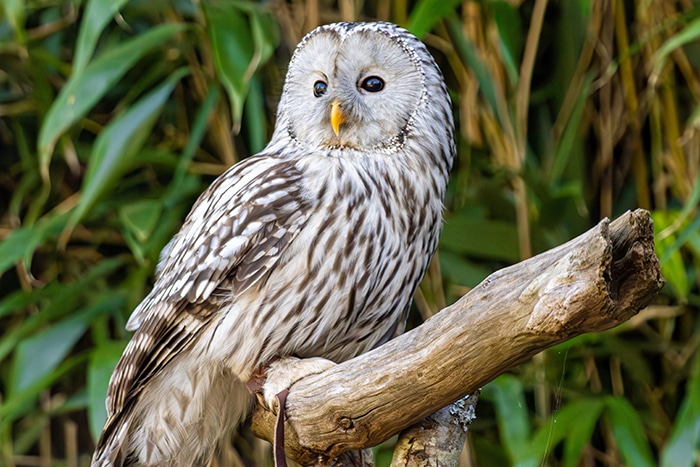
How Owls Find Food
Finding food takes up a large part of an owl’s life. Most species are meat eaters and feed on animals such as mice, voles, rabbits, birds, frogs, lizards, snakes, fish, and insects. What an owl eats often depends on where it lives and which prey is available.
Different species use different hunting techniques. Some wait quietly on a branch before swooping down to catch prey, while others search from the air as they fly over fields and open spaces. A few species can even hover briefly above the ground before diving toward a target. Thanks to their excellent hearing and eyesight, owls are often able to locate prey even in low-light conditions.
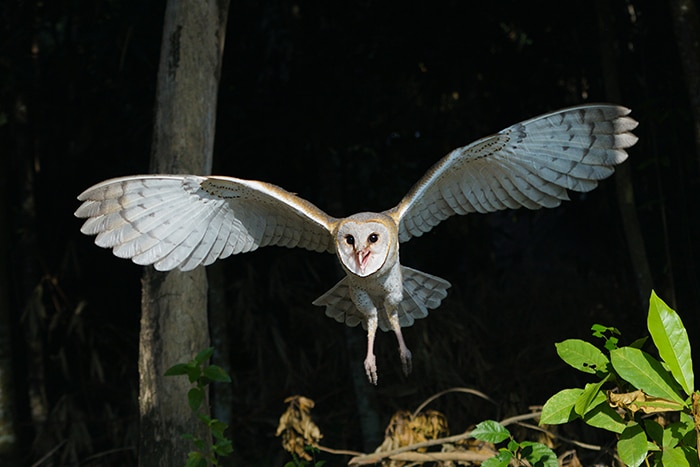
When hunting is especially successful, some owls save extra food for later. They may hide prey in tree holes, among branches, behind rocks, or in tall grass. This behavior, known as caching, helps ensure food is available when hunting becomes more difficult.
Where Owls Rest During the Day
After spending hours hunting, owls return to a resting place called a roost. During the day, many species rest comfortably and conserve energy before becoming active again after sunset.
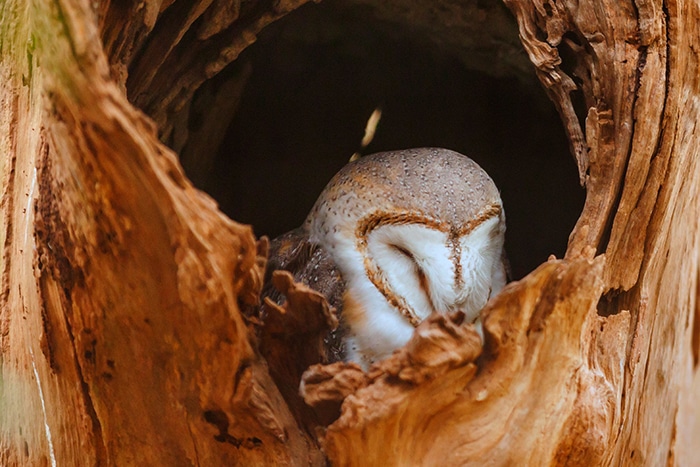
Most owls roost alone, especially outside the breeding season. Some species gather in groups, which may help them stay warm, watch for danger, and find mates more easily.
Roosts are often located close to hunting areas, making it easier for owls to begin searching for food soon after they wake up. While a roost is a temporary resting place, owls also need safe locations to raise their young.
Where Owls Make Their Homes
Unlike many birds, most owls do not build their own nests. Instead, they often move into nests that were originally built by other birds. Empty nests left behind by hawks, crows, and other large birds often become homes for owls.
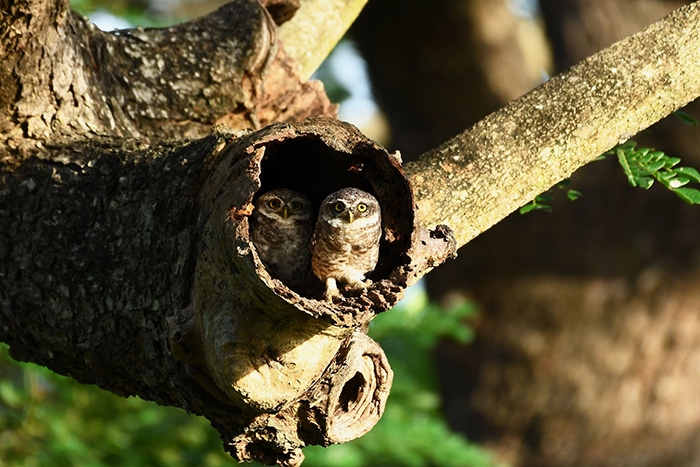
Owls use a variety of nesting locations, choosing places that provide protection and support for their young. Some nest in natural holes inside trees, while others use cavities created by woodpeckers. Barn owls commonly nest inside barns, silos, abandoned buildings, and cliff cavities. Burrowing owls take a different approach by nesting underground in tunnels made by animals such as prairie dogs and ground squirrels.
A few species, including snowy owls and short-eared owls, create simple nests on the ground. Once a nesting site has been chosen, owl parents protect the area while raising their young.
Responsible Birding Ethics and Owl Viewing Tips
1. Give Owls Plenty of Space: Watch owls from a safe distance and use binoculars or a camera zoom lens for a closer view. If an owl seems focused on your presence, move farther away to reduce stress.
2. Keep Disturbances to a Minimum: Keep noise to a minimum and avoid sudden movements. Never intentionally scare an owl into flight, since it uses valuable energy needed for hunting and survival.
3. Stay on Marked Trails: Remain on marked paths and avoid entering private property or sensitive wildlife habitats. This helps protect the places where owls rest and hunt.
4. Let Owls Behave Naturally: Do not use recorded owl calls, bait, or food to attract owls. These actions can interfere with their normal behavior and may create safety risks.
5. Be Careful When Sharing Locations: Think carefully before sharing an owl’s exact location online. Large crowds can accidentally disturb birds and their habitats.
6. Help Others Learn Good Birding Habits: Encourage responsible owl viewing whenever possible. Sharing good birdwatching habits can help protect owls and other wildlife.