Best For
- Adjustable firmness with remote control adjustability
- Excellent cooling performance
- Fantastic pressure relief for sleepers of all sleeping positions
Considerations
- Higher levels of motion transfer, 17% more motion than average
- Strong off-gassing, lasted for 23 days, over 3X the average
- Shipping is $250 and returns are $150 if the mattress ends up not working out
Our Verdict
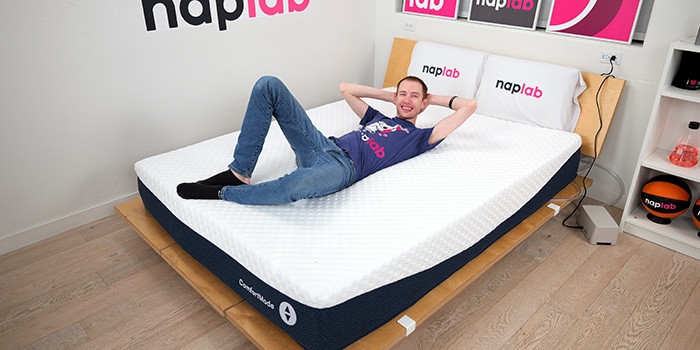
The Sleep Number Comfort Mode is a 10.00″ adjustable mattress made of poly foam, an adjustable air bladder, and a support foam base. The air bladder expands or compresses to give the mattress a firmer or softer feel.
The Sleep Number Comfort Mode is available with an adjustable firmness range that spans from medium (5 out of 10) to extra firm (9 out of 10). The majority of our tests were performed at firmness level 50.
This mattress has very deep sinkage and low levels of bounce. I will note that this feel was tested at firmness level 50. Opting for a softer or firmer feel will yield slightly different levels of sinkage and bounce, but generally, this mattress has deeper engagement and less pushback.
In our performance tests, this mattress earned an overall score of 8.20, ranking the mattress in the bottom 24% of all mattresses tested to date. If we look exclusively at adjustable mattresses, that rank drops even lower to the bottom 13%. But what it lacks in performance, it may make up for in price.
The Sleep Number Comfort Mode is $1,599 for a queen-sized mattress, which is 50% less expensive than average. If you’re on a tight budget but want the flexibility of an adjustable option, the Sleep Number could be a reasonable pick.
Type: Adjustable
Firmness: Medium (5) to Extra Firm (9)
Best For: All Sleeping Positions, All Body Weights
In This Review
Performance Tests | Firmness | Support & Sleeping Positions | Design | Materials | Comparisons | FAQs
Performance Tests
At NapLab, we put each mattress to the test.
We test 10 different factors that impact the performance, comfort, and feel of the mattress. We then take the results of those tests and compare them to every mattress we’ve tested to date.
Check out the full performance table below to see how this mattress ranks:
| Factor | Sleep Number Comfort Mode | Average |
|---|---|---|
| Overall Score | 8.20 | 8.51 |
| Price (Queen) | $1,599 | $3,210 (Adjustable only) |
| Cooling – Score | 9.0 | 8.6 |
| Sinkage – Depth | 2.78″ | 2.25″ |
| Sinkage – Feel | Very Deep | Moderate |
| Motion Transfer – Score | 7.6 | 8.2 |
| Motion Transfer – Acceleration | 10.34 m/s² | 8.81 m/s² |
| Response Time – Score | 9.6 | 8.8 |
| Response Time – Mostly Recovered | 0.2 sec. | 0.4 sec. |
| Response Time – Fully Recovered | 0.7 sec. | 1.0 sec. |
| Bounce – Height | 7.93″ | 8.71″ |
| Bounce – Feel | Low | Moderate |
| Edge Support – Score | 8.4 | 8.7 |
| Edge Support – Sitting | 4.00″ | 3.87″ |
| Edge Support – Lying | Good | Good |
| Sex – Score | 8.0 | 8.2 |
| Pressure Relief – Score | 9.0 | 8.5 |
| Comfort Layer Thickness | 3.50″ | 4.30″ |
| Mattress Thickness | 10.00″ | 12.21″ |
| Off-Gassing – Score | 3.6 | 8.0 |
| Off-Gassing – Smell | Strong | Strong |
| Off-Gassing – Days | 23 days | 7 days |
| Company – Score | 6.8 | 8.9 |
| Trial | 100 nights | 193 nights |
| Warranty | 15 years | 41% have lifetime warranties, average of other 59% of mattresses is 13 years |
How is Sleep Number Comfort Mode Different?
The Sleep Number Comfort Mode is a 10.00″ adjustable mattress with an overall performance level that is below average, but paired with a price that is below average as well.
Advantages
Advantages of the Sleep Number include better cooling performance and faster response time. This mattress also has above-average pressure relief despite only having a 3.5″ comfort layer (0.8″ less than average) and a thinner overall profile, only 10.0″ (2.21″ less than average).
The price could also be a big advantage for sleepers on a budget. The Comfort Mode is only $1,599 for an adjustable mattress—a savings of 50% compared to the average adjustable mattress.
Neutral Factors
This mattress is adjustable, so sinkage and bounce levels will vary based on the firmness setting you have it at. When tested at firmness level 50, this mattress had very deep sinkage and low levels of bounce.
Even at the firmest setting, this mattress still has deeper sinkage, and softer settings have extremely deep sinkage.
Because the bounce is primarily generated by air and the composition of the poly foam top layers, I would not expect it to vary dramatically across levels.
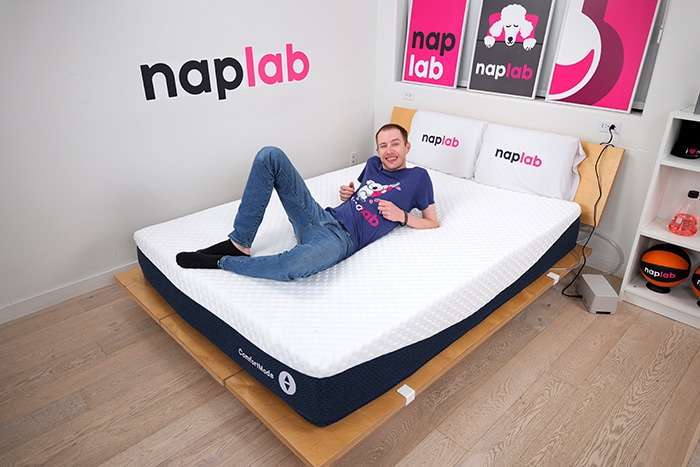
If you’re hoping for more bounce, the Comfort Mode may not be the right pick for you, but generally speaking, the adjustable nature of the Sleep Number provides a range of feels.
Disadvantages
Disadvantages of the Sleep Number include slightly worse edge support and very strong off-gassing. This mattress took 23 days to off-gas, where the average is only 7 days.
This mattress also has higher levels of motion transfer and a worse sex score. These two categories specifically impact couples the most, which is a bit unfortunate because the adjustable design of the Sleep Number is also aimed at benefiting couples the most.
Sleep Number offers a 100-night trial, which is 93 nights shorter than the average (193-night average). Additionally, shipping costs $250 to get the mattress to you and if you decide to return the mattress within your trial period, you will pay an additional $150 in return fees.
Cooling Test
The Sleep Number Comfort Mode has excellent cooling. During our tests, I did not feel any significant level of heat retention around my body.
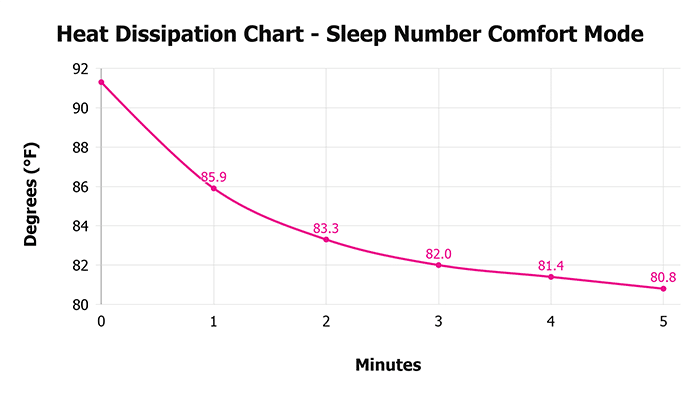
Baseline Temp.
76.3° F
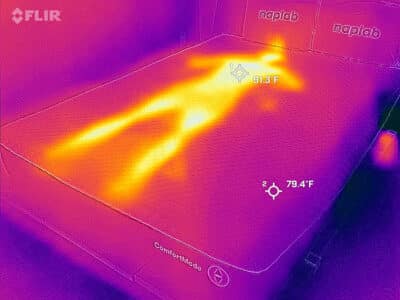
Max. Temp.
91.3° F
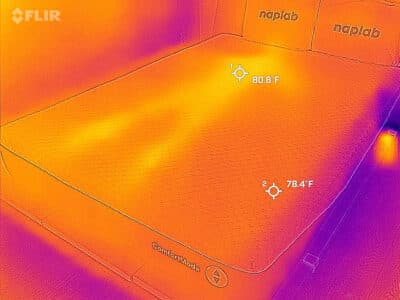
Ending Temp.
80.8° F
One of the major benefits of an adjustable mattress is the air bladder support layer. This layer, being filled with air, is simply less able to absorb and retain heat, especially compared to foam support layers.
Max. Temp.
Ending Temp.
- Baseline Temperature – the temperature of the mattress before anyone lies on it
- Maximum Temperature (0 minute) – the temperature of the mattress after lying on it for 15 minutes
- Ending Temperature (5 minute) – the temperature of the mattress after being lied upon and having no one on it for 5 minutes
In addition, we have all poly foam comfort layers on top. These poly foams all seem to breathe reasonably well and do not retain excessive heat.
In our objective temperature tests, we measured a max surface level temperature of 91.3° F. This is 1.1° warmer than the average of 90.2° F, based on all of our tests to date.
After getting off the mattress, the temperature declined by 5.4 degrees from minutes 0 to 1, which is 0.6 degrees cooler than the average 0 to 1 minute decline of 4.8 degrees.
Heat Dissipation Over Time
When we consider the combination of objective data, my subjective experiences, and an analysis of the materials, I’m confident in my view that cooling is excellent.
Sinkage Test
The Sleep Number Comfort Mode has very deep sinkage. During our tests, we measured a pressure point sinkage depth of 2.78″. This is 0.54″ more sinkage than the average sinkage depth of 2.24″, based on all of our tests to date.
Sinkage Depth
2.78″
Sinkage Feel
Very Deep
Body Contour
Balanced
The level of sinkage is documented in the image below.
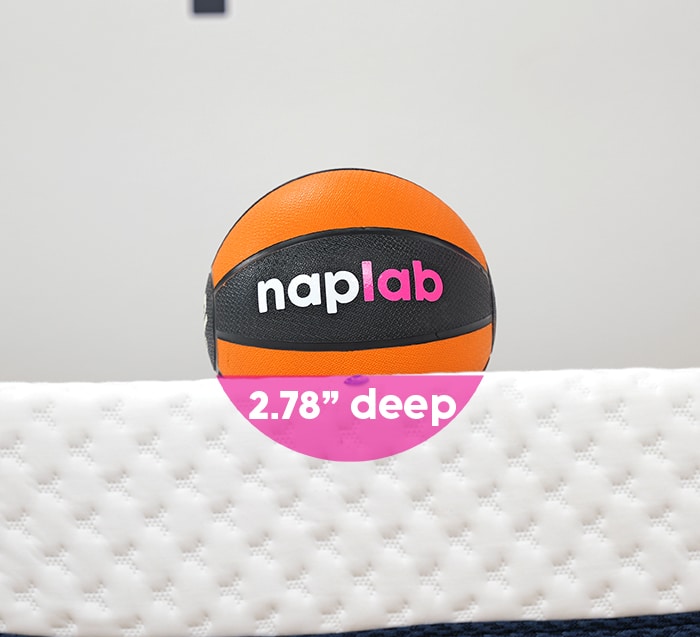
Our primary sinkage test was conducted at a firmness level of 50. However, we also tested other Sleep Number settings from 10 to 100 (see those below). The mattress creates a balanced body contouring hug, which makes sense given the material layers.
The comfort foams are two poly foam layers that don’t create a sharp or exacting hug like many memory foam layers will. Instead, we have a more even, balanced, non-polarizing type of hug around the body that many types of sleepers can enjoy.
Firmness: 10
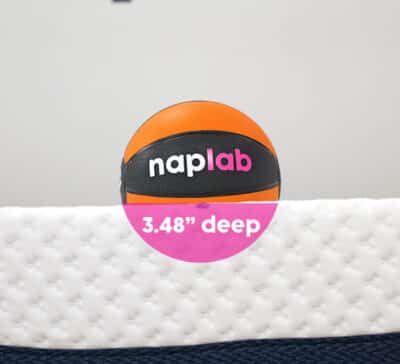
Firmness: 20
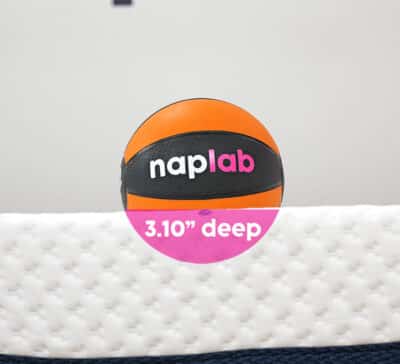
Firmness: 30
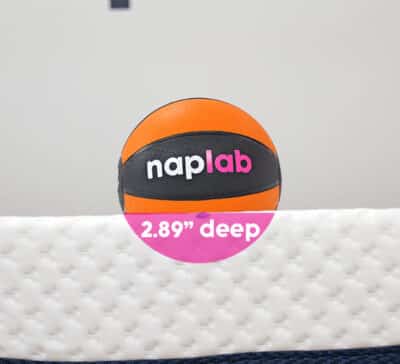
Firmness: 40
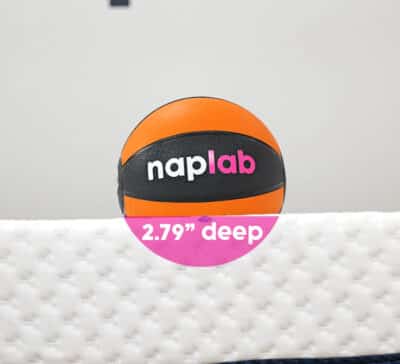
Firmness: 50
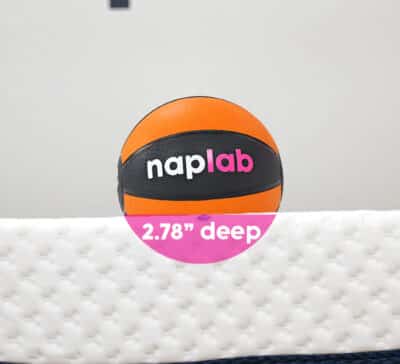
Firmness: 60
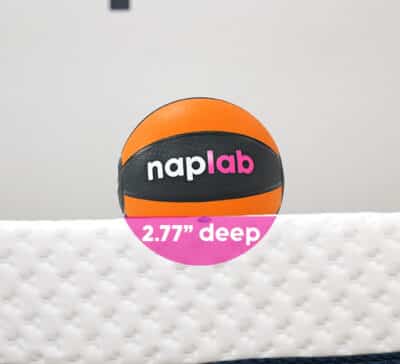
Firmness: 70
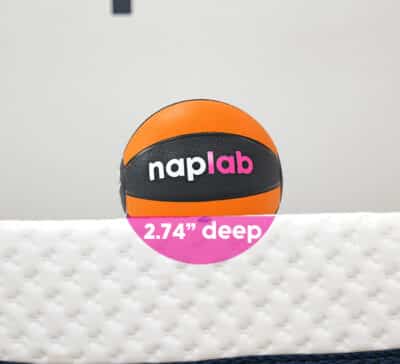
Firmness: 80
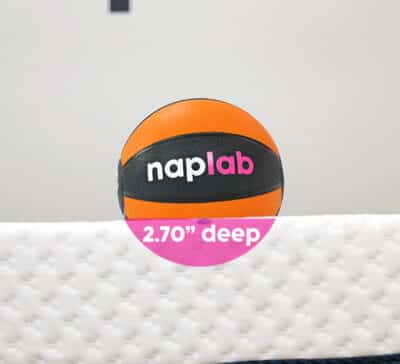
Firmness: 90
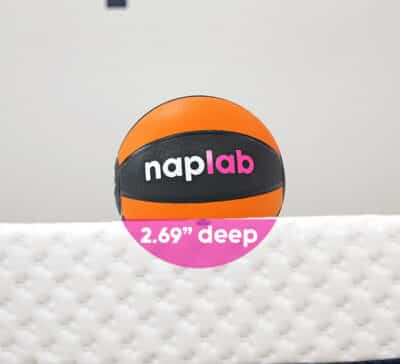
Firmness: 100
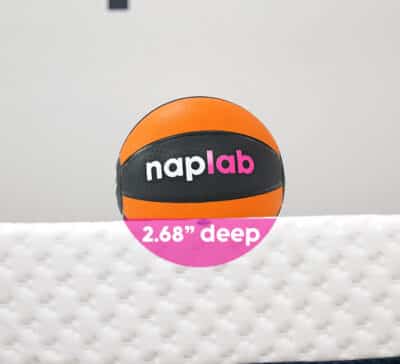
The 3.5” poly foam comfort layer is thick enough that you don’t acutely feel the adjustable air bladder at most firmness settings. That said, it is more noticeable at firmer levels due to the increase in resiliency and support.
Motion Transfer Test
The Sleep Number Comfort Mode has a moderate level of motion transfer. During our tests, we measured a total acceleration range of 10.34 m/s². This is 17% more motion transfer than the average of 8.82 m/s².
Accel. Range
10.34 m/s²
Motion Duration
0.80 seconds
This mattress has an unusual acceleration curve where we see huge negative acceleration and less positive acceleration. That unusual acceleration is a product of the air bladder, which creates an initial strong motion spike, but quickly levels off.
The air bladder isn’t as resilient or bouncy as many coil spring units will be, which helps to quickly bring energy levels down. While the 3.5” poly foam comfort layer is also helping, the bulk of the motion transfer story here can be explained by the adjustable air bladder.
The level of motion transfer is also documented in the video below.
In our motion transfer chart, which visualizes our accelerometer data, we can see the highest motion peaks from 0 to 0.2 seconds. Motion declines thereafter, but we do see a modest energy spike from 0.5 to 0.6 seconds.
By 0.80 seconds, we’ve returned to near-zero levels of energy, which is 0.09 seconds shorter than the average motion duration of 0.89 seconds.
Motion Transfer Over Time
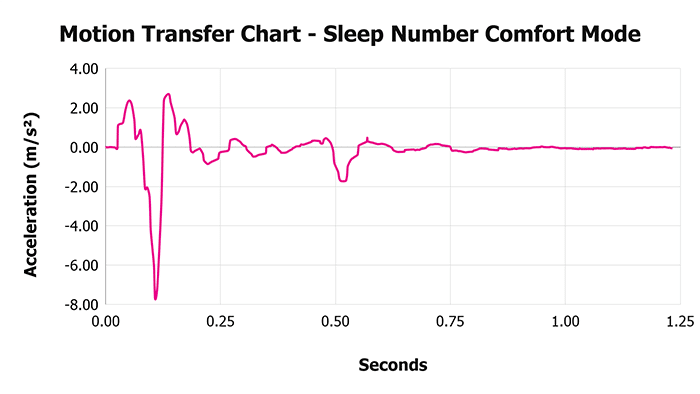
While motion duration is shorter than average, motion intensity was worse than average. As a result, we found motion transfer levels to be fine, but also far from great.
Response Test
The Sleep Number Comfort Mode has an extremely fast mostly recovered response time and a fast fully recovered response time.
Mostly Recovered
0.2 sec.
Fully Recovered
0.7 sec.
In our mostly recovered test, we measured a recovery speed of 0.2 seconds, which is 0.22 seconds faster than the average of 0.42 seconds, based on all of our tests to date.
In our fully recovered responsiveness test, we measured a recovery speed of 0.7 seconds, which is 0.32 seconds faster than the average of 1.02 seconds.
The level of responsiveness is documented in the video below.
While these responsiveness speeds aren’t quite instant, they aren’t slow either. The rapid material recovery speed ensures the mattress is easy to move around and you’ll never feel stuck or trapped in the mattress. Based on our testing data, I expect most sleepers will find this response speed to be perfectly satisfactory.
Bounce Test
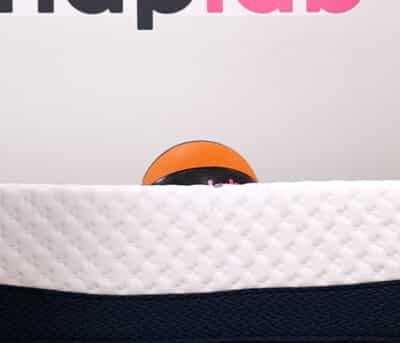
The Sleep Number Comfort Mode has a low level of bounce. During our tests, we measured a total bounce height of 7.93″. This is 0.78″ less bounce than the average of 8.71″, based on all of our tests to date.
Max. Depth
6.07″
Max. Rebound
1.86″
Total Bounce
7.93″
The below-average level of bounce is a product of the material design, specifically the adjustable air bladder. While the mattress is topped with 3.5” of poly foam, those layers alone can’t deliver high bounce. Instead, we see much of the bounce coming from the support layer, which is Sleep Number’s air bladder.
Max. Sinkage Depth
Max. Bounce Height
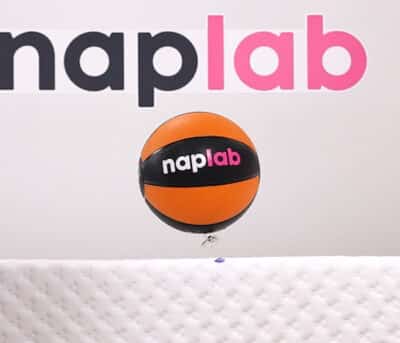
The level of bounce is also documented in the video below.
At the 50 firmness setting (medium), we measured less bounce than average compared to other mattresses we’ve tested. As is common on adjustable air mattresses, you can expect to see slightly more bounce at firmer settings and slightly less bounce at lower firmness settings.
The lower bounce does make this mattress worse for sex, but it also helps to keep motion transfer to a reasonably low level.
Edge Support Test
The Sleep Number Comfort Mode has good sitting edge support and good lying edge support.
Max. Sinkage
4.00″
Lying Support
Good
Reinforced Edge
Yes
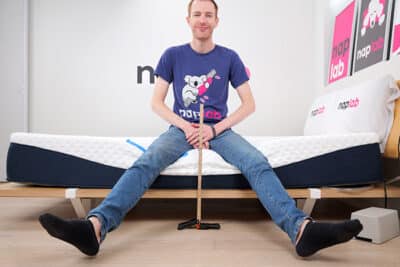
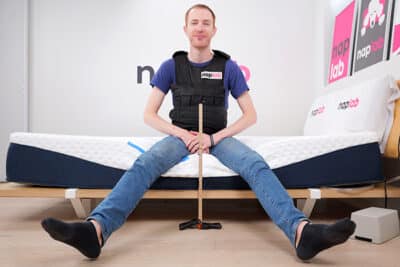
In our sitting edge support test, we measured a sitting sinkage compression of 4.00″. This is 0.13″ more sitting sinkage than the average of 3.87″, based on all of our tests to date.
The level of edge support while seated is documented in the images below.
Sitting, 140 lbs.
Sitting, 200 lbs.
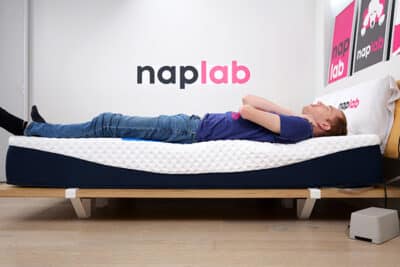
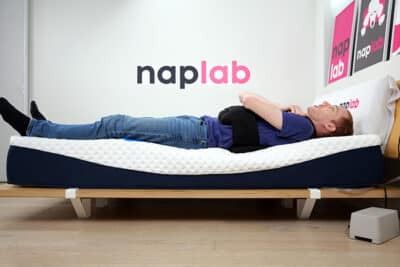
While lying directly on the edge of the mattress, I felt that the support was good in all sleeping positions. Notably, this mattress is equipped with support foam that runs along the entire perimeter of the mattress.
This support foam is 3.5” wide and 5.0” tall. It’s not quite as tall as we ideally like to see for an edge foam (6-8” would be preferable), but the 3.5” width is a good thickness.
The level of edge support while lying is documented in the images below.
Lying on Edge, 140 lbs.
Lying on Edge, 200 lbs.
Overall edge support was good, but also far from great. In my view, the combination of a slightly less tall 5.0” perimeter support foam and an adjustable air bladder is responsible for the more limited edge support.
Specifically, while lying near the edge, I noted a weaker sense of support, as the mattress just doesn’t feel as resilient at the absolute edge.
Sex Test
The Sleep Number Comfort Mode has good sex performance. First up, let’s talk through the positives, which include minimal noise, excellent pressure relief and cooling, and good edge support.
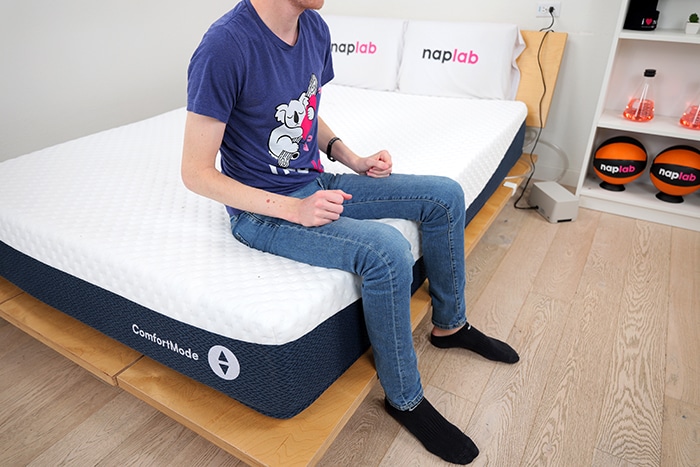
We measured sitting sinkage at the edge at a depth of 4.00”. This is slightly worse than average, but still robust enough to create good enough support that extends the surface area for amorous activities.
| Sex Factor | Factor Weight | Score | Rating |
|---|---|---|---|
| Bounce | 65% | 7.4 | Moderate |
| Edge Support | 20% | 8.8 | Good |
| Noise | 5% | 10 | Minimal |
| Pressure Relief | 5% | 9.0 | Excellent |
| Cooling | 5% | 9.0 | Excellent |
Where the mattress isn’t so great is bounce, which we measured at 7.93”. This is less bounce than average. When it comes to sex, more bounce is almost always better.
The more restrained bounce makes sex a more tiring and strenuous experience compared to mattresses with more bounce. Overall, we found the sex performance to be good, but also far from great.
Pressure Relief Test
The Sleep Number Comfort Mode has an excellent level of pressure relief. During our tests, I felt no significant pressure points on my body.
Comfort Layer
3.50″
Support Layer
6.50″
The mattress is equipped with 3.5″ of comfort material, which is 0.8″ less comfort material than the average comfort layer thickness of 4.3″, based on all of our tests to date.
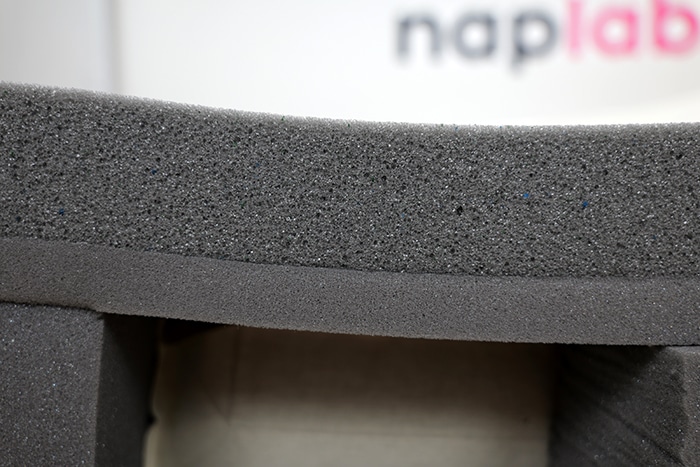
In all NapLab mattress tests, we make a point to cut the mattress open to examine the material quality. Overall, I’m pleased with what I see. The foam quality looks and feels good, both on the body and in-hand. Notably, the top-most foam layer has a more open cell structure, which is likely helping with cooling.
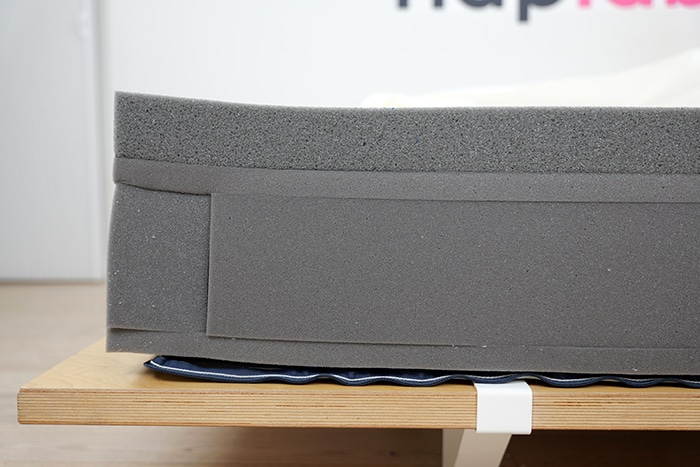
This mattress has a balanced, non-polarizing feel. It uses enough foam within the comfort layer that it feels like many other hybrid mattresses we’ve tested.
At higher firmness settings, you can feel more of the adjustable air bladder, as it becomes quite resilient and hard, but at medium and softer settings, it’s less noticeable.
In our objective pressure mapping tests, we measured a max PSI of 0.56. This is well within the 1.0 PSI threshold that I ideally want to see.
Pressure Map – Side Sleepers

| Pressure Relief (PSI) | Average | Maximum |
|---|---|---|
| Side Sleepers | 0.11 | 0.44 |
Pressure Map – Back Sleepers

| Pressure Relief (PSI) | Average | Maximum |
|---|---|---|
| Back Sleepers | 0.08 | 0.56 |
Pressure Map – Stomach Sleepers

| Pressure Relief (PSI) | Average | Maximum |
|---|---|---|
| Stomach Sleepers | 0.07 | 0.25 |
When I consider our objective pressure mapping tests, material thickness, material quality, and my subjective experience on the mattress, I’m confident most sleepers will find the pressure relief to be excellent.
Off-Gassing Test
The Sleep Number Comfort Mode had a strong smell upon its initial arrival. The mattress smelled for 23 days. This is 15.7 days longer than the average smell duration of 7.3 days. Notably, the Sleep Number mattress arrived uncompressed, and a crew of two people set the mattress up.
I was quite surprised at both the initial smell strength and smell duration. Typically, mattresses that arrive uncompressed have a considerably shorter smell duration than what we tested with the Comfort Mode.
Initial Smell Strength
Strong
Off-Gassing Period
23 days
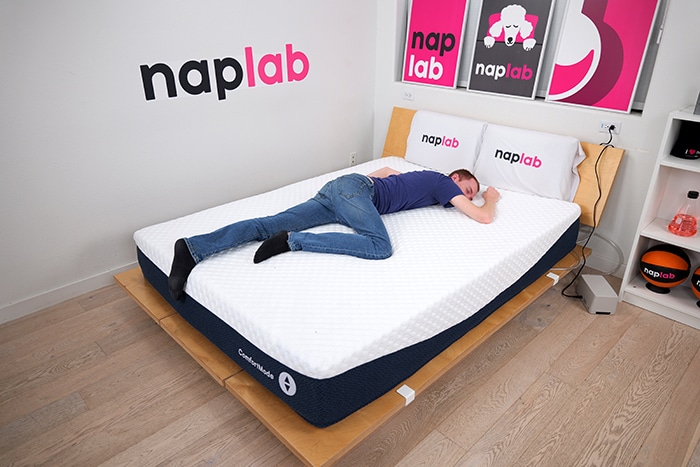
Company
Sleep Number mattresses come with a 100-night trial period and a 15-year warranty. Shipping is $250. Returns are $150.
| Company Factor | Factor Weight | Score | Data |
|---|---|---|---|
| Returns | 40% | 6.0 | $150 |
| Trial Period | 30% | 8.0 | 100 nights |
| Warranty | 20% | 8.0 | 15 years |
| Shipping | 10% | 4.0 | $250 |
| Country of Origin | 0% | USA |
Comparing 113+ brands tested to date, the average trial period is 193 nights, 93 nights more than Sleep Number offers. The average warranty is 13 years, which is 2 years less than this mattress, and that’s if we exclude the 41% of mattresses that offer lifetime warranties.
Shipping costs and return fees are also a real issue to consider. It’s pretty unusual to see shipping costs for initial orders in today’s market, and it’s astronomical to see a shipping fee of $250. When we add in the $150 return fee if things don’t work out, that’s $400 in extra costs.
This is a significant offset to the initially relatively low sticker price and a real consideration for sleepers on a budget.
Trial periods are beneficial as they can give sleepers a longer opportunity to try the mattress in the comfort of their own home. But much of that benefit feels degraded if it costs $250 to get the mattress to you and an extra $150 to take it away if you don’t love it.
How firm is Sleep Number Comfort Mode?
The Sleep Number Comfort Mode is an adjustable mattress that allows sleepers to modify its firmness rating with a remote that can select between 5 – 100.
Our tests were performed with the firmness set to 50, except for sinkage and firmness, where we performed tests across all firmness settings.
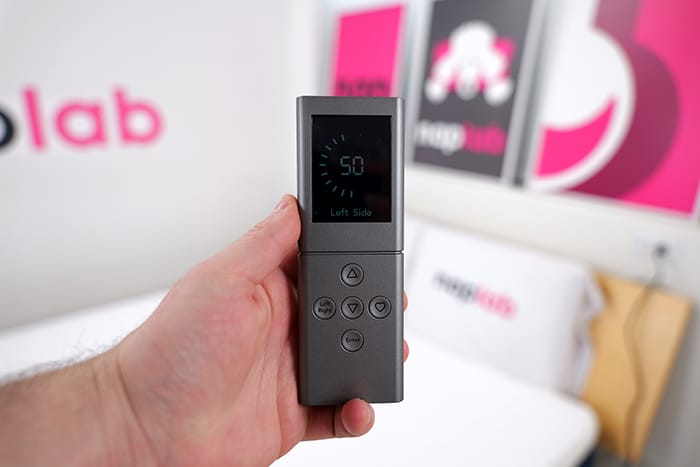
The Comfort Mode has a firmness range from medium (5) to extra firm (9), where 10 is the most firm. Below is how I would rate the mattress at each setting.
| Remote Setting | Firmness Rating |
|---|---|
| 5 | 5 |
| 10 | 5 |
| 20 | 5 |
| 30 | 5 |
| 40 | 5.5 |
| 50 | 6 |
| 60 | 6.5 |
| 70 | 7 |
| 80 | 8 |
| 90 | 8.5 |
| 100 | 9 |

In my view, the mattress does not feel substantially softer below a rating of 60. The difference between 60 and 5 is fairly minimal. Furthermore, settings below 20 felt unsupportive, so I don’t recommend them.
Despite the airbag being less full of air, the mattress still has a 3.5″ comfort layer. That 3.5” of foam doesn’t dynamically adjust its firmness, which is why there is such a fairly consistent level of firmness, especially in the medium and softer firmness settings.
Support & Sleeping Positions
Support on the Sleep Number Comfort Mode is excellent. During our tests, I felt well supported in all sleeping positions.
| Support Factor | Data |
|---|---|
| Comfort Layer | 3.50″ |
| Support Layer | 6.50″ |
| Firmness | Medium, Medium-Firm, Slightly Firm, Firm |
| Body Contour | Balanced |
| Zoned Support | No |
| Reinforced Edge | Yes |
The mattress is equipped with a 6.5″ support layer. This is 1.4″ thinner than the average support layer thickness of 7.9″, based on all of our tests to date. Certainly, the biggest selling point of the Sleep Number is the adjustable firmness.
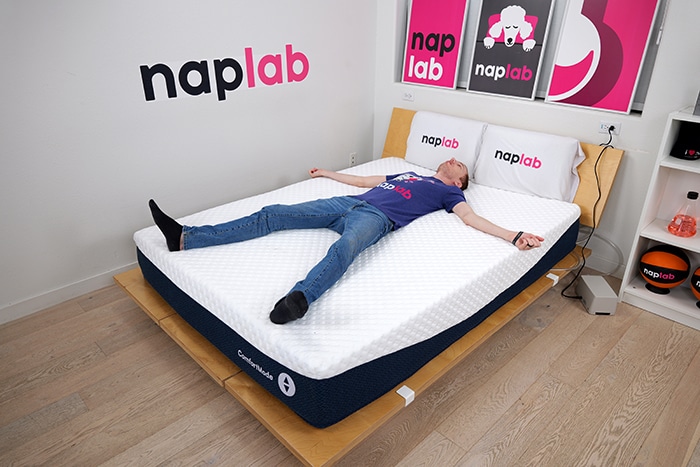
Being able to tune to your precise preferred firmness is hugely beneficial, as it creates more optimal support, pressure relief, and comfort. This feature is especially beneficial for sleeping partners who have different preferences and/or those who simply don’t know their ideal firmness preferences.
Check out the table below to see the sleeper weights and sleeping positions that would be best suited for this mattress.
Sleep Number Comfort Mode – 20/100
| Sleeper Weight | Stomach Sleeper | Side Sleeper | Back Sleeper |
|---|---|---|---|
| Under 150 lbs. | Maybe | Yes | Maybe |
| 150-250 lbs. | Maybe | Yes | Maybe |
| 250-300 lbs. | Maybe | Yes | Maybe |
Sleep Number Comfort Mode – 50/100
| Sleeper Weight | Stomach Sleeper | Side Sleeper | Back Sleeper |
|---|---|---|---|
| Under 150 lbs. | Yes | Yes | Yes |
| 150-250 lbs. | Yes | Yes | Yes |
| 250-300 lbs. | Yes | Yes | Yes |
Sleep Number Comfort Mode – 80/100
| Sleeper Weight | Stomach Sleeper | Side Sleeper | Back Sleeper |
|---|---|---|---|
| Under 150 lbs. | Yes | Maybe | Yes |
| 150-250 lbs. | Yes | Maybe | Yes |
| 250-300 lbs. | Yes | Maybe | Yes |
The Comfort Mode firmness ranges from a 5 out of 10 firmness on the lowest firmness setting to a 9 out of 10 firmness on the highest firmness setting. While this range is reasonably large, I was surprised to find it didn’t get any softer than a medium feel, 5 out of 10 firmness.
Perhaps more distressing, at the lowest firmness settings, the mattress becomes unsupportive. Specifically, the 5 and 10 firmness settings simply do not create sufficient support for the body, in my view. As a result, I would recommend not going any lower than the 20 firmness setting.
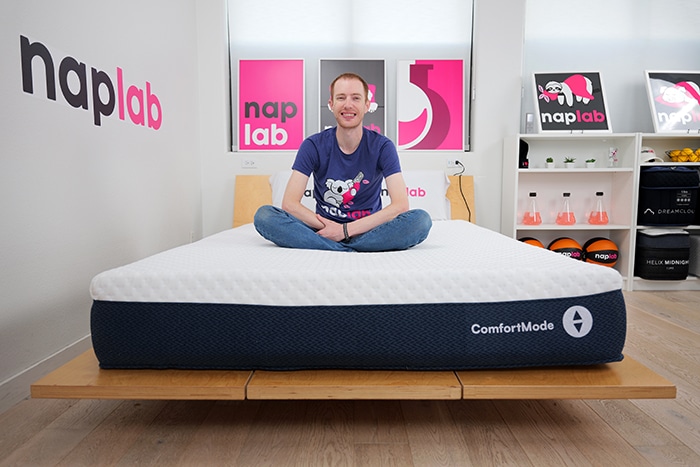
With all of that said, as long as your body is comfortable between a 5 out of 10 medium feel and a 9 out of 10 extra firm feel, then this mattress can create a good support dynamic for you.
Lastly, this mattress does not utilize any type of zoned support and does not contain any coils. Based on all of my tests to date, an analysis of the materials, and my subjective experiences, I’m confident that most sleepers will find support on the Sleep Number Comfort Mode to be excellent.
Design
The Sleep Number Comfort Mode is a 10.00″ adjustable mattress that comes in an adjustable firmness range, spanning from Medium (5) to Extra Firm (9).
| Design Factor | Data |
|---|---|
| Type | Adjustable |
| Thickness | 10.00″ |
| Cover Type | Thin |
| Weight | 70 lbs. |
| Has Handles | No |
| Fiberglass-Free | Unclear |
| Ships in a Box | No |
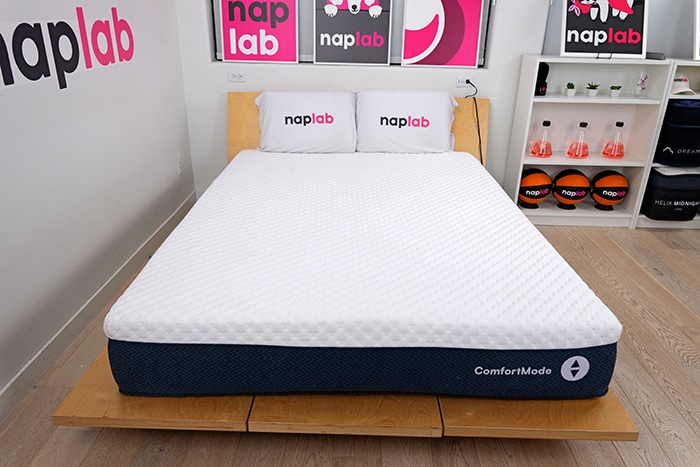
The design uses an adjustable air bladder within the support core of this mattress to provide a variable firmness level, a setting that can be adjusted on each side of the mattress.
For partners with very different needs, this adjustable firmness design can make it easier for each partner to get the feel that they’re looking for.
Materials
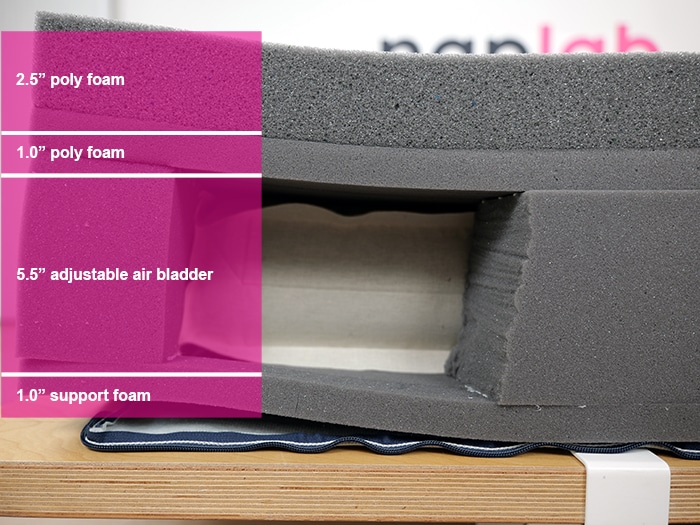
The Sleep Number Comfort Mode is 10.00″ thick and contains a combination of poly foam, support foam, and air. From top to bottom, here is a full list of the materials used in this mattress:
| Layer Type | Thickness | Layer Specs |
|---|---|---|
| Poly Foam | 2.50″ | 2.5 PCF |
| Poly Foam | 1.00″ | Not Available |
| Adjustable Air Bladder | 5.50″ | Not Available |
| Support Foam | 1.00″ | Not Available |
The Law Tag outlines the full breakdown of materials included in this mattress.
- Materials
- 100% polyurethane foam
- Air bladder
- Covering:
- Made For: Sleep Number Corporation, 1001 3rd Avenue South, Minneapolis, MN 55404
- Manufacture Date: 2/17/2026
- Finished Size: 60×80 in.
- Net Weight of Filling Mat: 0 lbs 0 oz
- Made in USA of Imported and Domestic Components
- Manufactured by: Sleep Number Corporation 2801 W Rochelle Road, DFW Airport, TX 75261
- Date of Manufacture: 2/2026
- Model: 2900 (CM)
The Cover
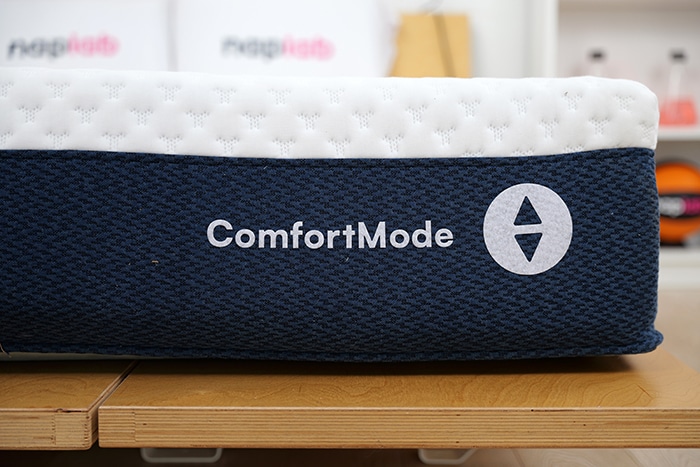
The Sleep Number Comfort Mode has a thin knit cover that is soft and has a bit of stretch to it. The same cover fabric wraps around the sides, then transitions to a thicker, dark blue fabric along the majority of the mattress’s side panels.
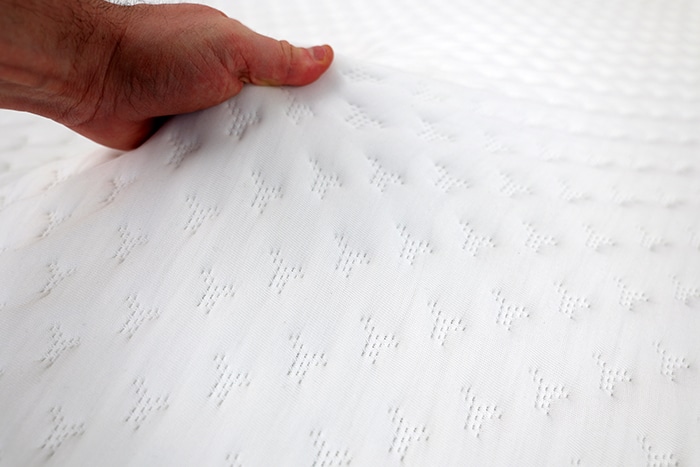
There are no carrying handles on this mattress and it is not shipped in a box. This would typically make setup a bit of a hassle, however, this mattress is delivered and setup by a 2-man crew. So setup is a non-issue.
The Comfort Layer
The comfort layer is 3.50″ thick and made of two layers of poly foam. Directly below the cover is a 2.5″ poly foam immediately followed by a 1.0″ poly foam layer.
The Support Layer
The support layer is 6.50″ thick and made of a 5.5″ air bladder followed by a 1.0″ support foam. Edge support foam wraps the perimeter of the mattress, which helps give the mattress support when seated at the edge, while also containing the air bladder in the central core of the mattress.
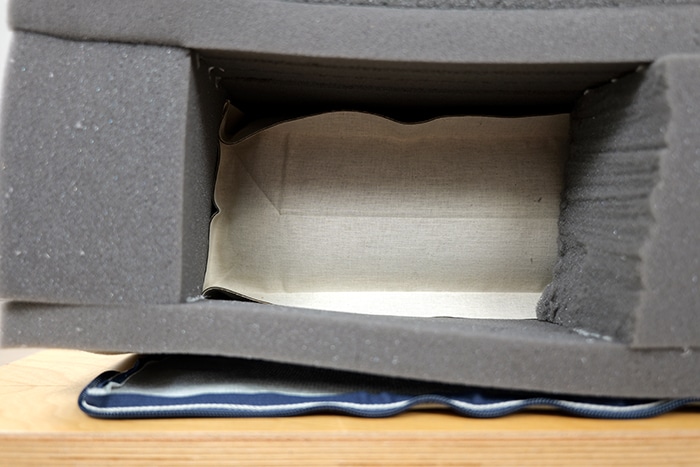
Adding or taking away air from the central bladder will provide a softer or firmer feel to the mattress. The 1.0″ support layer at the base of the mattress serves as
Product Evolution
The Sleep Number Comfort Mode launched in early 2026. It was designed as a budget-friendly entry model into the world of Sleep Number.
Since its launch there have been no major design / material changes.
Other Mattresses to Consider
Not sure if the Sleep Number Comfort Mode is the right pick for you? Check out these three other top-rated adjustable mattresses for alternatives you may want to consider.
For Performance
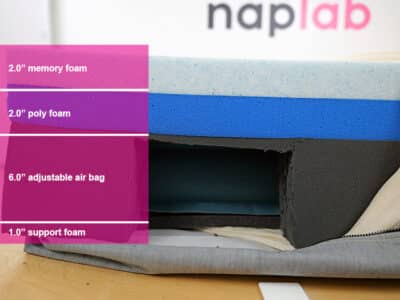
Personal Comfort Rego
5.0″ of Foam + Air Support
The Personal Comfort Rego is an 11″ adjustable mattress that has a firmness range from soft to firm. It has deep sinkage and low bounce, much like the Sleep Number. The price is a bit higher, but the overall performance is higher as well.
For Luxury
Saatva Solaire
Top-Notch Performance
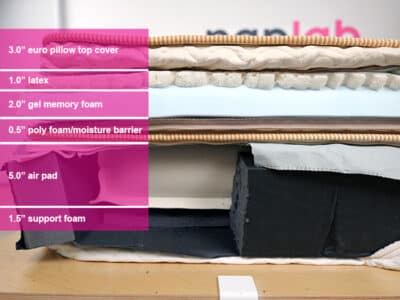
The Saatva Solaire is a 13″ adjustable mattress with a firmness range from soft to firm. Instead of solely relying on poly foam, the Solaire includes latex foam as well as gel memory foam. It also has a more plush cover (3.0″ thick in totality), which is significantly thicker than Sleep Number. The price is steep, but the overall performance is exceptional if your budget is flexible.
For Value
Winkbed
A Non-Adjustable Alternative
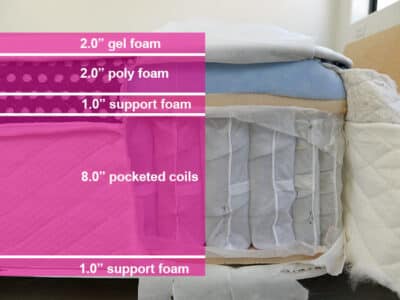
The Winkbed is a 14″ hybrid mattress available in 3 firmness levels—soft, medium-firm, and slightly firm. This mattress is non-adjustable, but it is a great value if you can determine a single firmness that is best suited to your preferences. Compared to the Comfort Mode, the Winkbed outperforms Sleep Number in all 8 of our performance tests.
Frequently Asked Questions
Still have questions? Check out some of the top FAQs on the Sleep Number Comfort Mode mattress below and get the answers you’re looking for.
How much does a Sleep Number Comfort Mode mattress cost?
Here are the current prices, with any sales or promotions reflected below:
Twin: $1,099
Twin XL: $1,199
Full: $1,299
Queen: $1,599
King: $1,899
Cal. King: $1,899
Split King: $4,598
*Note: Sales prices are subject to change without notice or warning.