Best For
- Slightly less motion transfer than the average
- Extremely low price tag, only $299 for a queen mattress
- Moderate sinkage + very low bounce
Considerations
- Poor cooling performance with significant levels of heat retention
- Extremely slow material recovery speed
- Scores in the bottom 1% of all mattresses tested to date
Our Verdict
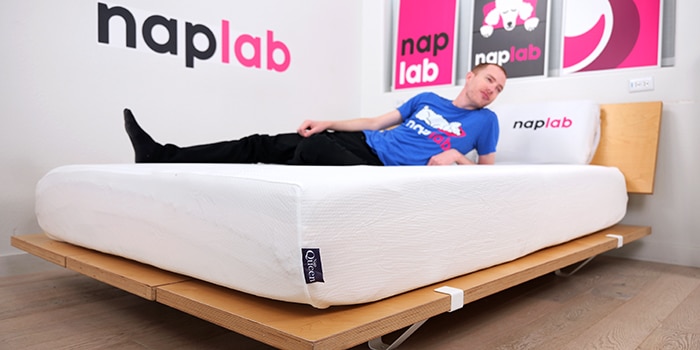
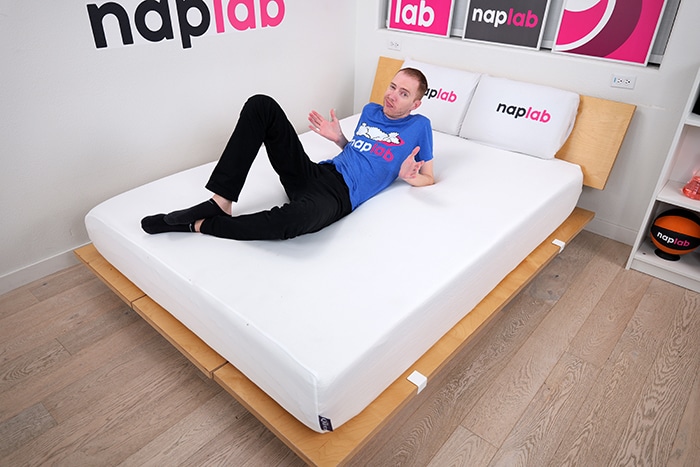
The NapQueen is an 11.00″ memory foam mattress made of only two layers of foam—a 3.0″ memory foam and 8.0″ support foam. It’s designed to be an ultra-budget-friendly option with 2-day Prime delivery via the Amazon marketplace.
The NapQueen is available in a single firmness level — medium-firm. This comes in at a 6 out of 10 on our firmness scale, where 10 is the most firm.
This mattress has moderate sinkage and very low levels of bounce. The NapQueen has a dramatic contour, like traditional memory foam.
In our performance tests, this mattress earned an overall score of 6.81, ranking the mattress in the bottom 1% of all mattresses tested to date. For performance alone, this is not a mattress I would recommend for anyone, but the low price may change how some sleepers view performance.
The NapQueen is $299 for a queen-sized mattress, which is 71% less expensive than the average memory foam mattress. If you’re on a very tight budget or are just looking for something temporary, the NapQueen could be an option. That said, this is not a mattress I would recommend in the vast majority of cases.
Type: Memory Foam
Firmness: Medium-Firm (6)
Best For: All Sleeping Positions, All Body Weights
In This Review
Performance Tests | Firmness | Support & Sleeping Positions | Design | Materials | Comparisons | FAQs
Performance Tests
At NapLab, we put each mattress to the test.
We test 10 different factors that impact the performance, comfort, and feel of the mattress. We then take the results of those tests and compare them to every mattress we’ve tested to date.
Check out the full performance table below to see how this mattress ranks:
| Factor | NapQueen | Average |
|---|---|---|
| Overall Score | 6.81 | 8.51 |
| Price (Queen) | $299 | $1,037 (Memory Foam only) |
| Cooling – Score | 5.0 | 8.6 |
| Sinkage – Depth | 2.13″ | 2.25″ |
| Sinkage – Feel | Moderate | Moderate |
| Motion Transfer – Score | 8.6 | 8.2 |
| Motion Transfer – Acceleration | 8.14 m/s² | 8.84 m/s² |
| Response Time – Score | 5.0 | 8.8 |
| Response Time – Mostly Recovered | 1.6 sec. | 0.4 sec. |
| Response Time – Fully Recovered | 2.8 sec. | 1.0 sec. |
| Bounce – Height | 4.67″ | 8.72″ |
| Bounce – Feel | Very Low | Moderate |
| Edge Support – Score | 7.7 | 8.7 |
| Edge Support – Sitting | 4.25″ | 3.89″ |
| Edge Support – Lying | Fair | Good |
| Sex – Score | 6.3 | 8.2 |
| Pressure Relief – Score | 7.0 | 8.6 |
| Comfort Layer Thickness | 3.00″ | 4.32″ |
| Mattress Thickness | 11.00″ | 12.24″ |
| Off-Gassing – Score | 6.4 | 8.0 |
| Off-Gassing – Smell | Strong | Strong |
| Off-Gassing – Days | 13 days | 7 days |
| Company – Score | 9.0 | 8.8 |
| Trial | 100 nights | 188 nights |
| Warranty | 10 years | 40% have lifetime warranties, average of other 60% of mattresses is 13 years |
How is NapQueen Different?
The NapQueen is an 11.00″ memory foam mattress with an overall performance level that is significantly below average, but a price that is also significantly below average. Compared to the average memory foam mattress, the NapQueen saves sleepers $738 on a queen-sized mattress.
Advantages
The primary advantage of the NapQueen is the low price. If you only have $300 and need a mattress with 2-day shipping, the NapQueen is your pick.
Neutral Factors
This mattress has moderate sinkage and very low levels of bounce. It has a dramatic contour and a very classic feel for memory foam.
Disadvantages
The disadvantages of the NapQueen mattress are many. It performs below average in almost every single testing category except for motion transfer, where it did a pretty decent job of restricting movements.
Cooling Test
The NapQueen has poor cooling. During our tests, I felt a significant level of heat retention around my body.
Baseline Temp.
73.0° F
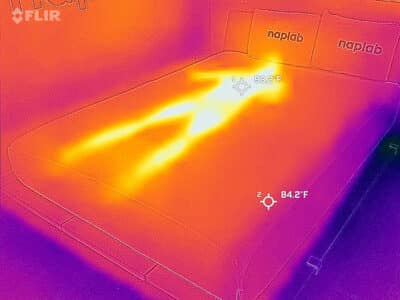
Max. Temp.
93.2° F
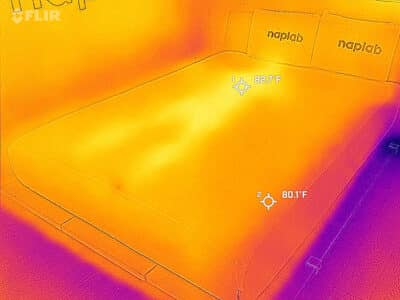
Ending Temp.
82.7° F
The mattress retains more heat, doesn’t seem to breathe well, and was significantly warmer than most others we’ve tested. The NapQueen is an all-foam mattress that uses a 3.0” memory foam layer on top.
Max. Temp.
Ending Temp.
- Baseline Temperature – the temperature of the mattress before anyone lies on it
- Maximum Temperature (0 minute) – the temperature of the mattress after lying on it for 15 minutes
- Ending Temperature (5 minute) – the temperature of the mattress after being lied upon and having no one on it for 5 minutes
All foam mattresses typically struggle to provide sufficient airflow, and that’s exactly what we experienced here. In addition, memory foam also typically retains more heat than other foam types.
The combination of lower-spec foams, a memory foam top layer, and an all-foam design creates more heat retention and cooling issues.
In our objective temperature tests, we measured a max surface level temperature of 93.2° F. This is 3.1° warmer than the average of 90.1° F, based on all of our tests to date.
After getting off the mattress, the temperature declined by 6.9 degrees from minutes 0 to 1, which is 2.1 degrees cooler than the average 0 to 1 minute decline of 4.8 degrees.
Heat Dissipation Over Time
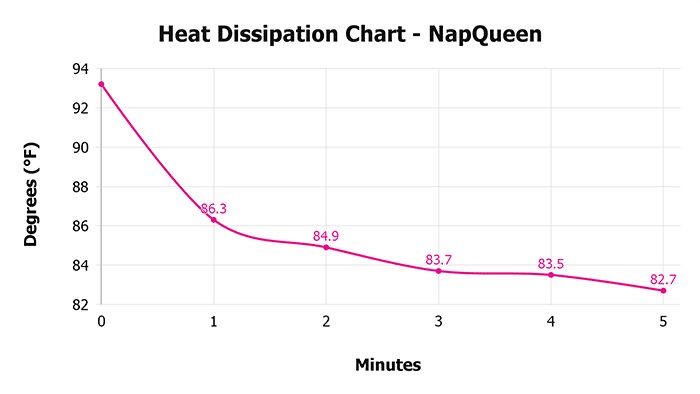
When we consider the combination of objective data, my subjective experiences, and an analysis of the materials, I’m confident in my view that cooling is poor.
Sinkage Test
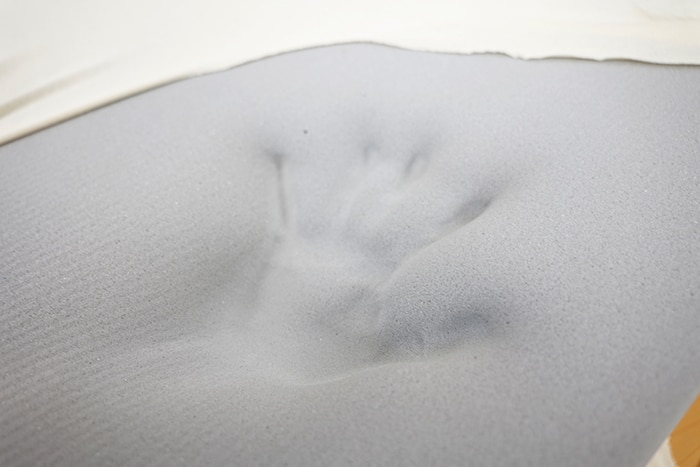
The NapQueen has moderate sinkage. During our tests, we measured a pressure point sinkage depth of 2.13″. This is 0.12″ less sinkage than the average sinkage depth of 2.25″, based on all of our tests to date.
Sinkage Depth
2.13″
Sinkage Feel
Moderate
Body Contour
Dramatic
The level of sinkage is documented in the image below.
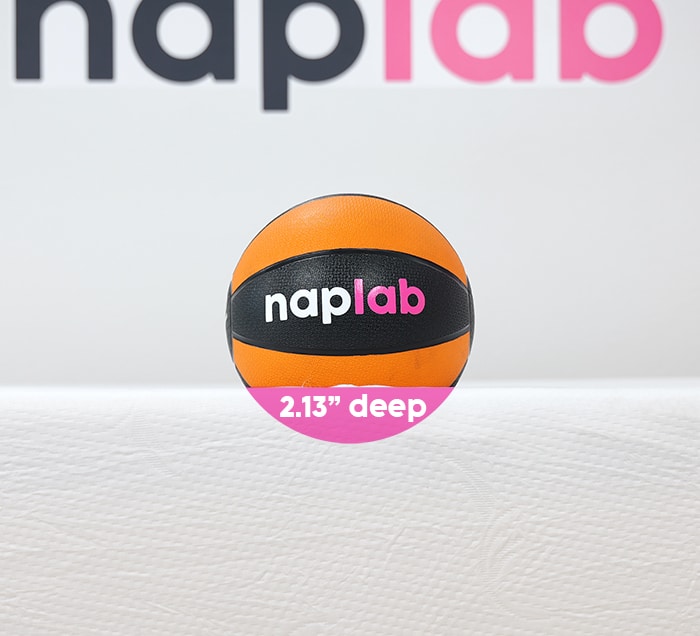
The mattress creates a dramatic body contouring hug. NapQueen is an all-foam design that includes a 3.0” memory foam comfort layer and has a traditional memory foam feel.
That means lots of hug, lots of contour, and a very slow material recovery speed. More traditionally formulated memory foam has a more polarizing feel. Some love it, some hate it. To be comfortable on this mattress, you’ll need to really prefer the feel of memory foam with lots of body contouring hug.
Motion Transfer Test
The NapQueen has a low level of motion transfer. During our tests, we measured a total acceleration range of 8.14 m/s². This is 8% less motion transfer than the average of 8.84 m/s².
Accel. Range
8.14 m/s²
Motion Duration
0.75 seconds
Memory foam mattresses typically create lower-than-average motion transfer, and that’s exactly what we measured here as well.
The viscoelastic memory foam, slower material recovery speed, and lower bounce work together to greatly reduce and disperse energy on the mattress, resulting in a lower level of motion transfer. While memory foam mattresses have their pros and cons, motion transfer is almost always low.
The level of motion transfer is also documented in the video below.
In our motion transfer chart, which visualizes our accelerometer data, we can see the highest motion peaks from 0 to 0.2 seconds. Motion declines notably immediately thereafter.
By 0.75 seconds, we’ve returned to near-zero levels of energy, which is 0.14 seconds shorter than the average motion duration of 0.89 seconds.
Motion Transfer Over Time
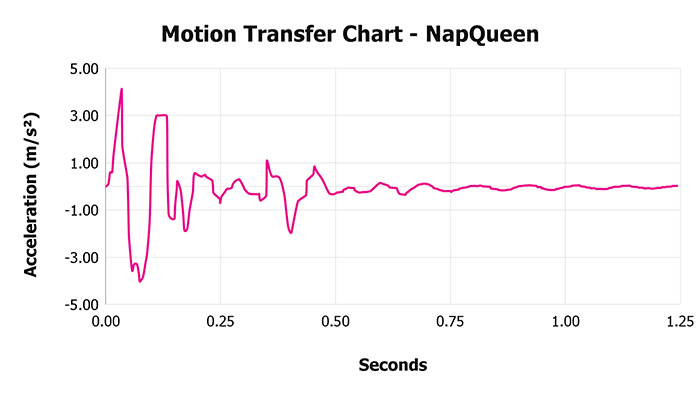
Both motion duration and motion intensity were better than average. As a result, the total motion transfer experience on the mattress is excellent.
Response Test
The NapQueen has a very slow material response. In our mostly recovered test, we measured a recovery speed of 1.6 seconds, which is 1.19 seconds slower than the average of 0.41 seconds, based on all of our tests to date.
Mostly Recovered
1.6 sec.
Fully Recovered
2.8 sec.
In our fully recovered responsiveness test, we measured a recovery speed of 2.8 seconds, which is 1.78 seconds slower than the average of 1.02 seconds. This mattress uses a thick 3.0” memory foam layer on top.
The level of responsiveness is documented in the video below.
This particular type of memory foam has a more classic formulation, which creates a more dramatic hug around the body and more viscoelastic properties. These properties dramatically increase the material recovery speed.
That slower recovery speed makes this mattress considerably more difficult to move around on and change sleeping positions. For many sleepers, this recovery speed dynamic will create more of a “stuck” feeling in the mattress.
Bounce Test
The NapQueen has a very low level of bounce. During our tests, we measured a total bounce height of 4.67″. This is 4.05″ less bounce than the average of 8.72″, based on all of our tests to date.
Max. Depth
3.78″
Max. Rebound
0.89″
Total Bounce
4.67″
All-foam mattresses, but especially memory foam mattresses, typically create less bounce and that’s exactly what we measured here. Memory foam isn’t highly resilient, isn’t springy, is slow to recover to shape, and simply doesn’t return much energy.
This combination of factors means that bounce is significantly suppressed, and we measured it well below average.
Max. Sinkage Depth
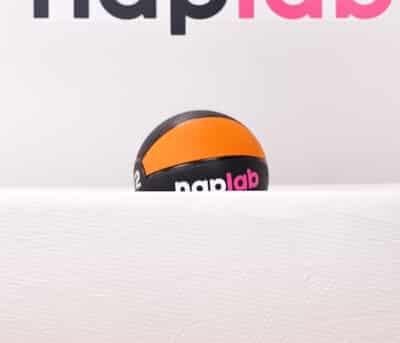
Max. Bounce Height
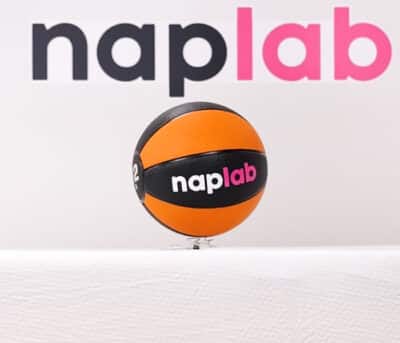
The level of bounce is also documented in the video below.
That lower bounce is a major reason that motion transfer is also better than average. However, a lower bounce makes it harder to move around on the mattress and has a negative impact on sex performance. As such, there are pros and cons worth considering.
Edge Support Test
The NapQueen has good sitting edge support and good lying edge support.
Max. Sinkage
4.25″
Lying Support
Fair
Reinforced Edge
No
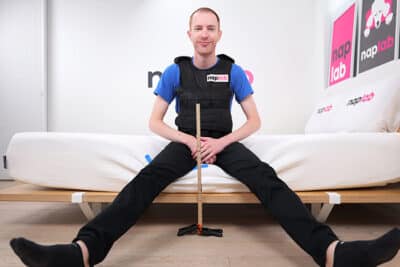
In our sitting edge support test, we measured a sitting sinkage compression of 4.25″. This is 0.35″ more sitting sinkage than the average of 3.90″, based on all of our tests to date.
The level of edge support while seated is documented in the images below.
Sitting, 140 lbs.

Sitting, 200 lbs.
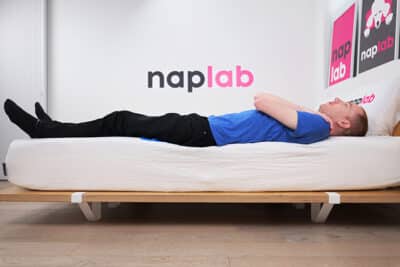
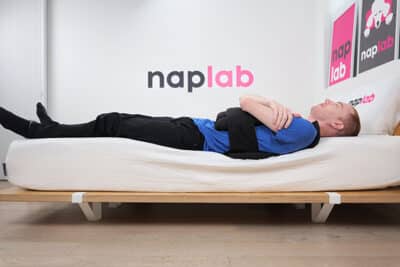
While lying directly on the edge of the mattress, I felt that the support was fair in all sleeping positions. The problem with lying support simply comes down to the memory foam. The memory foam creates lots of contour and lots of hug. In the middle of the mattress, that comfort dynamic is excellent.
The level of edge support while lying is documented in the images below.
Lying on Edge, 140 lbs.
Lying on Edge, 200 lbs.
However, at the edge of the mattress, that dynamic is creating a weakening of support, as there isn’t enough material along the edge to fully conform to the body. This isn’t a problem with NapQueen specifically, but rather a problem with memory foam mattresses more broadly.
If there is a silver lining, it’s that sitting support is still good. Even so, for lying support, you’ll want to move a few inches away from the edge to feel better supported.
Sex Test
The NapQueen has mediocre sex performance. On the positive side, noise is minimal and edge support, while not perfect, is good enough. Unfortunately, that’s where the good times end.
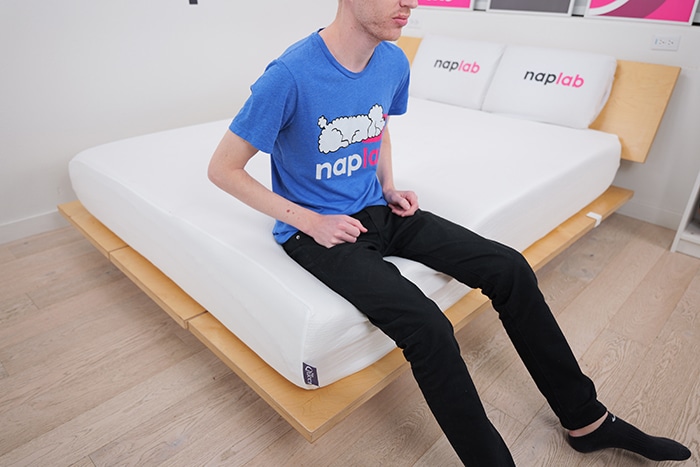
Pressure relief is only fair and cooling is poor. The cooling experience on the mattress is among the worst we’ve tested to date.
| Sex Factor | Factor Weight | Score | Rating |
|---|---|---|---|
| Bounce | 65% | 5.4 | Very Low |
| Edge Support | 20% | 8.4 | Good |
| Noise | 5% | 10 | Minimal |
| Pressure Relief | 5% | 7.0 | Fair |
| Cooling | 5% | 5.0 | Poor |
That said, where the mattress struggles the most for sex is simply bounce. When it comes to sex, more bounce is almost always better. The NapQueen has just 4.67” of bounce height. This is significantly below average.
That lower bounce makes sex more strenuous and tiring on the NapQueen. It simply requires more energy and effort. Ultimately, sex performance is just pretty bad. This is the 3rd-worst mattress for sex we’ve tested to date.
Pressure Relief Test
The NapQueen has a fair level of pressure relief. During our tests, I felt a slight to moderate level of pressure points on my body.
Comfort Layer
3.00″
Support Layer
8.00″
The mattress is equipped with 3.0″ of comfort material, which is 1.32″ less comfort material than the average comfort layer thickness of 4.32″, based on all of our tests to date.
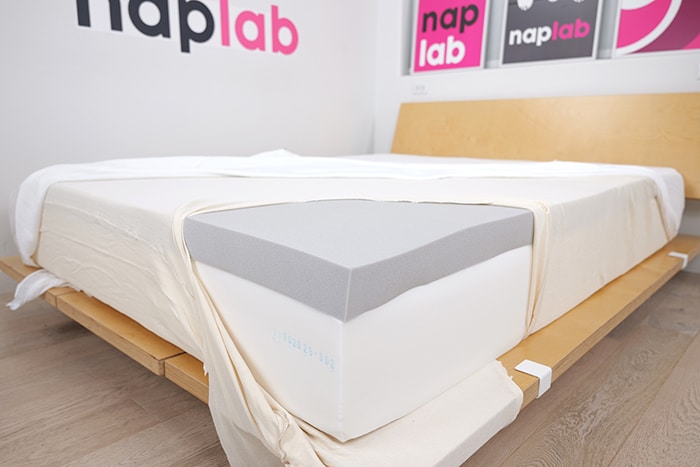
On all mattress tests, we make it a point to cut the mattress open and examine the material quality. The foam quality on the NapQueen isn’t great, but it’s also not terrible either. We’ve tested others in this pricing category that had notably worse quality.
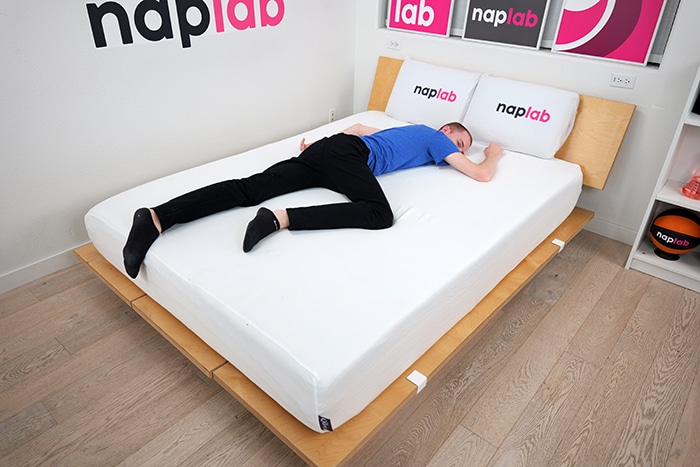
Even so, I do worry that the relative quality of these foams will mean the mattress has a shorter lifespan. Lower quality foams typically create more sagging and body impressions, which can degrade comfort, support, and pressure relief.
While I am far from satisfied with this level of pressure relief, given the price point, I think it’s a perfectly reasonable quality and performance level.
Pressure Map – Side Sleepers

| Pressure Relief (PSI) | Average | Maximum |
|---|---|---|
| Side Sleepers | 0.11 | 0.66 |
Pressure Map – Back Sleepers

| Pressure Relief (PSI) | Average | Maximum |
|---|---|---|
| Back Sleepers | 0.06 | 0.41 |
Pressure Map – Stomach Sleepers

| Pressure Relief (PSI) | Average | Maximum |
|---|---|---|
| Stomach Sleepers | 0.08 | 0.62 |
When I consider our objective pressure mapping tests, material thickness, material quality, and my subjective experience on the mattress, I’m confident most sleepers will find the pressure relief to be fair.
Off-Gassing Test
The NapQueen had a strong smell upon the initial unboxing.
Initial Smell Strength
Strong
Off-Gassing Period
13 days
The mattress smelled for 13 days. This is 5.7 days longer than the average smell duration of 7.3 days.
Company
NapQueen mattresses come with a 100-night trial period and a 10-year warranty. Shipping and returns are both free.
| Company Factor | Factor Weight | Score | Data |
|---|---|---|---|
| Returns | 40% | 10 | $0 |
| Trial Period | 30% | 8.0 | 100 nights |
| Warranty | 20% | 8.0 | 10 years |
| Shipping | 10% | 10 | $0 |
| Country of Origin | 0% | North Macedonia |
Comparing 110+ brands tested to date, the average trial period is 181 nights, 81 nights more than NapQueen offers.
The average warranty is 13 years, which is 3 years more than this mattress, and that’s if we exclude the 41% of mattresses that offer lifetime warranties.
Overall, both the trial and warranty are shorter than average, but they does offer free returns. That said, there is a caveat, as all returns require a receipt of donation.
See below for the exact terms, laid out by NapQueen:
We kindly ask for a receipt of donation to be provided for a seamless refund process if the mattress falls short of your expectations. This way, not only can you part ways with the mattress hassle-free, but you’ll also be contributing to a charitable cause. Please ensure to obtain proof of donation from a nearby facility, as refunds cannot be processed without it.
-NapQueen
How firm is NapQueen?
The NapQueen is available in 5 different height options, ranging as low as 6” all the way up to 14” thick. In our tests, we tested the 10” version.

The 10” option has a medium-firm feel, which is a 6 out of 10 on our firmness scale.
It’s possible some of these other height variations will have a softer or firmer feel, but they are all marked as having the same firmness rating, according to NapQueen.
If anything, I would guess that the 6″ and 8″ versions are slightly firmer then the 10-14″ versions.
Support & Sleeping Positions
Support on the NapQueen is fair. During our tests, I felt reasonably well supported, and yet, it’s clear the support experience is far from great.
The mattress is equipped with an 8.0″ support layer. This is 0.08″ thicker than the average support layer thickness of 7.92″, based on all of our tests to date.
| Support Factor | Data |
|---|---|
| Comfort Layer | 3.00″ |
| Support Layer | 8.00″ |
| Firmness | Medium-Firm |
| Body Contour | Dramatic |
| Zoned Support | No |
| Reinforced Edge | No |
For a mattress to create ideal support, it must both support the body, keeping the spine in a neutral alignment, while also providing sufficient pressure relief.
While the support side of this equation is fine, the pressure relief leaves much to be desired. My fear is that many will find the lack of pressure relief compounds into support issues.
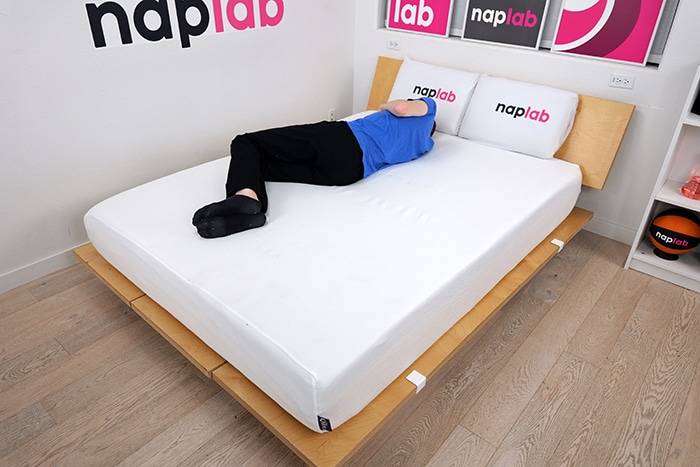
Check out the table below to see the sleeper weights and sleeping positions that would be best suited for this mattress.
| Sleeper Weight | Stomach Sleeper | Side Sleeper | Back Sleeper |
|---|---|---|---|
| Under 150 lbs. | Yes | Yes | Yes |
| 150-250 lbs. | Yes | Yes | Yes |
| 250-300 lbs. | Yes | Yes | Yes |
The lack of comfort makes it harder to stay in the same sleeping positions for an extended period of time and can cause a more restless sleeping experience. On a more positive note, this mattress has a medium-firm feel, which is ideal for most body types and sleeping positions.
In addition, this mattress does not use any type of zoned support. Instead, we have the same firmness from the head down to the foot of the mattress.
Lastly, but not least, we need to discuss the memory foam feel. Traditional memory foam has a more polarizing feel; some love it, some hate it.
To feel well supported on this mattress, you’ll need to prefer the feel of memory foam, including the dramatic body contouring hug and slower material recovery speed.
Based on all of my tests to date, an analysis of the materials, and my subjective experiences, I’m confident that most sleepers will find support on the NapQueen to be fair.
Design
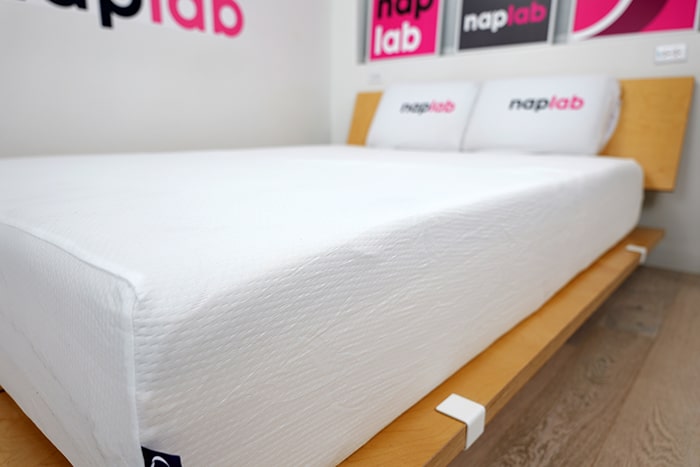
The NapQueen is an 11.00″ memory foam mattress that comes in a single firmness option—Medium-Firm. It has a basic design with a thin cover and skips fancy bells and whistles (like handles on the side or cooling covers, etc).
| Design Factor | Data |
|---|---|
| Type | Memory Foam |
| Thickness | 11.00″ |
| Cover Type | Thin |
| Weight | 59 lbs. |
| Has Handles | No |
| Fiberglass-Free | Yes |
| Ships in a Box | No |
Lastly, according to NapQueen, this mattress does not contain fiberglass.
Materials
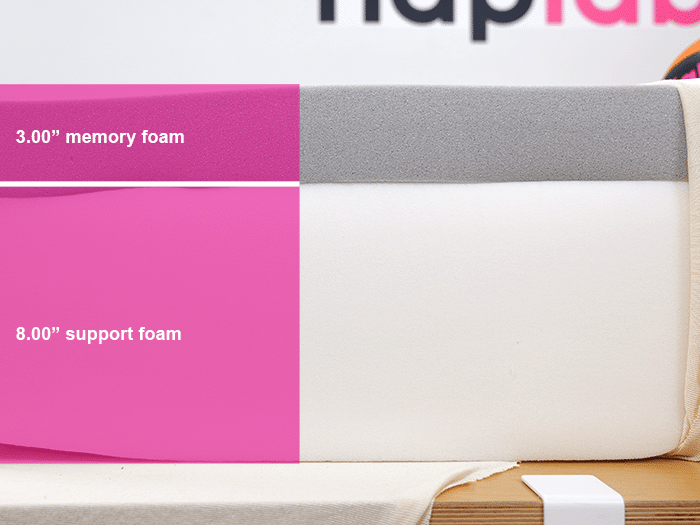
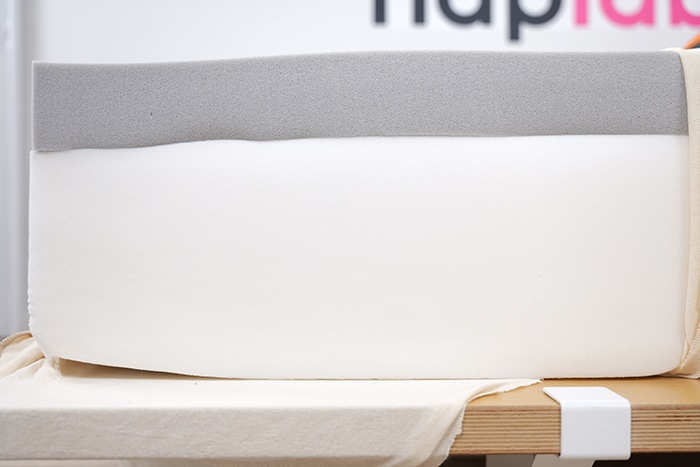
The NapQueen is 11.00″ thick and contains a combination of different foam types. From top to bottom, here is a full list of the materials used in this mattress:
| Layer Type | Thickness | Layer Specs |
|---|---|---|
| Memory Foam | 3.00″ | Not Available |
| Support Foam | 8.00″ | Not Available |
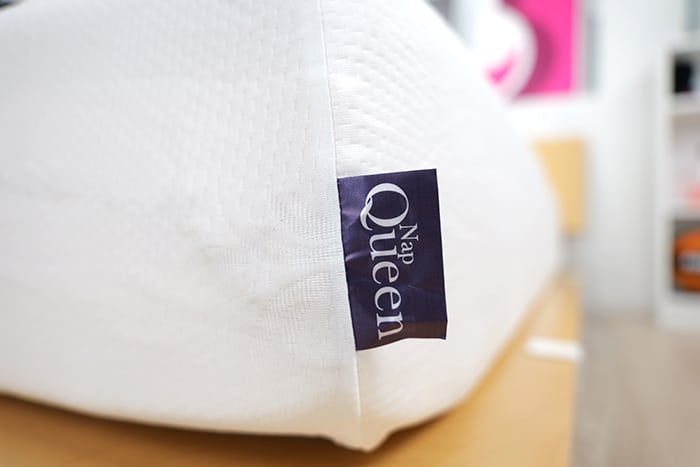
The Law Tag outlines the full breakdown of materials included in this mattress.
- Materials:
- 60% Polyurethane Foam
- 40 Viscoelastic Polyurethane Foam
- Cover: Polyester
- Bottom Polypropylene
- Made For: Adven Group LLC. 611 S. Cravens RD. Suite 300, Missouri City, TX 77489
- Finished Size: 80 in. x 60 in.
- Net Weight of Filling Material 59 lbs.
- Made In: North Macedonia
- Manufactured By: Soft Slip Dooel St. 10 16 KJOJLIJA 1043 Petrovec, Macedonia THE FORMER YUGOSLAV REPUBLIC OF
- Date: N/A
- Importer/US Records Location: Adven Group LLC. 611 S. Cravens Road Suite 300, Missouri City, Texas, 77489
- Model: NQ731231
- Prototype: NQ-Marg24
The Cover
The NapQueen has a thin cover. It is pretty basic, with a good amount of stretch to it. This same cover is used on all NapQueen mattresses, regardless of mattress thickness or size.
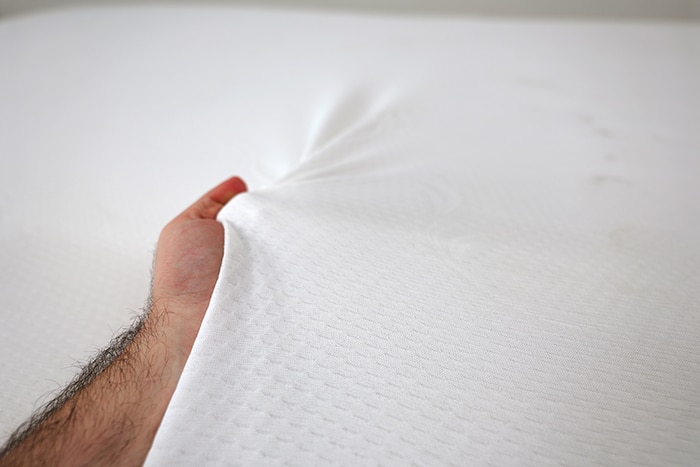
The sides of the mattress have the same fabric as well, which isn’t ideal for long-term durability. But this more simple design is also part of what keeps the price so low on this mattress.
The Comfort Layer
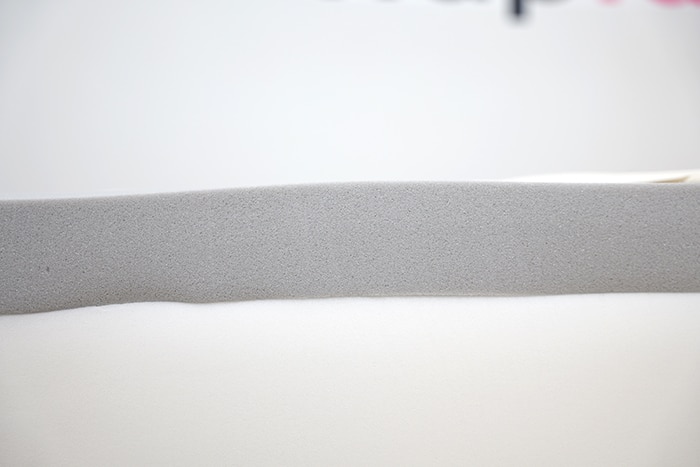
The comfort layer is 3.00″ thick and made of a single 3.0″ layer of memory foam (gray foam). Again, it’s basic and economical.
The Support Layer
The support layer is 8.00″ thick and made of a single 8.0″ support foam layer (white foam). For a low-priced all-foam mattress, this is exactly what I expect to see.
Product Evolution
NapQueen has been around since 2017, getting their start based out of Texas. The company started selling mattresses online around 2020. It does not appear there have been any notable product changes since the mattress launched in 2020.
Other Mattresses to Consider
Not sure if the NapQueen is the right pick for you? Check out these three other top-rated memory foam mattresses around $500 or under for alternatives you may want to consider.
For Performance
Siena Signature 10″
Under $400 For Queen
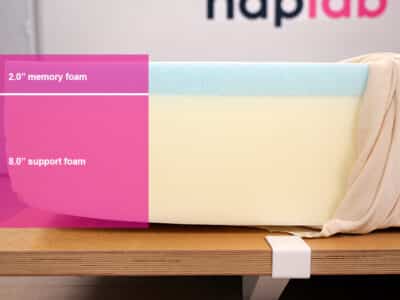
The Siena Signature 10″ is a 10″ memory foam mattress available in 1 firmness level—medium-firm. This mattress has significantly better performance across the board and yet is still priced under $400 for a queen mattress.
For High-Profile
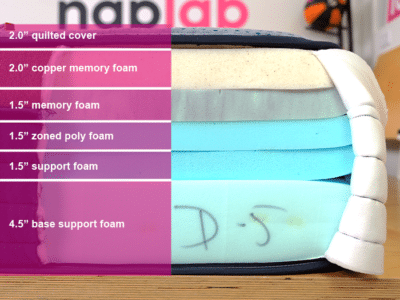
Brooklyn Bedding Copperflex
13″ Memory Foam Pick
The Brooklyn Bedding Copperflex is a 13″ memory foam mattress available in 1 firmness level—medium-firm. For sleepers who want a high-profile design while still spending under $500, the CopperFlex is a great option.
For Deeper Sinkage
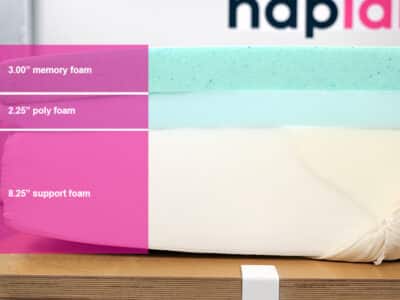
Cool Gel Ultimate
A Better Amazon Buy
The Cool Gel Ultimate is a 13.5″ memory foam mattress available in 1 firmness level—medium-firm. If you specifically want to stick with Amazon, the Cool Gel would be a better option. It has higher performance in 6 out of the 8 testing categories and still has a low price (under $500).
Frequently Asked Questions
Still have questions? Check out some of the top FAQs on the NapQueen mattress below and get the answers you’re looking for.
How much does a NapQueen mattress cost?
Here are the current prices, with any sales or promotions reflected below:
Twin: $164.99
Twin XL: $198.00
Full: $225.99
Queen: $284.00
King: N/A
Cal. King: N/A
*Note: Sales prices are subject to change without notice or warning.