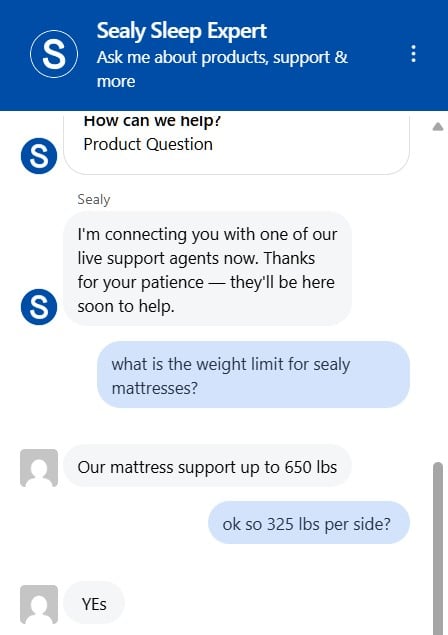
We don’t recommend Sealy for heavy people because they are not designed to support over 325 pounds per side, according to Sealy.
Most Sealy mattresses have a weight limit of only 650 lbs, 325 lbs. per side.
The Sealy Cocoon, an all-foam collection, is even lower at only 500 lbs—250 lbs. per side.
If you definitely want to stick with Sealy, I would recommend a hybrid model (instead of an all-foam) and aim for something with a thicker profile, 13″ or more.
The table below shows which Sealy mattresses fit within these parameters:
| Mattress | Firmness | Support Thickness | Total Thickness | Read Review |
|---|---|---|---|---|
| Sealy Posturepedic Hybrid | 5, 8 | 9.0″ | 13.00″ | Read Review |
| Sealy Posturepedic Plus Hybrid | 4, 5.5, 7 | 9.0″ | 13.00″ | Read Review |
| Sealy Posturepedic Plus Mount Auburn | 6 | 9.0″ | 13.00″ | Read Review |
| Sealy Posturepedic Plus RidgeCrest II | 5, 7 | 9.0″ | 14.00″ | Read Review |
| Sealy Posturepedic Pro Highland Manor | 8 | 9.0″ | 13.50″ | Read Review |
| Sealy Posturepedic Pro Lincoln Heights | 4, 6 | 9.0″ | 14.25″ | Read Review |
Second, many heavy sleepers require or prefer firmer mattresses to achieve the right support and pressure relief dynamic. Sealy mattresses often offer a firmer version that is a 7 or higher on the firmness scale, where 10 is the most firm.
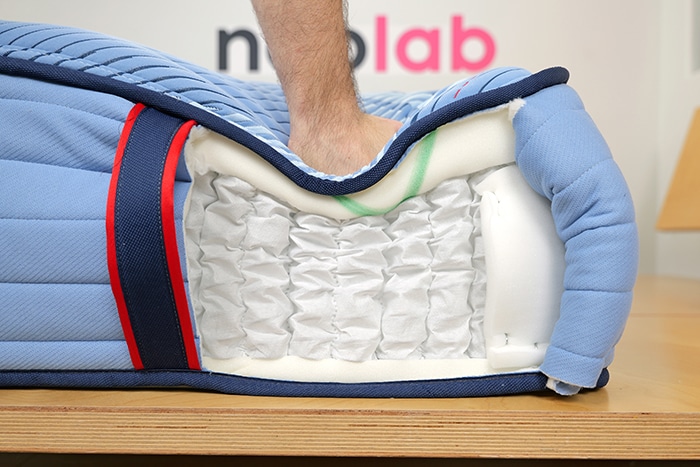
The Sealy Posturepedic Plus RidgeCrest II, Posturepedic Hybrid, Posturepedic Plus Hybrid, and Posturepedic Pro Highland Manor are all high-profile hybrid models with a slightly firm (7) to firm (8) feel available.
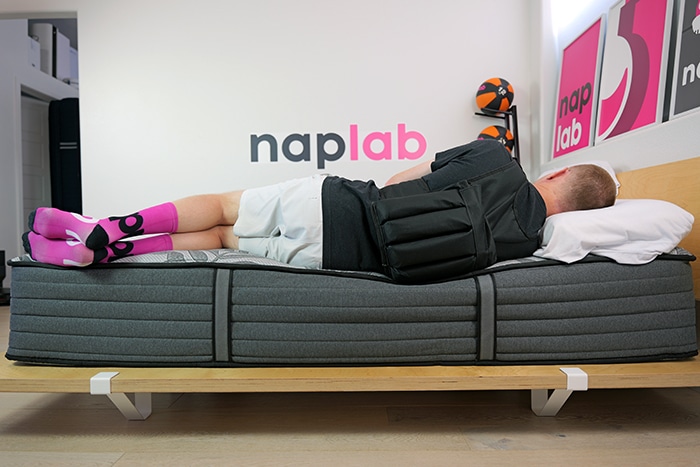
Another point to consider is pressure relief—an area where Sealy doesn’t have great performance. Sealy mattresses score among the worst for pressure relief, based on our objective and data-driven tests of 11 different Sealy models.
The one exception is the Sealy Posturepedic Plus Hybrid, which earned a score of 9.0. If you’re a heavier sleeper shopping for a Sealy mattress and want good pressure relief, this one is your best bet.