Sleep may look the same from the outside—eyes closed, bodies still—but across the animal kingdom, sleep schedules vary dramatically.
Some animals rest in short bursts throughout the day, others sleep deeply for long stretches at night, and a few have evolved patterns that barely resemble human sleep at all.
These differences aren’t random; they reflect how each species has adapted to survive in its environment.
Sleep also reveals important trade-offs. Animals that are vulnerable to predators tend to sleep lightly or in short intervals, while top predators can afford longer, deeper rest.
Grazing animals nap strategically so they can flee quickly, and social species often synchronize their sleep with the group. Even within the same class of animals, sleep duration and timing can differ widely.
The chart below takes a closer look at the sleep schedules of different types of animals across the globe.
Sleep Schedules in the Animal Kingdom
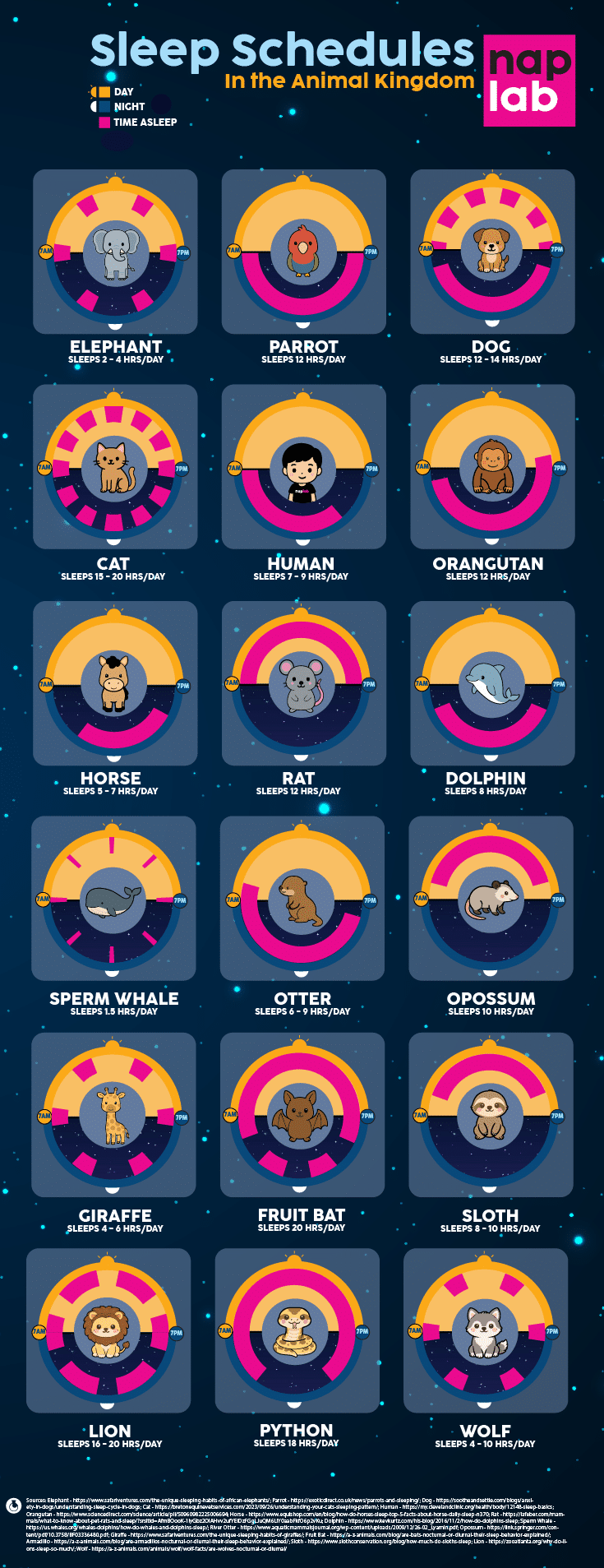
Humans tend to think of sleep as a nightly routine, ideally lasting eight uninterrupted hours. But that model is far from universal.
Elephants may sleep only a couple of hours per day, often standing up, while cats can spend most of their lives asleep. Dolphins rest one half of their brain at a time so they can keep breathing, and birds like parrots depend on long, consistent nights to stay healthy and emotionally regulated.
See below for a closer look at the sleep habits of 18 popular animals across the animal kingdom:
18 Popular Animals & Their Sleep Habits
| Animal | Hours Asleep | Part of Day Asleep | Source |
|---|---|---|---|
| Cat | 15 – 20 hours (split) | Anytime; Naps | See Link |
| Dog | 12 – 14 hours (split) | Mostly Night | See Link |
| Dolphin | 8 hours | Nighttime | See Link |
| Elephant | 4 – 6 hours (split) | Anytime; Naps | See Link |
| Fruit Bat | 20 hours | Daytime | See Link |
| Giraffe | 4 – 6 hours (split) | Anytime; Naps | See Link |
| Horse | 5 – 7 hours | Between 8pm – 5am | See Link |
| Human | 7 – 9 hours | Nighttime | See Link |
| Lion | 16 – 20 hours | Anytime; Naps | See Link |
| Oppossum | 10 hours | Between 8am – 6pm | See Link |
| Orangutan | 12 – 13 hours | Between 6pm – 6am | See Link |
| Otter | 6 – 9 hours | Between 8pm – 9am | See Link |
| Parrot | 12 hours | Nighttime | See Link |
| Python | 18 hours | Daytime | See Link |
| Rat | 12.6 hours | Daytime | See Link |
| Sloth | 8 – 10 hours | Daytime | See Link |
| Sperm Whale | 1.5 hours (split) | Anytime; Naps | See Link |
| Wolf | 4 – 10 hours | Anytime; Naps | See Link |
Closing Thoughts
From sleeping in the trees to catching Zzzs on the ocean floor, animals everywhere are constantly snoozing. The sleeping pattern of each animal is shaped by factors like predator risk, food availability, brain development, and social behavior.
How well are you sleeping? Do you get the 7 – 9 hours recommended for humans? While we wish we could find a way to support all-day napping (like the lions), we can help you find a mattress that supports better sleep.
Check out our mattress quiz for a personalized recommendation for the right mattress for you, based on your sleep habits and preferences.
Fair Use
You are welcome to use, reference, and share non-commercial excerpts of this study with proper attribution. If you cite or cover our findings, please link back to this page so readers can view the full methodology, charts, and context.